
A $500 drone just obliterated a $5 million Leopard 2 tank in Ukraine, exposing how outdated Western military spending wastes billions on vulnerable relics while cheap tech dominates the battlefield.
Story Highlights
- Russian FPV drones costing $500 destroy Leopard 2 tanks valued at $5 million, revealing massive cost asymmetry in modern warfare.
- Cold War-era main battle tanks like the Leopard 2 prove obsolete without integrated air defenses and electronic warfare systems.
- Ukraine’s drone-heavy front lines in Pokrovsk and Kupansk force tanks into secondary roles, wasting Western aid donations.
- Germany rushes Leopard 2A8 upgrades with Trophy active protection, but systemic failures highlight defense industry shortcomings.
Drone Strikes Expose Tank Vulnerabilities
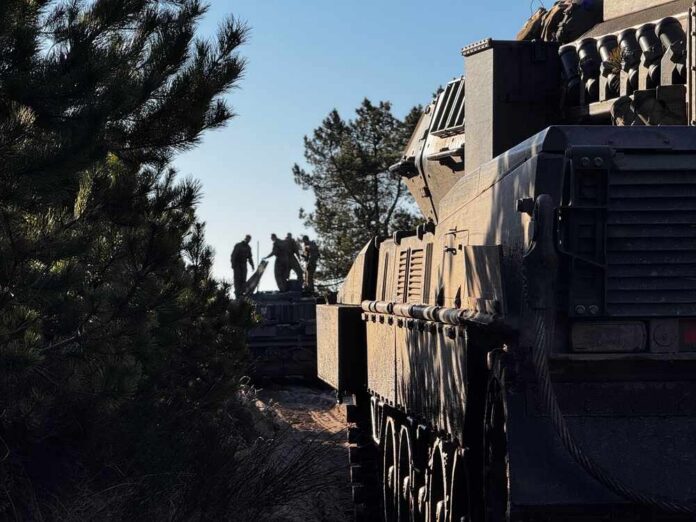
Russian forces deployed a $500 first-person view drone on August 28 in Pokrovsk, Ukraine, to destroy a Ukrainian Leopard 2A4 tank during its evasion maneuvers in an urban area. The tank, donated by Western allies like Germany, cost approximately $5 million. Its design prioritizes frontal armor from Cold War threats, leaving thin top protection exposed to vertical drone attacks. This incident underscores how hobbyist-level technology neutralizes multimillion-dollar assets on drone-infested battlefields.
Cold War Designs Fail in Drone Era
The Leopard 2 originated for scenarios like the Fulda Gap, focusing on Soviet armored breakthroughs rather than top-down threats. Since Russia’s 2022 invasion, Ukraine received these tanks for counteroffensives but suffered heavy losses to drones, artillery, and anti-tank missiles in Zaporizhzhia and Kupansk. Recent strikes hit camouflaged Leopard 2s with FPV drones and Lancet munitions, forcing repositioning to peripheral artillery roles amid constant surveillance.
Cost Asymmetry Wastes U.S. Taxpayer Dollars
Western aid pours billions into platforms like the $5 million Leopard 2, yet $500 drones with $300 goggles allow Russian operators to target them economically. This mirrors precedents like $200 drones downing $4.2 million U.S. Patriots. Both sides mass-produce FPVs, with Ukraine earning “drone superpower” status, but NATO faces embarrassment as donated tanks burn for pennies. Conservatives see this as elite mismanagement, echoing frustrations with overspending on globalist commitments over American priorities.
U.S. leaders in 2026, under President Trump’s second term with GOP congressional control, scrutinize such foreign aid amid domestic concerns like inflation and border security. Shared bipartisan distrust grows toward a defense establishment favoring expensive relics over innovative, cost-effective defenses rooted in American ingenuity and limited government principles.
Adaptations and Lessons for Global Militaries
Germany develops the Leopard 2A8 with Trophy active protection systems, enhanced top armor, and drone detection to counter vulnerabilities. Experts argue main battle tanks survive only in integrated ecosystems with air defenses, electronic warfare, and infantry screens. Ukraine’s war proves standalone MBTs belong to the past, shifting budgets toward counter-drone tech as defense firms pivot. This evolution demands accountability from NATO donors, aligning with calls to reject wasteful deep-state interventions.
Short-term, high attrition strains Ukraine’s supplies and morale while Russia gains initiative through swarms. Long-term, battlefields grow transparent, ending maneuver warfare and pressuring reforms. Americans on both sides lament government failures prioritizing elite interests over practical solutions, fueling demands for fiscal restraint and America First policies.
Sources:
Hacker News discussion on drones and tanks
Ukraine: The World’s First Drone Superpower and Russia Can’t Stop It