Progressive leaders used a Montgomery rally to pressure courts and lawmakers on redistricting while branding conservatives as threats to voting rights.
Story Highlights
- Rev. Al Sharpton led a March on Washington anniversary rally in Montgomery focused on redistricting fights.
- A federal court previously found part of Alabama’s 2023 map unlawfully diluted Black voting power and ordered changes.
- Speakers, including members of Congress, claimed new maps in Southern states suppress Black voters.
- Alabama Republican leaders defended race-neutral redistricting and state authority after recent Supreme Court action.
Rally Message Targets Maps, Courts, And GOP
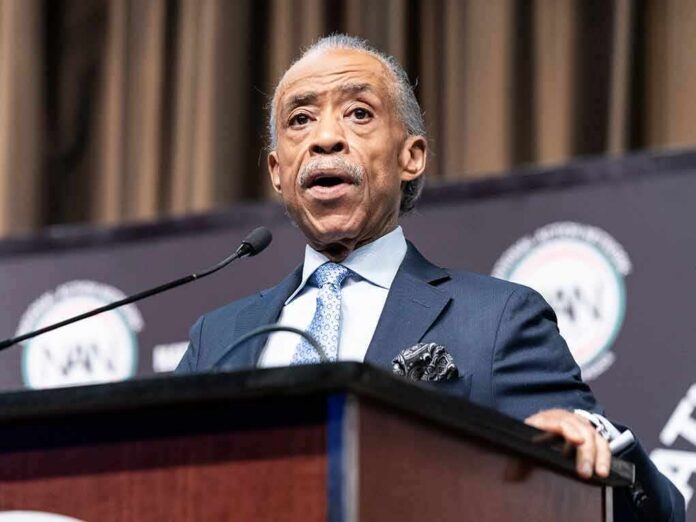
Rev. Al Sharpton convened a voting-rights rally in Montgomery to mark the March on Washington and to spotlight new political maps across the South. Organizers said recent rulings weakened protections and invited lawmakers to redraw lines. National politicians joined the stage and attacked Republican mapmaking and the courts. The tone was sharp and accusatory. The message named Alabama, Tennessee, Louisiana, and others as examples of reduced Black representation in the wake of legal shifts.
Members of Congress amplified that line. They said post-ruling changes crack urban voters and pack Black voters to blunt their voice. They framed the legal fight as a test of democracy and civil rights. The claims were strong and emotional at times. The speeches aimed to rally pressure on courts ahead of more hearings. The event turned Montgomery’s civil-rights legacy into a present-tense warning about redistricting power and election rules.
What Courts Actually Ruled In Alabama
A federal court found Alabama’s 2023 plan unlawfully diluted Black voting power and ordered a remedial map. Judges required lines that give Black voters a fair chance to elect their candidates in at least one key area. The ruling cited the Voting Rights Act and set specific fixes. The United States Supreme Court docket in Allen v. Caster shows the dispute’s path and confirms the remand and remedial steps taken in 2026.
That ruling followed years of litigation. Plaintiffs, including the Alabama State Conference of the National Association for the Advancement of Colored People, argued the maps weakened Black voters’ ability to elect preferred candidates under Section 2 of the Voting Rights Act. Court orders pushed lawmakers to draw new districts around Montgomery that reflect real voting strength. The court’s remedy underscored that line drawing cannot drown out a cohesive community’s voting power.
How Activists Frame A Multi-State Push
Progressive groups linked Alabama’s court fight to a broader Southern trend. They said new maps in Tennessee and Florida cut into Black representation. They warned that other states, including Louisiana and Georgia, were moving in the same direction after a fresh Supreme Court ruling. Journalists described fast action in special sessions, emergency appeals, and rapid changes that could shift seats in Congress and statehouses.
The rally’s speakers argued that this trend follows legal signals from Washington. They claimed that recent Supreme Court decisions narrowed federal guardrails. They pointed to the practical result: more room for mapmakers to split cities, stretch districts, and reduce the odds that Black voters can elect preferred candidates. They promised more lawsuits and more marches as the redistricting cycle continues into 2026 and beyond.
Conservative Response: State Power And Equal Rules
Alabama Republican Party Chairman Scott Stadthagen welcomed recent Supreme Court action and called it a win for rule of law. He said states have the right to draw maps through open legislative processes. He argued the Voting Rights Act should not drive race-based mandates. He framed the defense of Alabama’s maps as support for common sense, election integrity, and equal protection for all voters under neutral criteria.
Republicans across the South have said their maps follow long-standing redistricting practices and recent Supreme Court limits on race-based policies. They contend that liberal groups are using the courts for partisan gain rather than fair representation. They argue that neutral rules like equal population, compactness, and respect for political boundaries guide their plans. They say federal overreach should not force race-first line drawing that violates the Constitution.
What It Means For Voters And 2026 Races
Court-ordered changes in Alabama show that legal checks still work when evidence of dilution is strong. But new rulings have also moved more fights into after-the-fact court battles. That creates uncertainty for voters and candidates as lines shift near filing deadlines. Activists will keep marching and suing. Lawmakers will keep drawing and defending. The next few months will determine which maps stand on Election Day and who gets a real chance to compete.
Sources:
youtube.com, abc3340.com, latimes.com, apnews.com, alabamareflector.com, aljazeera.com, democracydocket.com, congress.gov, supremecourt.gov, racism.org