Washington’s onetime anti-ISIS partner has dissolved into Syria’s army without clear vetting rules, raising hard questions for U.S. policy and regional security.
Story Snapshot
- The Kurdish-led Syrian Democratic Forces announced dissolution and integration into Syria’s army.
- Public plans lack concrete details on command control and fighter screening, according to U.S. policy analysis.
- Reports say only part of the force is integrated while the state also absorbs foreign fighters.
- The shift complicates America’s counterterrorism posture and risk calculus in the region.
SDF Announces Dissolution And Merger Into Syrian Army
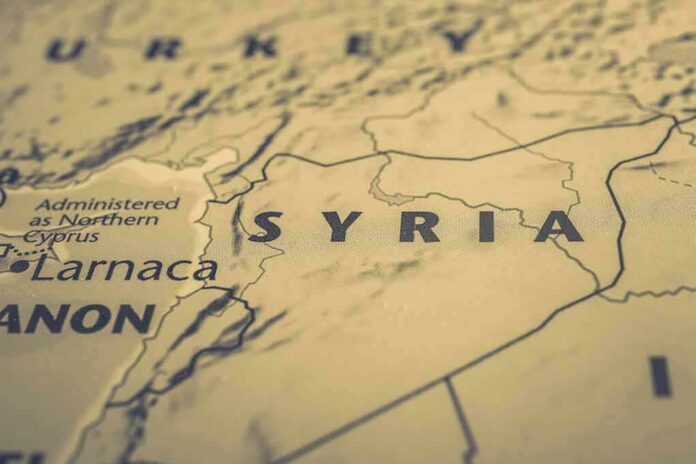
Reuters reported on August 25, 2026, that the Kurdish-led Syrian Democratic Forces dissolved and would be integrated into the Syrian military under an agreement with Damascus. Egyptian outlet Ahram and other trackers echoed that commander Mazloum Abdi said the SDF had completed the process of merging into Syrian army brigades. Security Council reporting also listed the August 25 step as part of the January deal that set the legal frame for the merger. These are the core facts driving today’s alarm.
U.S.-focused policy summaries highlight a major gap. The Congressional Research Service noted the January 2026 agreement called for integrating some SDF personnel into Syrian security units, but detailed plans for implementation, chain of command, and vetting were not published at the time. That missing detail matters. It decides who leads, who carries a rifle, and who gets screened out. Without it, Washington cannot judge if extremists or abusers gain new uniforms and state pay.
Foreign Fighters And Vetting Risks Cloud The Picture
Open-source analysis and rights reporting describe a broader “integrate or arrest” strategy in Syria that has brought foreign fighters into state structures since 2024, raising concerns about loyalty and discipline. A United Nations human rights report recorded a case where foreign fighters, nominally integrated with government forces, were identified as perpetrators in an incident, underscoring screening risks. Security reporting added that less than half of the SDF had been integrated so far, even as Damascus absorbed foreign jihadist fighters in parallel. These trends point to real, near-term dangers if vetting is weak.
Women who fought ISIS face exclusion as well. Ahram reported that while former Kurdish fighters are set to join the Syrian army, the military does not currently accept women in its ranks. That decision sidelines seasoned female veterans from the Women’s Protection Units who helped roll back the Islamic State group. It also signals that the integration is not only about counterterror skill but about political and social control. For America, that narrows trusted contacts and reduces capability built over years.
Why It Matters For U.S. Interests And Security
U.S. Central Command has kept pressure on ISIS cells, often with partner support, because the terror group still plots and recruits across Syria’s deserts and camps. Washington’s own oversight reporting noted that detention sites for Islamic State fighters and families relied on ad hoc SDF guards with limited training as recently as 2024, a vulnerability that demanded stable, professional partners. If those guards now wear new uniforms without firm standards, the risk to U.S. personnel, allies, and civilians grows.
Conservatives should expect clear standards and accountability for any partner force tied to U.S. resources. The public record now shows: the SDF disbanded into Syrian brigades; the government is integrating a mix of local and foreign fighters; and official plans for vetting and command remain thin in public view. That is not a recipe for lasting stability or safety. It is an early warning. Policymakers should press for transparent screening, human rights safeguards, and strict limits on extremist incorporation before deeper engagement.
Sources:
thegatewaypundit.com, jpost.com, greenleft.org.au, centcom.mil, ctc.westpoint.edu, english.ahram.org.eg