
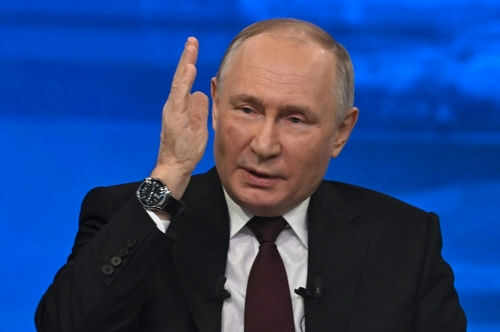
Putin’s calculated rewrite of Russia’s nuclear doctrine in late 2024 isn’t about security—it’s nuclear blackmail designed to paralyze Western support for Ukraine and fracture the very NATO alliance standing between freedom and authoritarian expansionism.
Story Snapshot
- Russia lowered its nuclear use threshold in November 2024, abandoning “existential threat” standards to permit strikes over mere territorial disputes—a dangerous erosion of global nuclear norms
- The revised doctrine explicitly targets NATO-backed nations like Ukraine, framing Western arms supplies as justification for potential nuclear retaliation against American and European allies
- Putin’s nuclear saber-rattling aims to divide Western resolve and force Ukraine into surrender terms favorable to Moscow, undermining sovereignty principles conservatives hold sacred
- Experts remain split on whether this represents genuine escalation or Putin’s desperate bluff to compensate for battlefield failures exposing Russia’s conventional military weakness
Putin’s Nuclear Gambit Targets Western Unity
Vladimir Putin signed the revised “Fundamentals of State Policy in Nuclear Deterrence” on November 19, 2024, dramatically expanding conditions under which Russia claims nuclear weapons use is justified. The updated doctrine abandons the 2020 version’s requirement of existential threats to the Russian state, instead permitting nuclear responses to conventional attacks threatening Russia’s sovereignty or territorial integrity. This deliberate vagueness creates dangerous ambiguity, allowing Moscow to justify nuclear escalation over disputed territories like Crimea or occupied Ukrainian regions—a direct assault on the principle that borders matter and aggression shouldn’t be rewarded.
Targeting America’s Support for Freedom
The doctrine’s most alarming provision explicitly allows nuclear strikes if non-nuclear states like Ukraine attack Russia with support from nuclear-armed nations—a transparent threat aimed squarely at the United States and United Kingdom. When Washington approved Ukraine’s use of ATACMS missiles and London lifted Storm Shadow restrictions on November 17, 2024, Putin’s regime immediately launched a nuclear-capable missile at Dnipro as a warning shot. This coercive strategy seeks to intimidate American policymakers into abandoning allies, exploiting fears of escalation to achieve what Russia cannot win conventionally. For conservatives who understand deterrence requires strength, not appeasement, this represents the exact globalist weakness that emboldens tyrants.
Belarus Inclusion Expands Moscow’s Nuclear Umbrella
Putin’s revised policy extends explicit nuclear protection to Belarus, Russia’s authoritarian satellite state, treating attacks on Minsk as triggers for potential nuclear retaliation. This expansion reveals Moscow’s intent to shield allied dictatorships under its nuclear umbrella while threatening democratic nations resisting aggression. The timing coincides with Ukrainian drone strikes—144 recorded in early September 2024—and territorial incursions exposing Russia’s conventional military failures since the February 2022 invasion. Rather than addressing battlefield incompetence, Putin chose nuclear threats to compensate for weaknesses his massive defense spending couldn’t fix, a pattern recalling Soviet-era bluster masking systemic rot.
Strategic Implications for American Security
Russia’s doctrinal shift carries profound long-term consequences for American national security and conservative principles of peace through strength. The Center for Strategic and International Studies warns this represents nuclear bullying designed to divide NATO allies by raising escalation fears, potentially slowing critical arms deliveries Ukraine needs to defend its sovereignty. Russian military planners reportedly view this doctrine as preparation for potential NATO conflict within a decade, guaranteeing advantages by deterring strikes on Russian territory. This weakens the nuclear taboo that prevented atomic warfare since 1945, undermining stability frameworks conservatives recognize as essential to preventing global catastrophe.
Is Russia Changing its Nuclear Doctrine to Affect its War in Ukraine? https://t.co/Ytp4XCOikJ
— RealClearDefense (@RCDefense) March 9, 2026
Expert assessments diverge on whether Putin’s threats constitute genuine escalation or strategic bluff. The European Leadership Network argues Ukraine’s post-warning use of Western missiles—and the West’s refusal to back down—exposed this as largely bluster, noting actual low-yield nuclear use would invite NATO intervention that Russia’s degraded conventional forces cannot withstand. However, the National Institute for Public Policy emphasizes Moscow’s orchestrated campaign to deter weapons deployments on its soil, enhancing Putin’s domestic political standing while testing Western resolve. Regardless of intent, the doctrine’s ambiguity creates unacceptable risks for Americans who value constitutional governance over authoritarian manipulation. President Trump’s return offers opportunity to restore deterrence credibility through strength, rejecting the Biden administration’s vacillating weakness that invited this aggression while ensuring Ukraine receives support to resist without triggering reckless escalation—the balanced approach conservatives demand from leadership protecting American interests and allied freedoms against nuclear blackmail.
Sources:
Russia’s Changing Nuclear Doctrine in the Shadow of Its Invasion of Ukraine
Why Is Russia Changing Its Nuclear Doctrine Now?
Bluff and Bluster: Why Putin Revised Russia’s Nuclear Doctrine
The Implications of Russia’s New Nuclear Doctrine
An Unreal Pain: Russia’s New Nuclear Doctrine Delivers Headlines but Not Change
New Russian Doctrine Increases Possible Nuclear Weapons Use Scenarios