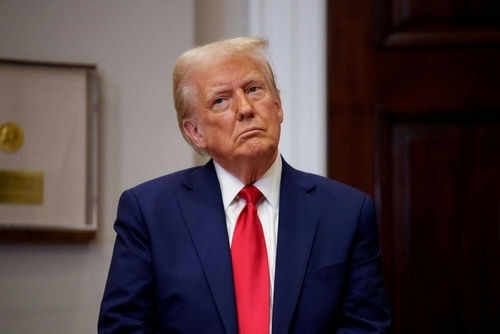
President Trump’s off-the-cuff talk about “taking” or “freeing” Cuba has jolted Havana—and it’s forcing Americans to ask what U.S. power should look like just 90 miles from Florida.
Quick Take
- President Trump said Cuba “looks like it’s ready to fall,” tying the island’s instability to the collapse of Venezuelan support after the U.S. captured Nicolás Maduro.
- Secretary of State Marco Rubio warned Cuba’s leadership to be “concerned,” arguing the system “doesn’t work” and that the country needs “new people in charge.”
- The White House issued an order declaring a national emergency related to threats posed by Cuba’s government, citing hostile foreign ties and “malign actions.”
- Cuba confirmed contacts with U.S. officials, signaling talks may be underway even as public rhetoric escalates.
Trump’s Cuba Remarks Land After Venezuela’s Shock Operation
President Trump’s Cuba comments arrived immediately after a dramatic turning point in the region: a rapid U.S. operation in Venezuela that resulted in the capture of President Nicolás Maduro. Multiple reports tied that episode to Cuba directly, noting that dozens of Cubans were killed while protecting Maduro and that Havana entered a period of official mourning. Trump then told reporters Cuba “looks like it’s ready to fall,” pointing to the loss of Venezuelan oil and income that long kept the regime afloat.
Trump’s language has varied from dismissing the need for direct troop action to suggesting sweeping leverage over the island. Later remarks reported from his meeting with Ireland’s prime minister included the claim that Cuba is in “very bad shape” and that action could come “very soon.” The public messaging matters because it shapes expectations in both countries, even while the administration has not announced any formal plan to invade or annex Cuba.
Rubio’s Pressure Campaign Targets a Regime, Not the Cuban People
Secretary of State Marco Rubio, a longtime critic of the Cuban communist system, amplified the pressure by emphasizing the regime’s economic dependence and fragility. Reports quoted Rubio arguing that Cuba’s economy “doesn’t work” and saying the island needs “new people in charge,” a clear signal that the administration’s end-state is political change in Havana. The immediate trigger, as described in coverage, is Cuba’s weakening position after Venezuelan subsidies faltered.
The administration’s messaging also intersects with a core U.S. national-security question: hostile foreign presence in America’s near abroad. According to the White House, Cuba’s government has engaged in “malign actions” and maintains relationships that can threaten the United States, including foreign military and intelligence ties. For many conservative voters who watched the previous era of soft rhetoric toward adversaries, the sharper posture reads like a course correction—so long as it stays anchored in law and clear objectives.
National Emergency Declaration Raises Stakes—and Constitutional Questions
The White House order declaring a national emergency related to Cuba is more than symbolism. Emergency authorities can unlock sanctions, financial restrictions, and enforcement tools that bypass the slow churn of normal rulemaking. Supporters argue that adversarial basing, intelligence collection, and destabilizing activity in the hemisphere justify a hard line. Critics, including some in Congress, have raised concerns in past debates about executive power and war-making, especially if rhetoric drifts toward unilateral military action.
No evidence confirms an invasion decision, troop deployment order, or a timeline for kinetic operations. The public record instead shows competing signals: Trump downplaying the need for direct action at one point, then suggesting he could “do anything” later. Conservatives who care about constitutional guardrails can reasonably separate two issues: using lawful economic and diplomatic pressure against a hostile regime, and launching major military action without congressional authorization.
Havana’s “Resistance” Talk Meets Blackouts, Oil Shortfalls, and Uncertainty
Cuba’s leadership has responded with defiance, and coverage describes warnings of “resistance” as the island braces for sharper U.S. pressure. The internal stress is real: reports described deepening energy problems, including island-wide blackouts, at the same time Cuba lost reliable Venezuelan support. The situation highlights how dependent communist systems become on external lifelines—and how quickly ordinary people suffer when a centralized economy can’t keep lights on or fuel flowing.
Cuba also sits at a strategic crossroads for America. Its proximity to Florida makes any instability—mass migration, covert activity, or foreign intelligence operations—impossible to ignore. That proximity is why talk of the Monroe Doctrine has resurfaced in reporting, framing Cuba not as a distant issue but as part of hemisphere security. Still, the research available does not include verbatim remarks from Cuba’s president beyond the general characterization of “resistance,” limiting how precisely that response can be evaluated.
Talks Confirmed, But “Taking Cuba” Remains Rhetoric—For Now
One of the most consequential developments is the quietest: Cuba confirmed that its government has had contacts with U.S. officials. That suggests the administration may be exploring outcomes short of invasion, including negotiated changes, security assurances, or phased pressure tied to reforms. Bloomberg Government reporting framed Trump’s approach as potentially making the United States a “patron” of the island—language that implies heavy influence rather than immediate occupation or annexation.
For Americans frustrated by years of globalist double standards—where adversaries test the U.S. while Washington hesitates—the Cuba story is a reminder that strength and clarity deter escalation. At the same time, conservatives should insist that any major action stays consistent with the Constitution, protects U.S. citizens first, and avoids open-ended nation-building. The most defensible path, based on what’s documented so far, is rigorous pressure on hostile state behavior paired with a realistic plan for what comes next.
Sources:
https://www.opb.org/article/2026/01/05/cuba-braces-as-trump-revives-monroe-doctrine/