Iran tried to bully the Gulf with missiles and drones—yet Saudi Arabia says the pressure campaign has only hardened the region against Tehran.
Quick Take
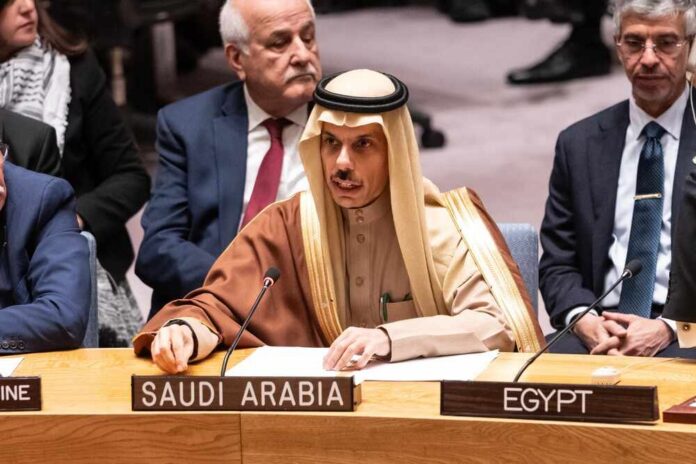
- Saudi Foreign Minister Prince Faisal bin Farhan said trust with Iran has been “completely shattered” after strikes on Gulf states and energy sites.
- Iran launched ballistic missiles toward Riyadh during a regional foreign ministers’ meeting; Saudi defenses intercepted the attack, with debris reported to have injured people.
- Saudi Arabia warned Iran that “pressure will backfire” and signaled it could consider military options after diplomatic avenues are exhausted.
- Gulf governments stressed they are not seeking a wider war, but argued Iran is targeting civilian life and critical infrastructure anyway.
Riyadh Meeting Targeted as Saudi Air Defenses Intercept Missiles
Saudi officials said Iran fired four ballistic missiles toward Riyadh on March 19 as regional foreign ministers gathered in the capital, forcing a real-time test of air defenses over a major city. Reports said the missiles were intercepted, but falling debris injured people, underscoring how quickly a “contained” conflict can spill into civilian areas. Saudi Arabia also faced attempted drone attacks against an eastern gas facility the same night.
Prince Faisal bin Farhan addressed the attacks after the meeting, arguing that Tehran’s coercion is counterproductive. He said Iran’s “pressure will backfire” and described a broad menu of possible responses—political, economic, and diplomatic—while also stating Saudi Arabia retains the right to take military action if needed after exhausting other paths. The comments framed the strikes as an assault on sovereignty, not a negotiable message.
Energy Sites and Civilians Pulled Into a War Gulf States Say They Didn’t Choose
Reporting from multiple outlets described strikes and attempted strikes across the Gulf region, including Qatar’s Ras Laffan industrial complex, facilities in the UAE, Saudi gas infrastructure, and the Samref refinery at Yanbu. The pattern matters because energy installations and related desalination systems are not abstract targets; they touch electricity, water, transportation, and household stability. Even limited disruptions can ripple into global markets, raising the stakes far beyond the immediate battlefield.
Gulf states have emphasized neutrality in the broader U.S.-Iran conflict and said their territories should not be treated as legitimate pressure points. That claim is complicated by the presence of U.S. bases in the region, but the stated Gulf position remains that facilities are defensive and that they are not volunteering to become launchpads for attacks. The practical question now is whether Iran accepts that separation—or continues striking neighbors it views as aligned with Washington.
“Trust Completely Shattered”: Saudi Messaging Signals a Harder Line After Détente
Saudi-Iran tensions have ebbed and surged for decades, driven by sectarian rivalry, proxy conflicts, and competing regional ambitions since the 1979 Iranian revolution. A 2023 China-brokered thaw created at least the appearance of a path back to managed coexistence. Prince Faisal’s description of trust being “completely shattered” signals how far the current escalation has pushed the relationship away from that track, and how difficult repair could become.
One reason the Saudi warning landed forcefully is the scale described in recent reporting: Iran has launched thousands of missiles and drones since late February, and more than 20 people have reportedly been killed, largely among security forces and foreign workers. Iran has claimed it is focusing on U.S. or military-linked targets, but Gulf officials and regional ministers pointed to civilian harm and infrastructure strikes as evidence the reality is messier—and more dangerous.
What This Means for U.S. Interests Under Trump: Deterrence, Stability, and Supply Lines
For Americans watching from afar, the immediate issue is not partisan theater overseas—it is how fast regional disorder can threaten supply chains and energy prices at home. When missiles fly at capitals and refineries, markets react, insurers raise costs, shipping patterns change, and consumers feel it. Saudi officials have argued Iran’s tactics are meant to intimidate, but the emerging effect appears to be tighter Gulf coordination and louder assertions of self-defense under international law.
There are still important unknowns. Reporting indicates Saudi Arabia has not launched counterattacks yet, and officials have stressed diplomacy while warning patience is not unlimited. Injury counts and damage details have varied across accounts, and Iran’s intent remains contested. What is clear is that targeting a diplomatic gathering in Riyadh—while simultaneously pressuring multiple Gulf energy sites—has strengthened the case that Tehran’s escalation is isolating it rather than forcing concessions.
Saudi Arabia’s message, delivered with unusually blunt language, is that intimidation will not rebuild leverage—it will destroy what remains of trust. Whether that produces de-escalation or a broader confrontation now depends on choices in Tehran and the region’s willingness to enforce red lines. For U.S. policymakers in 2026, the test will be combining deterrence with strategic restraint, while keeping American families insulated from yet another overseas crisis-driven price spike.
Sources:
Saudi Arabia Issues Stern Warning to Iran After Missile Attack on Riyadh
Saudi Arabia Says Trust with Iran ‘Completely Shattered’ by Attacks on Gulf States
The Jerusalem Post – Iran News (article-890485)