The Supreme Court just refused to stop California’s new congressional map—yet a stack of pending election-law cases could still rewrite the rules of political power heading into the 2026 midterms.
Quick Take
- The Supreme Court declined an emergency request to block California’s new congressional map, allowing it to be used for the 2026 cycle.
- Republicans argue the map is an unconstitutional racial gerrymander; Democrats say it is a political counterpunch to Texas redistricting.
- Separate Supreme Court cases on party fundraising and ad coordination could shift money and influence between parties, super PACs, and big donors.
- Voting Rights Act disputes in the Court could alter how minority-opportunity districts are drawn nationwide.
Supreme Court leaves California’s map in place—for now
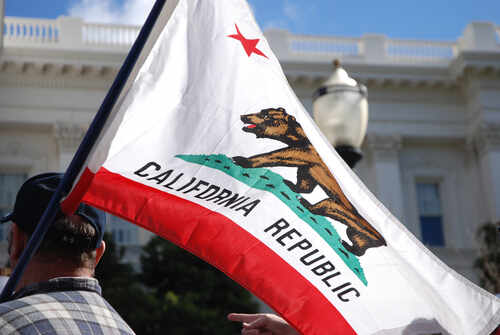
On February 5, 2026, the Supreme Court denied an emergency bid to block California’s new congressional map, meaning it can be used for this year’s primary and midterm elections. The dispute grew out of a tit-for-tat redistricting escalation after Texas adopted a GOP-friendly map and California voters approved Proposition 50 to temporarily replace the state’s map. The immediate effect is procedural stability, not final resolution.
California Republicans challenged the map as a racial gerrymander, while state officials and Democrats framed the design as political—an attempt to offset Republican gains elsewhere. The Court’s order did not settle the underlying constitutional questions, it simply refused to intervene on an emergency basis. For conservatives who already distrust political gamesmanship, the bigger story is that election rules are being contested in court at the exact moment voters are also demanding accountability.
The key legal fault line: race, politics, and what courts will police
Partisan gerrymandering claims have largely been pushed out of federal courts since the Supreme Court held such disputes are non-justiciable. That reality encourages both parties to get more creative—especially when a map can be defended as “political” while opponents argue it crossed the line into racial sorting. Several justices signaled skepticism about the motivations behind California’s approach, describing it as raw partisan advantage, even as the map survived the emergency challenge.
The practical consequence is that both sides are treating redistricting less like a once-a-decade civic process and more like a rolling campaign tactic. That should bother any voter who wants representation to be earned rather than engineered. The Constitution does not promise partisan “fairness,” but it does require equal protection. The more lawmakers treat demographic categories as levers, the more courts will be pulled into disputes that voters never asked judges to referee.
A campaign-finance ruling could reshape who controls election messaging
Another Supreme Court fight could matter just as much as map lines: party fundraising and the legal boundaries between party committees and outside spending groups. A major case challenges limits tied to coordination and spending rules, with potential outcomes that could shift how campaigns buy advertising and move money. Reporting indicates both parties are preparing for scenarios where party committees gain new freedom, potentially changing the balance between party operations and super PAC ecosystems.
The Trump-Vance administration’s posture in related litigation has also drawn attention because federal choices about whether to defend certain election laws can influence what arguments reach the Court and how quickly disputes mature. For conservative voters already frustrated by runaway spending and an election system that feels built for consultants, the core concern is accountability: when money flows through complex structures, it becomes harder to know who is really speaking and who is really calling the shots.
Voting Rights Act cases could change how districts are built nationwide
Separate cases tied to the Voting Rights Act, especially legal tests around minority-opportunity districts, could also change the playing field before the 2026 results are even counted. Coverage of the Court’s docket suggests skepticism among conservative justices during arguments about how far federal law should go in requiring particular district outcomes. A ruling that narrows certain interpretations would ripple across states and could reduce litigation leverage used to force map redraws.
That debate isn’t abstract; it affects whether elections are decided by voters or by courtroom standards that shift every cycle. Conservatives generally favor clear rules, federalism, and limits on Washington-driven social engineering. At the same time, Americans across the spectrum want elections that are transparent and legitimate. The unresolved tension is that both parties keep reaching for legal edge cases to lock in power—while voters, facing high costs and an overseas war, are increasingly asking why politics at home still looks like a permanent power struggle.
Sources:
Supreme Court lets California use its new congressional map
2026 elections party fundraising ad spending
California Democrats convention 2026 primary
People’s Guide: SCOTUS 2025-2026
Three Supreme Court cases that could reshape politics in 2026
Legal questions that will shape democracy in 2026
State Supreme Court races to watch in 2026
How does the Citizens United decision still affect us? (2026)