A Planned Parenthood-aligned Democrat just locked down a deep-blue Illinois House seat after a super PAC-soaked primary—showing how the Left’s money machine can decide “representation” long before November.
Story Snapshot
- Cook County Commissioner Donna Miller won the March 17, 2026 Democratic primary for Illinois’ 2nd Congressional District, beating former Rep. Jesse Jackson Jr. and a crowded 10-candidate field.
- Reports cited Miller’s fundraising advantage, with figures differing between FEC-reported totals and broader estimates that include outside super PAC spending.
- Miller previously served on the Planned Parenthood of Illinois board and campaigned heavily on healthcare, reproductive rights, and maternal health.
- The seat opened after Rep. Robin Kelly launched a U.S. Senate bid; the district has been a Democratic stronghold for decades, making the primary the main contest.
Miller’s Win Shows Where Power Really Sits in a “Safe” Seat
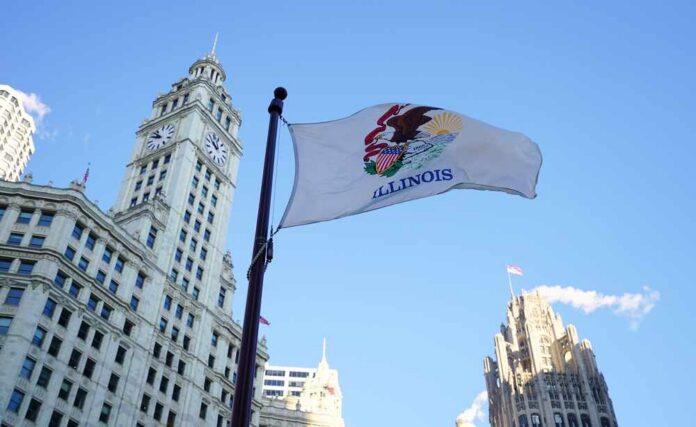
Cook County Commissioner Donna Miller won the Democratic primary for Illinois’ 2nd Congressional District on March 17, 2026, defeating former U.S. Rep. Jesse Jackson Jr. and multiple other Democrats in a 10-candidate race. Media reports put Miller around 41% and Jackson Jr. around 29%, a decisive margin in a fragmented field. Because the district has been reliably Democratic for decades, the primary outcome effectively set the district’s next member of Congress.
Rep. Robin Kelly’s decision to run for U.S. Senate created the opening, drawing a large roster of contenders and intensifying the fight for donors and endorsements. Miller’s campaign emphasized kitchen-table healthcare issues, including affordability and maternal health, while also centering “reproductive rights.” That platform matters because it signals the policy direction the district’s next representative is likely to pursue in Washington, especially on social issues that divide the country sharply.
Fundraising Numbers Don’t Match—But the Outside-Money Story Is Clear
Reporting on Miller’s financial advantage showed a key uncertainty: the size of her war chest depends on whether you count only campaign fundraising totals or add outside spending. One figure cited about $1.9 million in FEC-related fundraising, while other coverage described more than $4 million when including super PAC activity believed to be linked to a pro-Israel AIPAC-aligned group. Those aren’t the same buckets, and voters are left with a familiar takeaway: influence often travels through channels that are legal yet hard to track.
Even without perfect agreement on the dollar figure, multiple accounts pointed to the same dynamic—big spending shaped the field. In a 10-way contest, heavy outside advertising and late money can push one candidate above the pack while opponents split the rest. For conservatives who have watched “grassroots democracy” rhetoric collide with the reality of donor-driven politics, this race fits the pattern: a safe-seat primary becomes the real election, and the loudest megaphone often belongs to whoever can finance it.
Planned Parenthood Ties Define the Policy Direction Voters Can Expect
Miller’s background includes service on the Planned Parenthood of Illinois board, a fact highlighted prominently in coverage. Her campaign message also leaned into reproductive-rights language, alongside broader healthcare themes. For many conservative voters, Planned Parenthood is not a neutral healthcare provider but a political institution at the center of America’s abortion fight. In a district where the Democratic primary is effectively decisive, those ties are a strong indicator of what kind of votes and priorities will show up in Congress.
At the same time, the local-government résumé mattered. Miller has served as a Cook County commissioner, a role tied to the governance of a county with millions of residents and a large budget. Her pitch to voters, as reported, framed her as a working official focused on the district’s needs rather than a comeback candidate. That contrast likely mattered against Jackson Jr., whose name recognition is high but whose prior congressional career ended with a 2012 resignation amid federal corruption charges and personal turmoil.
Jackson Jr.’s Comeback Fell Short, and the General Election Looks Lopsided
Jesse Jackson Jr. attempted a return to politics in a district long associated with Democratic machines and legacy names, but the primary result showed that recognition alone was not enough. Coverage described his campaign as a comeback bid following his resignation from Congress in 2012. Miller’s win, paired with her fundraising edge and local record, suggests that Democratic primary voters prioritized a candidate positioned to consolidate establishment support and outside spending in a crowded race.
Next comes the general election against Republican nominee Mike Noack, described as a truck driver who was unopposed in the GOP primary. With the district’s long-standing partisan history—often summarized as a Democratic lock—the November contest is widely expected to favor the Democratic nominee, even if final margins cannot be guaranteed months out. For conservatives, the bigger lesson is structural: in deep-blue districts, policy is frequently decided in primaries dominated by activist factions and major donors, not broad general-election electorates.
Limited public details leave important questions unanswered, including how much outside money ultimately moved the vote and which messages drove late-deciding voters. What is clear is that Miller’s victory places a Planned Parenthood-aligned, healthcare-first Democrat on track to succeed Kelly in a seat where the primary routinely carries more consequence than November. In a national environment where Americans are demanding accountability and constitutional restraint, this race highlights how insulated “safe” districts can become from wider voter concerns.
Sources:
Ex-Planned Parenthood board member beats out former congressman, state senator
Miller, Murphy, McCaskill top local Democratic primary races