President Trump has declared a national emergency on Cuba and unleashed a groundbreaking tariff weapon targeting third-party oil suppliers, but critics warn this aggressive move—while promising—still falls short of dismantling the communist regime’s entrenched power structure that has oppressed the Cuban people for over six decades.
Story Highlights
- Trump signed an executive order on January 29, 2026, declaring Cuba’s communist regime an “unusual and extraordinary threat” to U.S. national security
- New tariff framework targets countries supplying oil to Cuba, expanding sanctions beyond traditional embargo measures for the first time
- Cuba hosts Russia’s largest overseas intelligence facility targeting America, plus Chinese military assets and safe havens for Hamas and Hezbollah terrorists
- Administration critics argue removing Cuba’s dictator alone won’t fix systemic corruption without comprehensive structural reforms to liberate the Cuban people
Trump Declares National Emergency and Activates Tariff Powers
President Trump invoked emergency powers under the International Emergency Economic Powers Act on January 29, 2026, formally designating the Cuban government as a national security threat. The executive order empowers the Secretaries of State and Commerce to impose tariffs on any country providing oil to Cuba, whether directly or through intermediaries. This unprecedented mechanism became effective January 30, 2026, marking the first time U.S. sanctions have targeted third-party suppliers rather than Cuba itself. The move reverses the Obama administration’s failed appeasement policies that delivered zero democratic reforms while enriching the Castro regime.
Cuba’s Dangerous Alliance With America’s Enemies
The White House fact sheet released alongside the executive order details Cuba’s alarming partnerships with hostile foreign powers. The island nation hosts Russia’s largest signals intelligence facility outside Russian territory, actively spying on American communications and military operations. Cuban territory also provides sanctuary for Chinese intelligence and defense operations, plus safe havens for Hamas and Hezbollah terrorists. These relationships directly threaten American national security while the regime brutally represses its own citizens who dare demand basic freedoms. Cuba has remained on the State Sponsors of Terrorism list due to its refusal to cooperate with U.S. law enforcement and its continued support for destabilizing activities throughout the Western Hemisphere.
Economic Pressure Strategy Targets Regime Lifeline
The tariff framework creates immediate consequences for nations fueling Cuba’s oppressive machinery through oil sales. Companies involved in oil supply chains face potential duties on unrelated imports to the United States, dramatically expanding the economic pressure beyond traditional OFAC restrictions. Legal experts at Greenberg Traurig describe this as a novel application of emergency powers that forces global energy suppliers to choose between Cuban business and American market access. Short-term impacts include heightened scrutiny of international oil transactions, while long-term effects could strangle the regime’s ability to maintain its military and security apparatus. This economic warfare tactic builds on Trump’s successful pattern of holding dictators accountable, following his decisive actions against Iran and Venezuela’s Maduro regime.
Leadership Change Alone Won’t Liberate Cuba
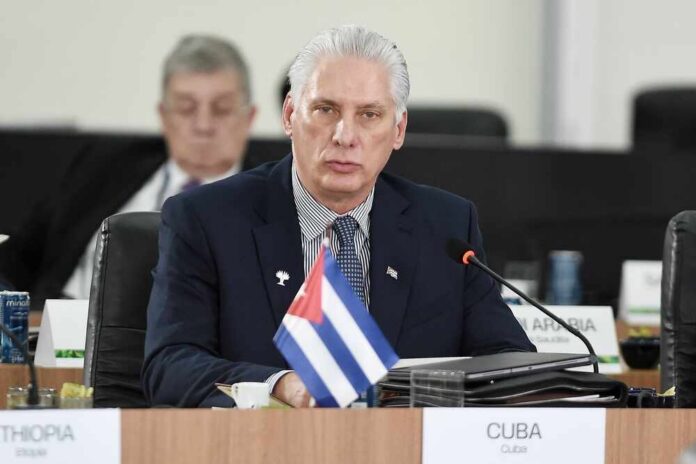
While Trump’s aggressive stance represents a welcome departure from decades of weak-kneed diplomacy, replacing Cuba’s current dictator Miguel Díaz-Canel addresses only the symptom, not the disease. The communist system itself—built on confiscated property, political prisoners, and suppressed free enterprise—requires complete dismantling to give Cubans genuine liberty. The administration’s strategy aims to support the Cuban people’s democratic aspirations through economic isolation, but without comprehensive plans for post-regime governance and constitutional protections, regime change risks simply shuffling the same corrupt elites into new positions. Trump’s first-term reversal of Obama’s one-sided concessions demonstrated proper resolve, yet sustainable freedom demands institution-building that protects individual rights and private property—principles conservatives understand are foundations of prosperity, not luxuries granted by governments.
The national emergency declaration represents the firmest U.S. posture toward Cuba in decades, signaling to Russia, China, and terrorist organizations that American soil will no longer tolerate threats ninety miles from Florida. As the Secretaries of State and Commerce develop implementation guidance for the tariff system, businesses must assess their exposure to Cuban oil supply chains or face significant financial consequences. The president retains authority to modify measures based on regime compliance, creating potential leverage for negotiations. However, history shows communist dictatorships rarely reform voluntarily, making this economic pressure a long-term commitment requiring sustained resolve beyond symbolic gestures or rhetorical victories.
Sources:
US Declares National Emergency on Cuba and Announces Tariff Framework Targeting Oil Suppliers
Addressing Threats to the United States by the Government of Cuba