After years of Washington “green” spending promises, taxpayers are now staring at a hard question: who gets held accountable when $159 million goes to a foreign EV bus company that stops building buses?
Quick Take
- The Biden EPA awarded roughly $159 million to Canada-based Lion Electric to build 435 electric school buses, but the company later entered bankruptcy and halted production.
- Fifty-five U.S. school districts are left in limbo with about $95 million in undelivered bus orders tied to the federal program.
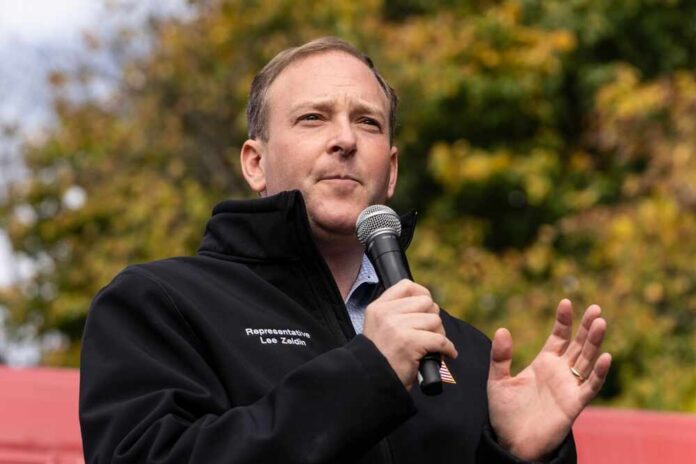
- Trump EPA Administrator Lee Zeldin is using the Lion case to argue Biden-era climate spending moved too fast and with too little oversight.
- Zeldin’s broader push to claw back $20 billion from the Greenhouse Gas Reduction Fund faces legal and procedural hurdles, with courts and prosecutors cited as unconvinced by wrongdoing claims.
A $159 Million “Clean Bus” Bet That Isn’t Delivering Buses
The EPA’s Clean School Bus program, created under Democrats’ 2021 infrastructure law, aimed to replace diesel buses with electric models using federal money. Lion Electric, a Canadian manufacturer, became one of the program’s biggest winners, receiving about $82.7 million in October 2022 and reaching a total of $159 million in awards through May 2024. The payoff was supposed to be 435 buses for districts nationwide, but Lion later moved into bankruptcy proceedings and stopped manufacturing.
Lion’s collapse did not happen in a vacuum. Reporting described the company as struggling financially even before the first major award, including a reported $17.2 million loss in the quarter preceding the initial funding. Beyond losses, Lion faced scrutiny over financial disclosures and a later investor lawsuit alleging misleading projections and withheld supply-chain problems. When a grant process sends large sums to a company already showing warning signs, taxpayers aren’t “anti-clean” for demanding tighter vetting.
School Districts Left Holding the Bag While Bureaucrats Move On
When Washington writes checks, local communities often live with the consequences. The reporting says 55 school districts across states including California, Montana, North Dakota, Iowa, Alabama, Maryland, and Illinois are affected, with about $95 million in promised deliveries now uncertain. A superintendent in Illinois said the district was contacting Lion and the EPA to “explore available options moving forward.” That’s polite bureaucratic language for a real operational problem: routes, maintenance plans, and budgets built around buses that may never arrive.
For conservative voters who have watched inflation eat paychecks and watched federal “investments” rack up debt, this is the part that stings. A school bus is not an abstract climate symbol; it’s a daily service that has to run on time. The World Resources Institute analysis cited in the reporting underscores how dependent this niche has become on federal funding, with 67 percent of planned electric school buses reportedly funded by the federal government. If the industry can’t stand without constant subsidies, taxpayers deserve honest numbers and timelines.
Zeldin’s Oversight Argument Meets a Complicated Legal Reality
EPA Administrator Lee Zeldin has framed the Lion Electric breakdown as evidence that Biden-era agencies moved money too quickly and without sufficient oversight. Former Trump EPA Administrator Andrew Wheeler similarly said the government had so much money and was trying to move it so fast that corners were likely cut, making bankruptcies unsurprising. The oversight critique is straightforward: when programs prioritize speed and headlines over due diligence, failure isn’t just possible—it becomes predictable.
At the same time, Zeldin’s broader fight over the Greenhouse Gas Reduction Fund shows why accountability in Washington often turns into a legal maze. Zeldin has alleged a $20 billion scheme and moved to reclaim funds routed through “green banks,” but reporting also describes significant legal risk if the government attempts clawbacks without solid justification. A Georgetown law professor warned that abrogating contracts without legal basis can trigger damages, leaving taxpayers paying twice—once for the initial program and again for the lawsuit.
“Gold Bars,” Frozen Funds, and the Question Conservatives Keep Asking
The Greenhouse Gas Reduction Fund dispute has added political heat. Zeldin publicly claimed billions in “gold bars” had been located and described the grantmaking as improper, while other reporting said the administration did not present federal courts with evidence of wrongdoing and that a federal prosecutor resigned rather than pursue what she viewed as an unsubstantiated grand jury investigation. Citibank, acting as a financial agent for the program structure described in reporting, froze access to funds after administration orders, and meetings with grantees were repeatedly rescheduled and canceled.
Lee Zeldin Throws Biden Administration Under the Bus for Sending Millions to Failed Canadian EV Company
https://t.co/3yU1dDlFQ6— Townhall Updates (@TownhallUpdates) March 23, 2026
For a conservative audience—especially those already skeptical of globalism and bureaucratic power—the thread connecting these stories is less about whether electric buses are “good” or “bad” and more about competence, contracts, and constitutional-style governance. Congress can authorize programs, but agencies still owe the public basic safeguards: transparent criteria, enforceable performance milestones, and consequences for failure. The research available doesn’t fully detail EPA’s vetting procedures for Lion, so the strongest conclusion is narrow: when taxpayer-funded projects fail, Washington must show its work.
Sources:
Zeldin’s $20B take-back bid risks plunging EPA into legal peril
EPA Greenhouse Gas Reduction Fund court case
Administrator Zeldin Announces Billions of Dollars’ Worth of “Gold Bars” Have Been Located