A Philadelphia district attorney’s vow to slap federal ICE agents in handcuffs at a major airport is the kind of local-versus-federal showdown that can turn routine travel into a constitutional flashpoint.
Quick Take
- Philadelphia DA Larry Krasner escalated his public campaign against ICE by threatening arrests of federal agents operating at Philadelphia International Airport.
- The Trump administration deployed ICE personnel to airports after a partial DHS shutdown triggered TSA staffing shortages and long security lines.
- Krasner’s comments centered on prosecuting any “crimes” within Philadelphia, but available reporting does not identify specific alleged crimes by ICE agents.
- The standoff highlights a broader sanctuary-city model: local officials using public pressure and legal threats to deter federal immigration enforcement.
Krasner’s Arrest Threat Raises a High-Stakes Federalism Question
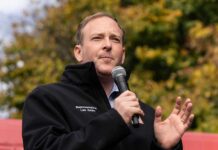
Philadelphia District Attorney Larry Krasner used a March 25 press conference at Philadelphia International Airport to sharpen his message to federal officers: if ICE agents commit crimes in the city, he says his office will prosecute them and, if necessary, jail them. The rhetoric follows earlier remarks in February at an “ICE Out” event, when he used inflammatory language and promised to “hunt” offenders down. The available sources describe threats, not filed charges.
Krasner’s posture matters because it places a local prosecutor squarely in the middle of federal operations at a sensitive location—an airport—where jurisdictional confusion can quickly become operational disruption. Local prosecutors generally do have authority over crimes committed in their jurisdictions, regardless of who commits them. But applying that principle to federal agents acting under federal direction is legally and practically complex, and the reporting does not provide a clear legal roadmap for how such arrests would play out.
DHS Shutdown Fallout: Why ICE Agents Were at Airports in the First Place
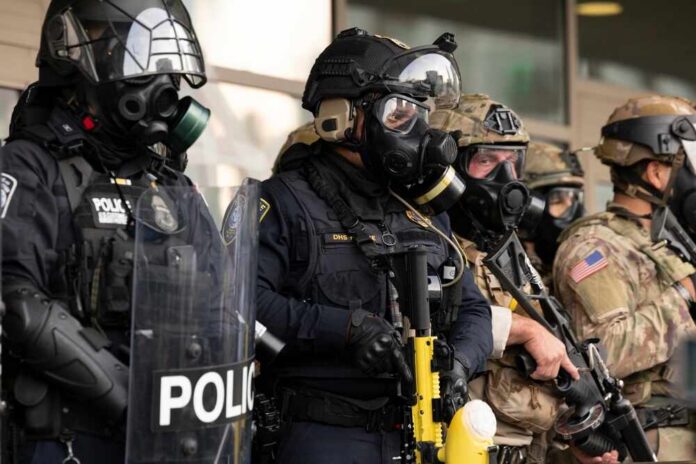
The immediate backdrop is a partial Department of Homeland Security shutdown that began February 14, 2026. With TSA officers working without pay, airports experienced staffing strain, and some travelers faced reported wait times exceeding four hours. In response, President Trump’s administration deployed hundreds of ICE agents to airports nationwide to help relieve pressure during heavy travel periods. That decision also sparked criticism, because ICE officers are primarily trained for immigration enforcement rather than aviation security.
Those practical concerns are not a minor footnote for travelers. Airports run on consistency: clear lines of authority, predictable staffing, and low-friction screening processes. Adding a politically charged federal presence into that system—especially during a shutdown—invites confrontation and delays. The reporting also notes that about 400 TSA officers left the force after the shutdown began, a figure that underscores why the administration leaned on other DHS components to keep screening moving.
From Newark to Philly: Protests Turn Airport Operations Into a Political Stage
The Philadelphia clash did not emerge in isolation. On March 24, travelers confronted unmasked ICE agents at Newark International Liberty Airport, with protesters accusing them of being “Nazis.” That kind of public face-off can create safety risks and bottlenecks in crowded terminals, even when no violence occurs. As of the latest updates in the research, DHS had not publicly commented on the confrontations between travelers and ICE personnel at airports.
For voters already exhausted by government dysfunction, the shutdown-to-airport-chaos pipeline is the bigger story than the shouting match itself. Washington’s failure to keep DHS funded put TSA workers, travelers, and frontline personnel in a pressure cooker. In that context, Krasner’s threat functions as political theater and as a warning shot to federal authorities. But the research provided does not show that any specific misconduct by ICE at the airport triggered his comments.
What Conservatives Should Watch: Enforcement, Due Process, and Local Power Plays
Conservatives who want order at the border and limited government at home are watching two competing realities collide. The first is the need for lawful federal enforcement and continuity of critical infrastructure like airports. The second is the risk that local officials use prosecutorial power—and public threats—to chill federal action without clear underlying allegations. With no identified crimes cited in the reporting, the strongest documented fact here is escalation in rhetoric and the prospect of jurisdictional conflict.
The near-term outcome may be less about courtroom filings and more about whether Philadelphia’s posture encourages copycat resistance in other sanctuary jurisdictions. The research also leaves key questions unanswered: how many ICE agents were deployed to Philadelphia specifically, what their exact duties were at checkpoints, and what operational guidance governed their interactions with travelers. Until more details emerge, the practical takeaway is straightforward: political brinkmanship at airports risks turning everyday security operations into a partisan battleground.