
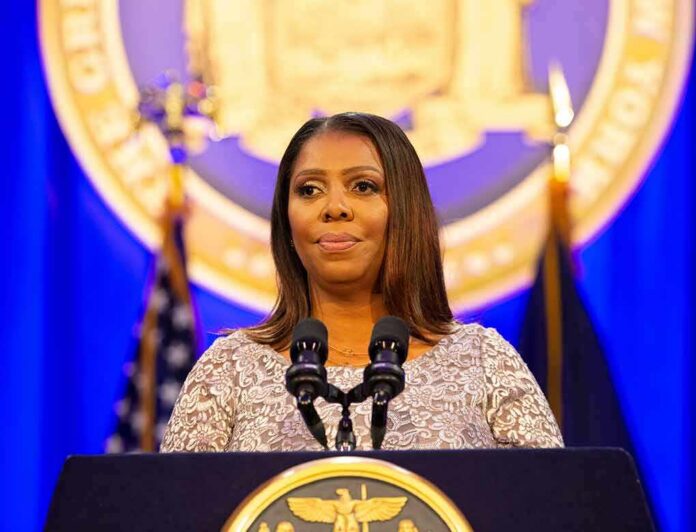
New York’s top prosecutors fell silent when asked if they ordered lighter charges for illegal immigrants to avoid deportation—right after Congress said they did.
Story Highlights
- A House Judiciary Committee report alleges New York City prosecutors tailored charges and pleas to protect noncitizens from removal.
- Letitia James, Melinda Katz, and Eric Gonzalez did not answer when pressed at a Manhattan event about the claim.
- Queens prosecutors later denied leniency on gun cases, saying they charge the highest possible offense.
- The report cites internal guidance urging “immigration‑conscious” outcomes in some offices.
Congressional Report Alleges “Immigration‑Conscious” Charging In New York
The House Judiciary Committee released an interim staff report alleging New York City’s five district attorneys treated noncitizens differently than citizens in criminal cases. The report describes charge reductions and plea deals designed to avoid deportation triggers, including guidance on steering cases to “non‑deportable” outcomes. Committee materials say internal documents from at least two borough offices coached staff on how to limit immigration fallout in case records, including references to firearms, during plea bargaining. Supporters call it accountability; critics see a two‑tiered system.
Committee summaries say the practice went beyond routine discretion. They argue it became policy in some offices, affecting how facts were recorded and which charges were filed. The report links these choices to city and state sanctuary approaches and to decisions to ignore many federal detainers. The committee frames the result as weaker public safety and unequal justice. The report spans about twenty‑two pages and centers on New York City’s elected prosecutors and their offices’ written and verbal guidance to staff.
Pressed On Camera, Top Officials Offer No Direct Answer
New York Attorney General Letitia James, Queens District Attorney Melinda Katz, and Brooklyn District Attorney Eric Gonzalez faced questions at a Manhattan event after the report dropped. Coverage shows the trio did not confirm or deny ordering prosecutors to cut charges to spare noncitizens from deportation. The exchange drew attention because it came at a “gun safety” press setting, where the claims involved alleged soft treatment in serious cases. No immediate detailed rebuttal followed at the microphones that day.
After the event, a Queens District Attorney spokesperson pushed back on one key point. The office said it shows no leniency on gun crimes. The spokesperson stated prosecutors charge any illegal firearm case at the highest level allowed under state law. That statement conflicts with the report’s broader claim that offices guided staff to pursue “immigration‑conscious” outcomes. It does not, however, address other offense types or the report’s examples involving plea records and how facts are described.
How Prosecutorial Discretion Meets Immigration Stakes
Supreme Court guidance in Padilla v. Kentucky told defense lawyers to advise noncitizen clients about deportation risks. That ruling made immigration fallout part of plea talks nationwide. The House report argues some New York prosecutors went further by shaping charges and records to shield defendants from removal, not just weighing fairness. The difference matters. Considering consequences is lawful. Concealing aggravating facts or granting status‑based breaks creates a fairness gap that angers victims and erodes trust.
A former Brooklyn prosecutor quoted in coverage said he treated all defendants fairly with no special deals even if pleas carried immigration consequences. That account underscores a split between individual practice and what the House report describes as office‑level guidance in some boroughs. Fairness means equal rules for everyone. The committee says policies that adjust outcomes based on immigration status betray that standard. The public debate now turns on whether internal guidance crossed that line.
Public Safety, Equal Justice, And What Comes Next
The committee frames the alleged practices as a public safety risk. If charges are softened, records can hide real conduct. Repeat offenders then face weaker penalties, and federal immigration agents lose tools to remove dangerous noncitizens. The report ties this to sanctuary policies and thousands of detainers the city ignored, arguing that crime victims bear the cost. New York leaders dispute the broader “sanctuary breeds crime” claim, but that does not answer the charge‑reduction allegation itself.
TOTAL SILENCE: NYC’S TOP PROSECUTORS ON ILLEGAL IMMIGRANT PLEA DEALS
New York's top law officials refused to answer a question on charge reductions for noncitizens at a g*n seizure event.
⠀
Officials stood together on October 29 to mark the removal of more than 4,500 g*ns from… pic.twitter.com/EJQFUcsvgA— Blue Lives Matter (@bluelivesmtr) October 31, 2026
New Yorkers deserve clear answers. Did offices issue written or verbal guidance to steer charges or records to avoid deportation, and for which crimes? Did any guidance limit references to guns or violence in plea paperwork, and how often? The Queens office’s gun‑crime denial is specific and testable. Officials can publish charging memos and plea templates to confirm it. Transparency is the fastest way to restore trust, protect victims, and ensure one standard of justice for every defendant.
Sources:
wfin.com, townhall.com, judiciary.house.gov, voz.us, us.headtopics.com