
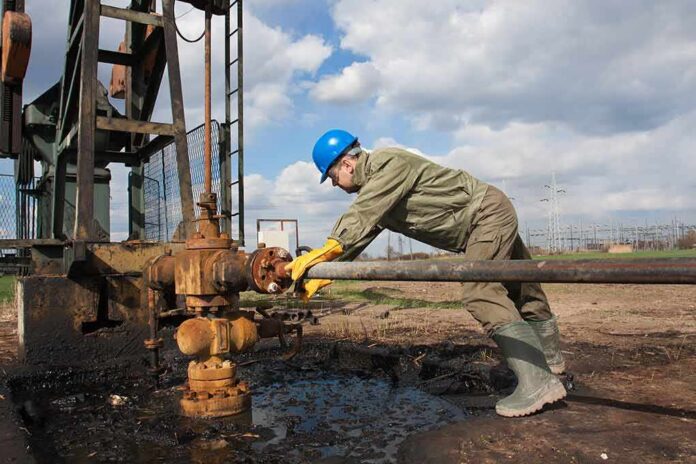
A guard unit shut a key Libyan pipeline valve, halting three oil sites and risking wider supply shocks, Libya’s state oil company says.
Story Snapshot
- Libya’s National Oil Corporation reported an illegal valve closure that stopped three oil sites.
- The company warned it may declare force majeure if shutdowns persist.
- Protesting guards tied actions to pay and conditions, and threatened more cuts.
- Repeated Libyan shutdowns show a pattern of oil used as leverage in disputes.
What Happened: Valve Closure Triggers Field Shutdowns
Libya’s National Oil Corporation said members of the security force assigned to protect oil facilities closed a valve on the Hamada to Zawiya crude pipeline. The company said the action stopped operations at multiple sites and caused pressure spikes along the line. The company called the closure illegal and warned of damage risk. The halt fits a history of targeted pipeline disruptions that quickly ripple through Libya’s output and shipping chain.
National Oil Corporation officials stated the shutdown “completely halted” operations at impacted fields and a pumping station tied to the line. The company said it could invoke force majeure if the stoppage continues or spreads. A force majeure notice would shield the company from delivery claims while sites remain unsafe or blocked. Past cases show such notices often follow sudden closures of valves or access points on this corridor.
Who Closed It and Why: Guards Cite Pay Disputes, Threaten Escalation
Members of the Petroleum Facilities Guard linked the action to long-running disputes over pay, benefits, and working conditions. Reports quoted guards who warned of partial production cuts for a week and a full shutdown if demands were not met. Some guard statements described closures as a last resort after talks failed. Separate reports show guard units have coordinated similar protests before and pledged step-by-step closures to widen pressure on authorities.
Not all guard voices backed the stoppage. A statement carried by Libyan media urged protesters to end the siege and said such acts were illegal. That split highlights the messy chain of command inside Libya’s security landscape. It also explains why closures can happen fast and end just as quickly after new deals, while the legal status of the acts remains contested by state bodies responsible for energy and security.
Why It Matters for American Drivers and Energy Security
World oil prices move on fear as much as barrels. Disruptions in Libya can tighten supplies into the Mediterranean and beyond. Even when global output looks steady, traders bake in risk from sudden North African outages. That risk shows up at the pump. American families have lived through price spikes driven by far-off unrest. Stable supply chains matter. Illegal shutdowns in Libya raise costs and reward chaos—two things that hurt working people first.
Energy policy at home can blunt these shocks. Strong domestic production, real pipeline capacity, and fewer anti-drilling rules keep our market steady when foreign sources wobble. President Trump’s focus on American energy strength aims to shield families from turmoil overseas. Every time a valve turns off in Libya, it reminds us why our own oil and gas backbone must stay strong, modern, and open for business.
Pattern, Not a One-Off: Libya’s Recurring Oil Leverage
Since 2011, Libya’s oil sector has seen repeated shutdowns where pipelines, ports, or fields get used as bargaining chips in budget, salary, or political fights. Analysts and reporters have tracked cycles of closures, quick force majeure warnings, and then short-lived deals that restart flows until the next standoff. The current Hamada to Zawiya disruption follows that playbook, including the threat of wider cuts to raise leverage on the central government.
▫️🇱🇾 Libya Oil Production Holds Steady Despite Protests at Oil Facilities▫️
🛢️ Production remains around 1.4 million barrels per day: National Oil Corporation Chairman Massoud Suleman told Reuters that Libya’s overall oil output has not been greatly affected by the disruptions…
— Washington Report (@Washington_Rep) September 15, 2026
In earlier years, similar valve closures shut key fields and pushed the National Oil Corporation to suspend exports. The repetition tells markets to expect more of the same. That expectation lifts risk premiums and can nudge prices higher even without a large volume loss. For American consumers, that means foreign political stalls can seep into household budgets unless the United States stays energy dominant and unafraid to keep our own production strong.
Bottom Line for Readers
Libyan guards shut a pipeline valve and stopped three oil sites, and the state oil company called it illegal and raised force majeure risk. Guard factions said they acted over pay issues and threatened more cuts if demands were not met. The event fits a long pattern where Libya’s oil becomes a pressure tool in local disputes. For Americans, this is a fresh warning: foreign instability reaches your gas bill unless the United States keeps a strong, reliable energy base at home.
Sources:
reuters.com, middleeastmonitor.com, spglobal.com, news.sbs.co.kr, devdiscourse.com