
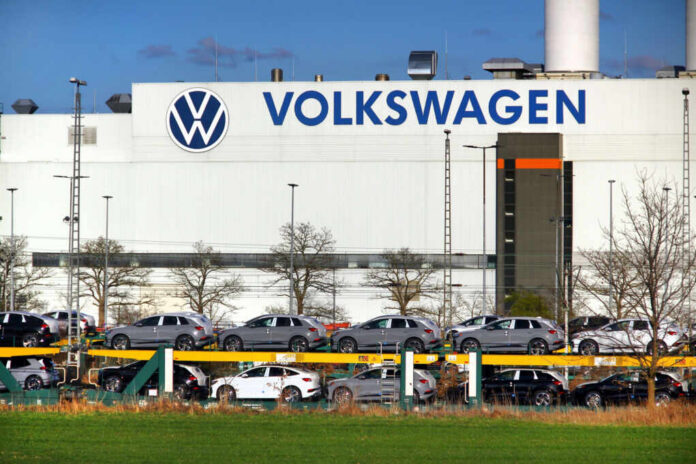
Europe’s biggest carmakers want a “Made in Europe” rule that could reshape global auto trade and squeeze out rivals from China.
Story Snapshot
- Volkswagen, Stellantis, and Renault push the European Union to reward cars with 70% Europe-made content [2].
- Automakers say the rule would secure supply chains and cut import dependence during the electric shift [2].
- The European Commission backs battery production and cost-cutting but has not endorsed a 70% mandate [4].
- Analysts warn legal and cost risks could hit consumers and smaller firms across the bloc [4].
EU Automakers Demand Local-Content Rewards
Volkswagen, Stellantis, and Renault asked European lawmakers for a “simple ‘Made in Europe’ rule” tied to a clear yardstick. They want seventy percent of a car’s value to come from the twenty seven member states for seventy percent of sales, according to reporting on a joint letter. The companies account for about sixty percent of Europe’s car output, giving the request major weight [2]. The move comes as Chinese brands gain ground in electric vehicles and undercut prices across Europe.
The automakers frame the plan as resilience, not protection. They say local content will strengthen supply chains and lower reliance on imports during a fast technology shift [2]. They also argue the standard must be easy to verify across the bloc. Volkswagen has said a credible “Made in Europe” label must be simple, attainable, and consistent. That push lines up with the industry’s wish to keep more value at home as batteries, chips, and software drive costs [5].
Brussels’ Current Path: Batteries, Flexibility, Lower Red Tape
The European Commission launched an Automotive Package that aims to boost competitiveness without a hard content mandate. The plan highlights an “EU made battery value chain,” lighter paperwork, and lower costs for producers. It also speaks of strategic independence, climate goals, and more flexibility for manufacturers [4]. The package includes a Battery Booster and financing tools to help expand cell and pack capacity inside Europe, where most imports still come from Asia [4].
This softer approach may reflect legal and market limits. A strict local content rule could clash with internal market law or world trade rules, which punish discrimination by origin. The Commission’s focus on neutral tools and investments, rather than quotas, suggests caution about hard thresholds [4]. That path still supports jobs and tech, but avoids rules that could spark trade fights or raise prices for working families already hit by inflation.
Industry Logic Meets Open-Market Tension
Europe’s main car lobby, the European Automobile Manufacturers’ Association, has urged leaders to create more value in Europe and prevent de industrialisation. At the same time, it backs new free trade deals with India and Mercosur to open markets [3]. That mix shows the tension. Local content rewards can anchor factories in the bloc. Free trade can cut tariffs and widen sales. Those goals can fit together, but only if rules avoid punishing efficient parts sourcing that keeps cars affordable.
Reporting on the joint letter says the seventy percent bar would count the full value chain, from engineering to manufacturing [2]. That sweep could burden even European brands that still rely on global suppliers for batteries, power electronics, and software. Costs could rise if firms shift to higher price inputs just to hit the target. The record does not include clear modeling that proves the rule would cut prices or save more jobs than it risks [2]. That gap makes the case harder to sell.
What It Means for American Readers and Energy Costs
American families know what happens when green mandates and complex rules pile up. Prices climb, and choices shrink. Europe’s debate shows that again. Leaders want cleaner cars and strong factories. But the tool they pick matters. Investment in batteries and lower red tape can bring jobs without forcing broad sourcing quotas [4]. Quotas can backfire. They can raise costs, slow innovation, and invite trade blowback that hurts workers on both sides of the ocean.
Automakers Volkswagen, Stellantis and Renault, which account for about 60% of Europe's car output, are urging the EU to adopt a simple ‘Made in Europe’ rule and stronger incentives to boost local production https://t.co/0YLE7wVmAn pic.twitter.com/FRjH9PvJOx
— Reuters (@Reuters) June 12, 2026
For conservatives, the lesson is clear. Support policies that build domestic capacity through energy independence, simpler rules, and fair trade enforcement. Be wary of sweeping content rules that look tough but shift costs to consumers. Europe’s own plan leans toward investment and flexibility, not rigid mandates [4]. If Brussels sticks with that track and demands real transparency from automakers, it can defend industry without punishing drivers. That balance is the common sense path America should back.
Sources:
[2] YouTube – Europe’s top carmakers urge simple ‘Made in Europe’ rules
[3] Web – Europe’s top carmakers urge simple ‘Made in Europe’ rules
[4] Web – Strengthening Europe’s auto industry through innovation, open …
[5] Web – Automotive package – Mobility and Transport – European Commission