Chernobyl’s “no-go zone” is now a living rebuke to the idea that more government management automatically means better outcomes.
Quick Take
- Nearly 40 years after the 1986 Chernobyl disaster, wildlife populations appear robust across the Exclusion Zone, including rare Przewalski’s horses.
- Scientists and reports credit the wildlife rebound largely to the absence of people—less hunting, farming, roads, and development—despite persistent radiation hotspots.
- Evidence comes heavily from camera traps and observations; some experts caution that “thriving” claims can outpace rigorous population surveys.
- The zone remains dangerous for humans and is complicated by war-era militarization, including mines and barriers, even as animals move freely.
Przewalski’s horses show how fast nature fills a vacuum
Ukrainian scientists and recent reporting describe free-ranging herds of Przewalski’s horses—an endangered wild horse native to Mongolia—using abandoned structures for shelter and foraging among overgrown ruins. The horses were introduced in 1998 as a conservation experiment, and while some initially died, survivors adapted and established stable groups. Camera-trap images have become a key window into how these horses behave in a landscape people can’t safely inhabit.
The broader list of animals reported across the Chernobyl Exclusion Zone includes wolves, lynx, moose, red deer, and even brown bears, along with free-roaming dogs descended from abandoned pets. Observers also report hundreds of bird species nesting in the area. The core pattern is consistent across accounts: once the human pressure of agriculture, traffic, logging, and constant disturbance disappeared, habitat returned quickly—turning Soviet-era infrastructure into a kind of unintended wildlife corridor.
Radiation didn’t vanish—humans left, and that changed everything
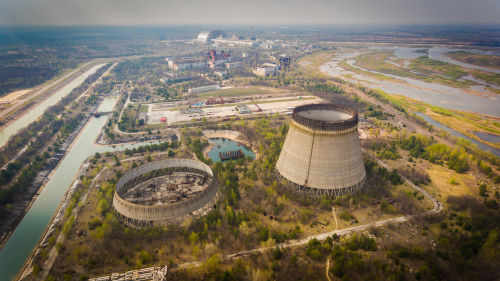
The Exclusion Zone covers roughly 2,600 square kilometers across Ukraine and Belarus and was created after Reactor 4 exploded on April 26, 1986, spreading radioactive contamination across Europe. Hotspots remain, including areas such as the “Red Forest,” where radiation initially killed large stands of pine. The zone is still monitored, and it remains broadly unsafe for permanent human settlement, even as forests, wetlands, and grasslands have reclaimed once-managed land.
For conservatives who distrust grand social engineering, the uncomfortable takeaway is that many ecological “wins” described at Chernobyl didn’t come from careful central planning—they came from simply removing constant human control. That does not make nuclear accidents acceptable, and it does not mean radiation is harmless. It does underscore a recurring policy lesson: when governments and industries make catastrophic errors, ordinary people bear the long tail of risk, while the environment sometimes rebounds in surprising, uneven ways.
“Thriving” is real in places—but the data has limits
Multiple sources agree there has been no obvious, zone-wide collapse of wildlife, and some describe the Exclusion Zone as resembling a pre-human European wilderness. At the same time, scholars and analysts warn that dramatic footage and scattered observations can be mistaken for comprehensive population science. Camera traps are powerful tools, but they don’t automatically answer how many animals exist, whether reproduction is stable across decades, or how contamination affects long-term health in specific subpopulations.
Reports also describe subtle biological effects linked to radiation exposure, including unusual traits seen in some species, alongside claims that major mutations appear rare. That mix is important: the story is not “radiation is fine,” but “life can persist while still paying hidden costs.” Because access and systematic surveying can be difficult, readers should treat headline-level claims with caution and look for repeatable measurements rather than viral clips—especially when outlets frame the zone as “healed.”
War, mines, and governance challenges complicate the “accidental refuge” narrative
The post-2022 war environment added another layer of risk to an already restricted area, with militarization, barriers, and minefields reported in and around parts of the zone. Those conditions can limit scientific work, distort monitoring, and raise the stakes for anyone tasked with radiation management or conservation. Wildlife may still move across the landscape, but the combination of contamination and conflict makes the Exclusion Zone a reminder that government failure can compound over time—first through disaster, then through instability.
WATCH: Animals Are Thriving on Contaminated Land in Chernobyl’s Radioactive Exclusion Zone https://t.co/UqRJvqNjFr #gatewaypundit via @gatewaypundit
— tim fucile (@TimFucile) April 21, 2026
Politically, Chernobyl’s wildlife rebound is being used to tell different stories at once: resilience, cautionary tale, and sometimes propaganda-friendly inspiration. The most defensible conclusion from the current reporting is narrow but meaningful: removing humans reduced many everyday threats—hunting, vehicles, habitat fragmentation—enough that large animals recolonized despite persistent radiation. The harder, unanswered question is what this “success” costs over generations, and whether governments can apply the real lesson—humility, transparency, and long-term accountability—before the next man-made crisis.
Sources:
Chernobyl’s wild revival: rare horses thrive in radioactive exclusion zone
Four Legs Good, Two Legs Bad? Animals Return to the Chernobyl Exclusion Zone
Chernobyl radioactive zone wildlife thriving