Marco Rubio’s promise to “unleash Chiang” on Iran signals a looming surge of U.S.-Israeli airpower—yet the Cold War phrase itself is raising eyebrows even among allies who want Tehran’s missiles stopped.
Quick Take
- Secretary of State Marco Rubio said U.S. strikes on Iran will intensify in the “hours and days” ahead, describing a planned escalation phase.
- Rubio’s targets include Iran’s ballistic missile launchers, production sites, and elements of Iran’s navy, framed as dismantling Tehran’s ability to threaten neighbors.
- The phrase “unleash Chiang” references 1950s U.S. debates about removing restraints to let Chiang Kai-shek attack mainland China—used here as a metaphor for removing limits on offensive action.
- Rubio later emphasized the operation was pre-planned by President Trump, not a reaction to Israel “dragging” the U.S. into conflict.
- An Iranian drone strike near a U.S. consulate area in Dubai was reported with all U.S. personnel accounted for, underscoring retaliation risk.
Rubio’s “Unleash Chiang” Warning: What He Said and What It Signals
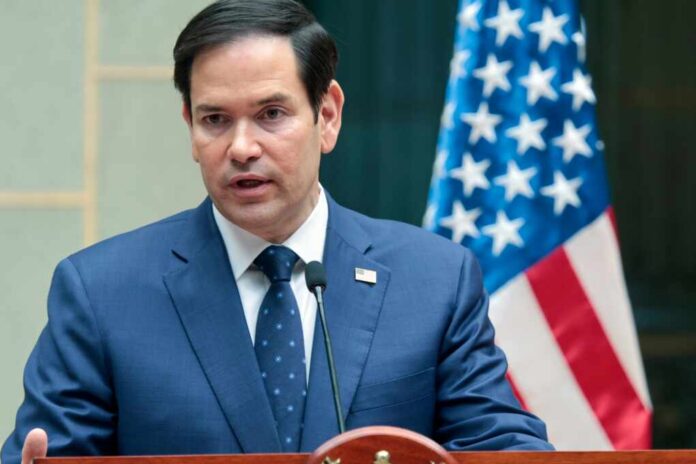
Secretary of State Marco Rubio delivered the headline-grabbing line while previewing congressional briefings alongside Defense Secretary Pete Hegseth, Joint Chiefs Chairman Gen. Dan Caine, and CIA Director John Ratcliffe. Rubio described an imminent escalation of joint U.S.-Israeli strikes aimed at Iran’s ballistic missile program, including launchers and production facilities, and also pointed to actions against Iran’s navy. The stated objective is to strip Tehran of tools used to menace neighbors and deter counterstrikes.
Rubio’s comments landed as the operation moved from an initial strike phase—reported as beginning the prior Saturday—into what officials described as an intensification window. Reports indicated operations were “on or ahead of schedule,” with CENTCOM executing the campaign’s military objectives. While the public language is forceful, the concrete policy question is straightforward: how far the administration plans to go in suppressing Iran’s missile infrastructure and maritime capabilities before deterrence becomes open-ended escalation.
Why This Phrase Matters: The Cold War Reference Behind “Chiang”
“Unleash Chiang” is not a random turn of phrase. It echoes a Cold War-era political argument that the United States should remove constraints—famously involving the U.S. Seventh Fleet in the Taiwan Strait—so Nationalist Chinese leader Chiang Kai-shek could attempt to retake mainland China. In modern terms, it is a metaphor for dropping restraints and applying overwhelming force. Rubio’s choice of words is a rhetorical signal that the administration wants adversaries to believe limits are being removed.
That history also explains the media confusion: the phrase carries baggage from past debates about widening wars and about civil-military strategy during the Truman-MacArthur era. In the Iran context, Rubio appears to be communicating resolve rather than laying out a new doctrine. Still, dramatic language can narrow diplomatic off-ramps, and it can affect how Tehran calculates retaliation. When a senior official uses historic escalation rhetoric, Americans should expect the administration to clearly explain objectives, end states, and oversight to Congress.
Timeline Pressure: Dubai Drone Incident and Risk of Retaliation
Reports on March 3 described an Iranian drone strike near a U.S. consulate area in Dubai, with all U.S. personnel accounted for. That kind of incident illustrates the core short-term risk in any intensifying strike campaign: adversaries look for asymmetric responses that avoid direct battlefield losses while still imposing costs. Even limited attacks can raise the odds of miscalculation, especially when regional partners and U.S. facilities sit within reach of drones and missiles.
Trump’s Framing: Pre-Planned Strikes, Not “Dragged In” by Israel
Another key development was Rubio’s attempt to clarify earlier impressions about why the U.S. launched when it did. Accounts indicated he emphasized the operation was pre-planned by President Donald Trump rather than triggered by Israel’s timeline, and President Trump denied that Israel “dragged” America into war. That distinction matters for constitutional government because it shapes how the public understands accountability: the elected Commander in Chief owns the decision, and Congress is being briefed as the operation expands.
[David Bernstein] Marco Rubio Threatens to "Unleash Chiang" on Iran. What? https://t.co/zi5zvjQmXz
— Volokh Conspiracy (@VolokhC) March 4, 2026
For conservatives who remember years of muddled objectives and elite talking points, the demand now is clarity and measurable outcomes. What is clear is the administration’s stated focus on Iran’s missile “zone of immunity” concept and its strike-and-retaliate cycle. Whether the “unleash Chiang” rhetoric helps deterrence or fuels wider conflict will depend on disciplined targeting, credible end goals, and transparent communication with the American people.
Sources:
“We’re going to unleash Chiang”: Marco Rubio says U.S. to intensify strikes on Iran in coming days
Unleash Chiang meaning explained: What Marco Rubio said about future of US operation against Iran