
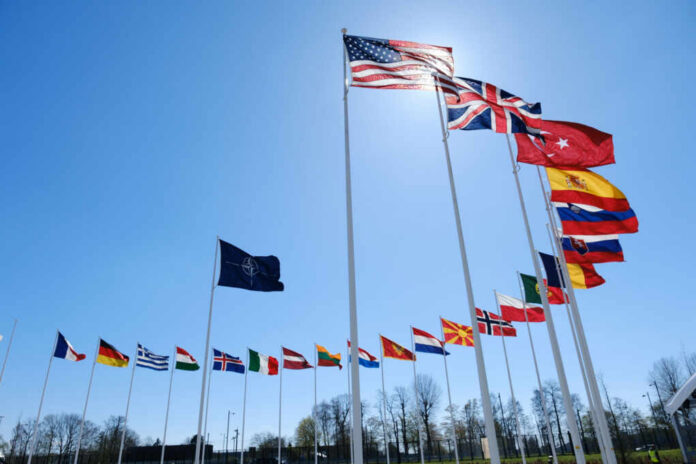
President Trump is warning that America could be left holding the bag in a real war while allies hide behind paperwork and politics.
Quick Take
- President Trump escalated his long-running NATO burden-sharing fight by tying it directly to allies’ limited support during the U.S. war with Iran.
- NATO Secretary-General Mark Rutte publicly acknowledged Trump’s “disappointment,” describing some allies as slow on logistics even as he insisted the alliance remains strong.
- Trump’s rhetoric, including renewed Greenland pressure on Denmark, is raising fresh questions about troop deployments and the long-term credibility of Article 5.
- The core dispute is less about speeches and more about whether U.S. taxpayers should bankroll collective defense when allies hesitate during high-risk operations.
Trump’s NATO message shifts from “pay up” to “show up”
President Donald Trump sharpened his criticism of NATO after an April 8, 2026, White House meeting with Secretary-General Mark Rutte, arguing the alliance failed to materially back the United States during the war against Iran. Trump’s public messaging framed the issue as a reliability test, not just a budget debate. By emphasizing wartime support—access, logistics, and operational cooperation—Trump moved the argument from spending targets to whether allies will act when U.S. lives and resources are on the line.
Trump’s complaint lands differently because it comes amid an active conflict rather than a theoretical scenario. Reporting around the dispute describes allies limiting cooperation connected to basing, logistics, and operations near the Strait of Hormuz, areas that become decisive in any sustained Middle East campaign. Trump also publicly labeled NATO “disappointing” and suggested the alliance may not be dependable in the future, language that adds pressure but also injects uncertainty into deterrence—especially for countries that rely heavily on U.S. power.
Rutte concedes slow support while trying to hold the alliance together
Mark Rutte’s posture has been unusually candid for a NATO secretary-general dealing with a combative U.S. president. Rutte acknowledged sensing Trump’s disappointment and described some allies as slow to provide needed support related to the Iran conflict, while also stressing that most allies ultimately complied and that NATO is strengthening. That split message highlights NATO’s core political reality: unity is often achievable, but only after delays shaped by domestic politics, coalition governments, and risk aversion.
Rutte’s balancing act matters because NATO is built on confidence as much as capability. When the U.S. president says allies “weren’t there,” even allies that did contribute face reputational damage, and those that hesitated invite more pressure. For American voters—especially taxpayers already frustrated by inflation, federal overspending, and international commitments—Rutte’s partial concession can look like confirmation that Washington’s demands are not merely rhetorical. For European governments, it underscores the fear that U.S. patience has hardened into conditional support.
Greenland, troop posture, and the leverage politics of an “America First” alliance
The NATO dispute is also entangled with Trump’s renewed pressure on Denmark over Greenland, a separate issue that nonetheless strains alliance cohesion. By referencing Greenland alongside NATO disappointment, Trump signals that security guarantees, basing decisions, and diplomatic goodwill are part of one negotiating environment. That approach fits an “America First” leverage strategy: the United States provides the bulk of credible force, so it expects tangible reciprocity. Critics argue that mixing issues raises stakes; supporters argue it forces overdue clarity.
What changes if Washington repositions forces—or doubts Article 5?
Media coverage has raised the prospect of U.S. troop shifts away from countries viewed as “unhelpful,” and the White House has signaled discussions without announcing a formal withdrawal. Even without leaving NATO, a posture change can reshape European security overnight by altering basing, readiness, and response timelines. For Americans, the central policy question is accountability: does the U.S. maintain expensive deployments when partners hesitate during conflict? For allies, the question is credibility: can they count on U.S. guarantees if political trust erodes.
The immediate outcome remains unsettled because key details—such as the exact scope of allied noncooperation and any specific U.S. redeployment decisions—have not been publicly finalized. What is clear is the political direction: Trump is treating alliance commitments as transactional and performance-based, especially during wartime. That stance resonates with voters tired of globalism and endless obligations, but it also exposes a hard truth that frustrates Americans across the spectrum: when government and allied institutions move slowly, ordinary citizens pay first—through risk, taxes, and instability.
Sources:
Trump again berates NATO, calls it “disappointing”
Trump criticizes “disappointing” NATO