
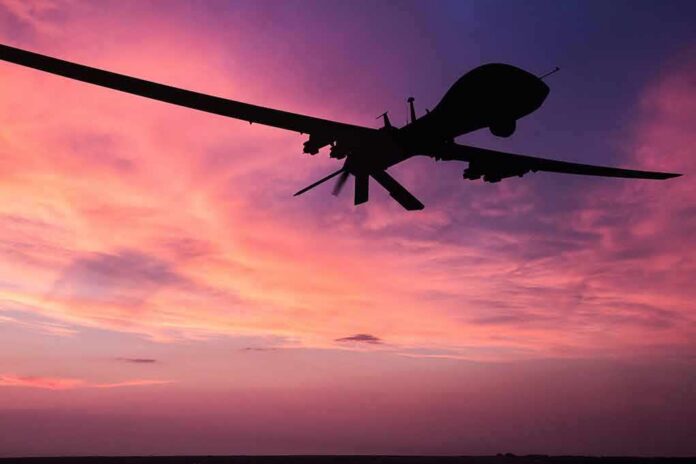
America is moving to mass-produce lethal small drones, as the Pentagon orders 14,000 Neros systems worth over $100 million after top competitive trials performance.
Story Highlights
- The Pentagon ordered 14,000 Neros drones and explosive payloads valued at over $100 million.
- Neros earned the award through “Drone Dominance” Gauntlet II, finishing among top performers.
- The Archer AI drone is the centerpiece of the order, built for guided one-way attacks.
- The push fits a larger plan to field hundreds of thousands of low-cost drones by 2027.
Pentagon Places 14,000-Drone Order After Gauntlet II
Defense officials selected Neros Technologies for 14,000 small attack drones and explosive payloads after the company ranked near the top in the Pentagon’s Drone Dominance Gauntlet II trials. Neros values the order at more than $100 million. Reported results show Neros performed at or near the front of both mission tracks in the event, which drove the procurement decision and scale of the buy. This is a direct purchase tied to competitive field tests, not a paper study.
Neros’ Archer AI platform sits at the center of this award. Reports describe Archer as a compact, autonomy-enabled, first-person-view style drone engineered for terminal guidance and one-way attack missions. The Pentagon’s selection favors speed to field and mass over boutique features. The order builds on a rapid timeline that began with earlier Gauntlet rounds, creating a pipeline to ship many units fast, train troops, and stock critical inventories for combatant commands.
Why Mass Matters: From Few Exquisite Systems To Many Cheap Drones
Program leaders are shifting from small numbers of high-cost weapons to large numbers of low-cost, “attritable” drones that can be built and replaced quickly. The Drone Dominance effort aims to acquire more than 200,000 small systems across phases by roughly 2027, with frequent live competitions to pick winners. This model stresses industry capacity while cutting bureaucracy, so troops get usable gear now rather than wait years for traditional programs.
Officials and outside analysts have described a multibillion-dollar road map that prizes speed, common parts, and domestic supply chains where possible. The approach also opens the door for startups and nontraditional firms, including teams with roots in racing and hobbyist engineering, to win real orders. That change breaks old patterns that favored a few primes, and it rewards companies that can deliver proven performance at scale on short timelines.
What This Means For Readiness, Deterrence, And The Taxpayer
This buy signals that President Trump’s team wants shelves stocked and units trained before a crisis hits. Fielding thousands of small attack drones helps close gaps exposed by recent conflicts that favored cheap swarms over slow legacy buys. Warfighters need options that overwhelm the enemy’s defenses and do not break the budget. Mass-procured drones meet that test: they are affordable, repeatable, and deadly when paired with smart tactics and good training.
For taxpayers, fixed-price competition and short delivery schedules help control costs and force results. For troops, common, rugged airframes and simple controls shorten training and speed maintenance. For adversaries, large stocks of guided one-way systems raise the price of aggression and complicate their planning. The bottom line is straightforward: buy what works, buy it fast, and buy it in numbers big enough to matter on day one of a fight.
Sources:
zerohedge.com, sofx.com, newsmax.com, defensescoop.com