
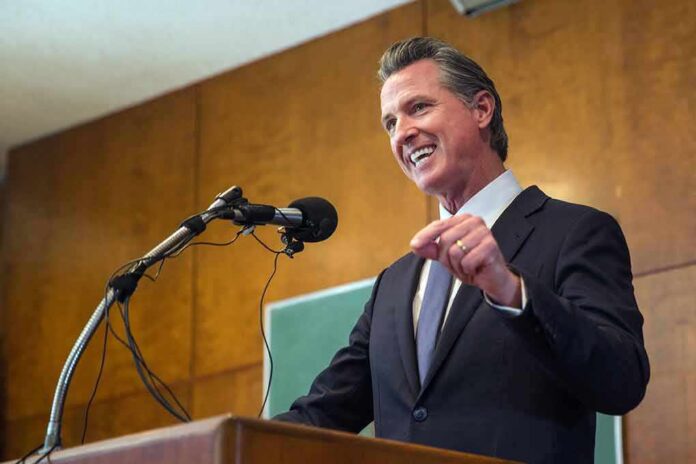
California Governor Gavin Newsom blasted President Trump over climate policy just as the Environmental Protection Agency moved to erase federal carbon limits on power plants.
Story Highlights
- Newsom accused Trump of abandoning climate leadership while in New York for high-profile events.
- The Environmental Protection Agency repealed most Biden-era greenhouse-gas limits for coal and gas plants.
- The agency said the repeal will save about $310 billion and lower costs for families.
- Critics warned the rollback ends national limits on a major source of emissions.
What Newsom Claimed And Why It Landed Now
Governor Gavin Newsom accused President Trump of abdicating climate responsibility during meetings with global and business leaders in New York. His remarks came as climate week events drew media attention, providing a stage for partisan contrast. The clash followed a major federal move on power policy. California’s governor has long argued his state leads on clean energy, and he used the moment to fault Washington for pulling back. His criticism targeted both symbolism and substance tied to federal rules.
The timing ensured maximum visibility. Newsom’s team pointed to California’s clean-energy mix and framed national policy as moving backward. Supporters said the rollback could slow progress and raise health risks. Detractors of Newsom countered that his state’s electricity prices remain high and reliability uneven. The public fight, while political, reflects a real shift in federal regulation that affects power plants nationwide. That shift is now the center of the argument, not just rhetoric.
What The Environmental Protection Agency Actually Did
The Environmental Protection Agency finalized a repeal of most Biden-era greenhouse-gas rules for fossil-fuel power plants. The agency also proposed rescinding the remaining standards. The Environmental Protection Agency said the action would save about $310 billion in compliance costs and help “unleash” American energy. Officials said utilities could choose the most cost-effective path without forced shutdowns. The Environmental Protection Agency presented the move as relief for ratepayers and a boost to energy security.
News reports noted the repeal lifts national limits on carbon from coal and natural gas plants. Those plants remain among the largest stationary sources of emissions. The Associated Press described the change as erasing rules designed to curb climate pollution. That framing emphasized environmental stakes, while the agency highlighted affordability and reliability. The gulf between these narratives explains the sharp political response and the likelihood of more lawsuits and hearings ahead.
Why Conservatives See Relief, And Why Critics Are Alarmed
President Trump’s team framed the rollback as a win for families and small businesses. The Environmental Protection Agency argued the prior rules threatened reliable power and would drive costly shutdowns. Backers said cutting red tape lets utilities invest in what works and keep bills in check. They tied the policy to energy independence, domestic jobs, and a stronger grid. For many readers tired of high prices and rolling mandates, that case hits home and answers a basic kitchen-table concern.
Gov. Gavin Newsom called President Trump an “invasive species” that is threatening progress around the globe and said he needs to be removed from office at a U.N. session on climate change. https://t.co/vOKsY7dZwj
— San Francisco Chronicle (@sfchronicle) September 24, 2026
Critics, including Newsom, warned the move removes a key check on pollution from the power sector. The Associated Press reported the earlier Environmental Protection Agency estimates claimed large health and environmental benefits under the prior rules, which are now gone. Environmental groups and some states prepared legal challenges and public comments. They argue the nation risks falling behind rivals that keep building clean energy while Americans bear long-term costs from pollution and climate damage.
The Legal And Political Road Ahead
Courts will likely decide how far the Environmental Protection Agency can go and how durable this repeal is. The rulemaking faces a formal comment period and expected litigation. Congress may also weigh in through oversight. In the meantime, utilities will plan under the current guidance. States will push their own paths, with California touting stricter targets and others choosing lower-cost approaches. That split could widen regional price and reliability differences as policy diverges.
For conservative readers, the core question is simple: will this reduce bills and improve reliability without inviting federal overreach? The Environmental Protection Agency says yes, pointing to the projected savings and flexibility. For critics, the tradeoff looks risky and short-sighted. Both cannot be right on every point. What is certain is this: Washington just made a decisive turn on power policy, and families will feel the results on their monthly statements and in the stability of the grid.
Sources:
aljazeera.com, apnews.com, whyy.org