
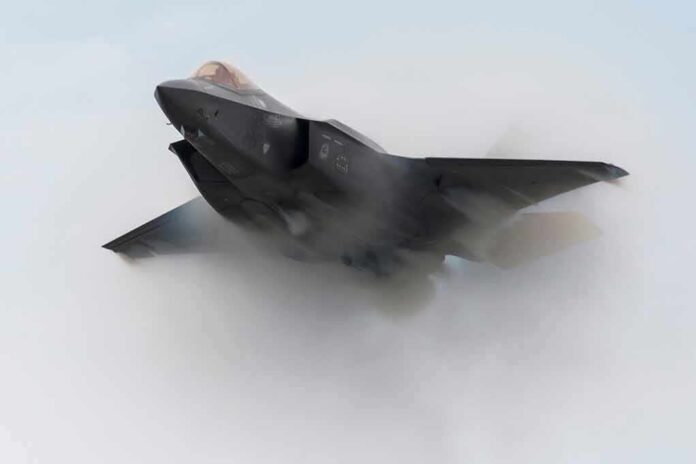
A coast-to-coast scare once blamed on a “meteorite” now points to an American spy plane roaring at Mach 3.
Story Highlights
- Reports in 1973 linked a massive shockwave from Indiana to New York to a meteorite.
- A named SR-71 pilot later detailed a Mach 3 route that fits the boom pattern.
- National Aeronautics and Space Administration records confirm SR-71 sonic booms at Mach 3.
- No primary meteor evidence surfaced to validate the space-rock theory.
What People Heard Across The Midwest And Northeast In 1973
On October 12, 1973, people from Indiana to New York reported a loud shockwave. Papers ran with a meteorite idea, citing a Penn State voice who said it was possible a space rock entered the atmosphere. The Air Force said it would look into it. Then the record went quiet. The simple story stuck: a meteor rumbled over several states. But no lab report, impact site, or recovery ever backed that claim up.
The “meteor” frame made sense to readers. A big boom without a clear source invites a big-sky answer. But the boom’s reach also fits known physics. Shock waves from fast objects can carry far and hit the ground like sharp thunder. That includes supersonic aircraft. Textbook shock-wave patterns show how speed and altitude set the boom footprint. That is why a meteor was plausible then, but not proven. And it is why an aircraft had to be tested as well.
The SR-71 Route That Lines Up With The Boom
Retired Lieutenant Colonel James Shelton later described a short-notice mission in SR-71 tail number 979. He said the jet climbed to 80,000 feet and cruised at Mach 3 toward Griffiss Air Force Base in New York. He recalled seeing Chicago’s lights to the left and Indianapolis to the right as they passed south of Chicago and north of Indianapolis. He believed the boom was touching the ground and disturbing people along the path that night.
Shelton said the next day’s papers showed the shockwave stretched from Indiana to New York State, matching the corridor of his flight. That claim brings time, route, speed, and altitude into one picture. It replaces a dramatic guess with a traceable path. It also fits what crews at Beale Air Force Base dealt with often: a steady stream of sonic-boom complaints when high-speed missions ran over populated areas along long routes.
What National Aeronautics And Space Administration Research Proves About SR-71 Booms
National Aeronautics and Space Administration studies measured Blackbird sonic-boom signatures at altitudes up to about 80,000 feet and at speeds up to Mach 3. The work shows the SR-71 could create clear ground-level overpressure patterns across large areas. Engineers used the jet to test ways to reduce those booms because they sound like sharp thunderclaps. That research confirms the aircraft can produce the kind of shock that people heard that night.
One National Aeronautics and Space Administration paper reports direct measurements of sonic-boom pressure signatures from the SR-71 across Mach 1.35 to 3.0. This is hard data, not a hunch. It explains why a multi-state complaint pattern is possible when a jet is high, fast, and flying a long leg. It also explains why a meteor claim needs proof like fragments, radar, or matched timing logs. Those items never turned up in the public record that reporters have shared.
Why The Meteor Story Stuck And Why Facts Matter
The meteor angle was vivid and easy to print. A named expert even said it was conceivable. But later retellings rely on secondhand quotes, not the original clipping or a lab record. That weakens the case. By contrast, the aircraft side has a pilot’s route notes and National Aeronautics and Space Administration data that show how the boom would travel. When evidence is thin, the loudest story wins. When records emerge, physics and logs should win instead.
This is a lesson for today’s readers. Big events often get framed fast, then never corrected. Government silence can let myths take root. Conservatives value truth over spin, and clarity over hype. When we check the logs and the science, the 1973 shock points to an American jet doing its job at speed, not a rock from space. That is not only common sense. It matches named testimony and measured research on SR-71 sonic booms.
The Bottom Line For Readers Who Want Proof
Specifics beat slogans. Shelton’s account lays out a time, a tail number, a corridor, and cruise at Mach 3 and 80,000 feet. National Aeronautics and Space Administration testing confirms the SR-71 throws a strong, far-reaching sonic boom. No primary meteor evidence has surfaced to rival that. The “meteor” story was catchy, but the aircraft story is supported. When in doubt, follow the data, not the drama.
If archives surface the original 1973 clippings, or a formal meteor log, we will update our readers. Until then, the best-supported cause for that multi-state shockwave is the SR-71 Blackbird’s sonic boom along its eastbound route to New York.
Sources:
19fortyfive.com, archive.org, theaviationgeekclub.com