
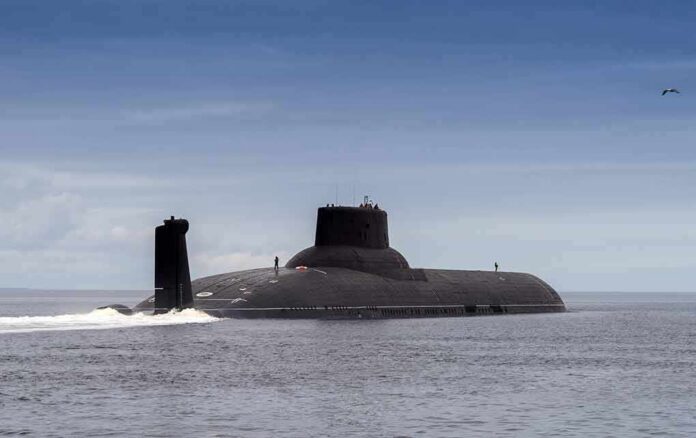
The U.S. Navy just funded five competing prototypes for a submarine-launched nuclear cruise missile, signaling a serious push to boost American deterrence at sea.
Story Highlights
- The Navy awarded five prototype agreements worth about $743.6 million combined.
- Work covers missile development, flight integration, and new launch canisters.
- Virginia-class submarines and Virginia Payload Tubes are the planned integration path.
- Prototype efforts are expected to run through December 31, 2027.
Navy Launches Competitive Prototyping for SLCM-N
The U.S. Navy awarded five prototype agreements for a nuclear-armed sea-launched cruise missile, known as SLCM-N. Naval Today reported the awards followed an October 6 Navy announcement and were made on September 23, 2026. The combined value is about $743.6 million, which shows a real, funded development track and not just talk. The awards start work on the missile itself, flight-system integration, and the launch canisters needed to fire the weapon from a submarine.
Dynetics, which is a Leidos company, Raytheon, and Northrop Grumman Systems Corporation will focus on missile development and flight integration, according to the reporting. Northrop Grumman Mission Systems and Pacific Engineering will work on the canisters. The Navy kept competition in place across these pieces. That can drive better designs and lower risk. The reports do not include the dollar amount for each individual award, only the total across all five.
Design Focus: Virginia-Class Submarines and Payload Tubes
The new missile and its canisters are being designed around the Virginia-class attack submarines. Reports state that the launcher subsystems will fit Virginia Payload Tubes and connect with Virginia-class ship systems. This gives the fleet a regional nuclear option separate from the Ohio-class submarines that carry the Trident II D5 ballistic missiles. A sea-based cruise missile can offer a different flight path and range profile, which can help planners match options to regional threats.
Congress has moved to back this effort with law and funding steps. The Congressional Research Service says the fiscal year 2025 defense bill ordered a dedicated program element for SLCM-N. It also notes that the fiscal year 2026 bill authorized $210 million for the missile and $50 million for the warhead. This blend of Navy and nuclear enterprise support matters. It shows the program is not a side project. It is a defined piece of the nuclear force that lawmakers have chosen to track and fund.
Schedule, Scope, and What Comes Next
According to Naval Today, the prototype work is expected to continue through December 31, 2027. That timeline covers design, integration, and canister prototyping. The public reporting does not show a completed flight test, nuclear certification, or deployment yet, which is normal at this stage. These are early engineering steps. They are meant to answer questions about underwater launch, tube fit, safety rules, and how the missile links with submarine combat systems.
Army Recognition adds that earlier awards and the new agreements bring the announced total for SLCM-N efforts to roughly $1.106 billion, though contract overlaps may blur that number. The fiscal path also has wrinkles. The Congressional Research Service reported that the fiscal year 2026 Navy budget assumed $1.92 billion in mandatory funding through reconciliation rather than standard requests. That choice could affect long-term stability if future laws change. Still, today’s awards are concrete steps that move hardware and integration forward.
Why a Sea-Launched Nuclear Cruise Missile Matters Now
The Trump administration first proposed SLCM-N in 2018 to give the United States another credible regional deterrent. The goal is to meet threats from major rivals with more flexible options at sea. The Navy once fielded a similar weapon, the nuclear Tomahawk, but removed it decades ago. SLCM-N revives that class with modern systems and integration on today’s attack submarines. For many conservatives, this is simple: peace comes from strength, not wishful thinking.
U.S. Navy advances nuclear cruise missile program with five prototype awards and a 2032 limited deployment deadline
The U.S. Navy has awarded five agreements worth $743.6 million for prototype work on the SLCM-N nuclear-armed sea-launched cruise missile.https://t.co/PAMwlbhFoC
— Shahriyar Gourgi (@ShahriyarGourgi) October 9, 2026
The program’s focus on Virginia-class boats means more U.S. submarines could carry a nuclear tool that complicates any enemy plan. It can signal resolve without sending in bombers or moving ballistic submarines closer. Congress has required a dedicated program line and provided authorizations to keep it on track. The big picture is clear. The Navy is building options that protect American families, defend allies, and uphold peace by making sure no foe doubts our will or our reach.
Sources:
realcleardefense.com, navaltoday.com, defencesecurityasia.com, armyrecognition.com