A German court just opened a high-security trial that could finally tie the Nord Stream blasts to a named suspect with a detailed plan and forensic trail.
Story Highlights
- German prosecutors charged a former Ukrainian officer over the Nord Stream sabotage in a Hamburg court.
- The case outlines a rented yacht, forged passports, and professional divers using high-power explosives.
- Investigators say explosive traces from the yacht match residues from seabed fragments near the pipelines.
- Ukraine’s leadership denies state involvement as the court process begins.
Hamburg Trial Brings Names, Dates, and Methods Into Open Court
German federal prosecutors brought a former Ukrainian army officer, identified as Serhii K., before the Hanseatic Higher Regional Court in Hamburg on October 14, 2026. Charges include causing an explosion, damaging infrastructure, disrupting public services, and complicity in a war crime for attacking civilian infrastructure. The court set strict security. The case marks the first time a named suspect faces a detailed public record in the Nord Stream blasts that shook Europe’s energy map in 2022.
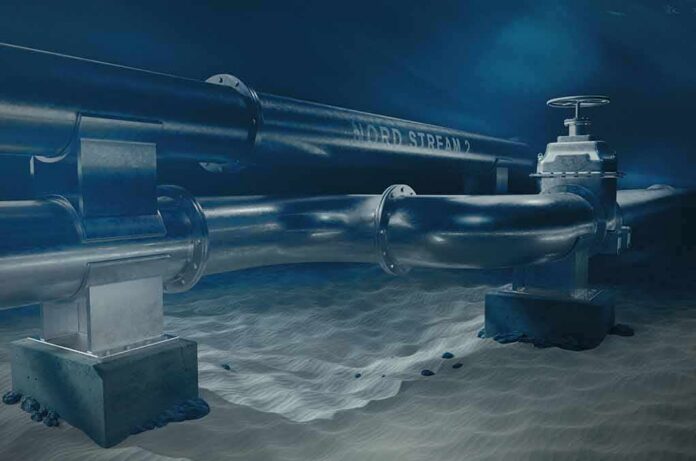
Prosecutors present a specific story. They say a small team used a rented sailing yacht called the Andromeda, sailed from the German port of Rostock, and carried out a covert diving mission. The indictment describes forged passports, a hired captain, four deep-sea divers, and an explosives expert. The operation allegedly placed multiple timed charges on three of four pipeline strings at about 80 meters depth. The prosecutors argue this plan was professional, practiced, and built to avoid detection.
Alleged Forensics: From a Charter Yacht to the Baltic Seabed
Investigators say they found explosive traces on the Andromeda and matched those residues to fragments recovered near the damaged pipeline sections on the Baltic seabed. Reporting on the prosecution case describes several devices, each potentially weighing over 20 kilograms, set with timers to rupture the steel pipes. This technical story, if proven in court, links the rented boat to the blast sites through materials science and careful chain tracking of people and gear.
The indictment, said to run about 136 pages, reportedly walks through procurement steps, travel paths, and identities used by the group. It aims to move beyond rumor by tying names to logistics and tools. Still, the public has not seen the full lab files or all chain-of-custody records. Court rules and classified elements may limit what the public will learn in real time. That makes the trial’s cross-exams important for testing the state’s claims.
Open Questions: Command, Motive, and the State Link
Prosecutors outline a mission that points toward Ukrainian interests but do not publicly name an ordering authority. Reports say the case frames the operation as tied to unidentified Ukrainian state actors, without a clear command chain. Ukraine’s president and other officials deny state involvement. They say Kyiv did not plan or execute the attack. The court will need records and testimony to move this point from suspicion or denial to a tested fact.
RT @velitesgear | Full Text Article: https://t.co/4OCzw0HVHn | Author: @militarnyi Ukrainian Citizen Accused of Organizing NordStream Pipeline Blasts to Stand Trial in Germany
The trial of a Ukrainian citizen accused of organizing the sabotage of the Nord Stream gas pipelines in…— Velit.es (@velitesgear) October 14, 2026
Three nations probed the blasts. Sweden and Denmark closed inquiries without naming a culprit. Germany pressed on and brought this case. That uneven path shows how hard it is to prove an undersea attack. It also shows how slow, careful work can create a public case with dates, devices, and an accused organizer. The burden now sits with the prosecution to show the who, how, and why under courtroom scrutiny, and with the defense to challenge every link.
Why This Matters for American Readers and Energy Security
The blasts drove energy prices higher and rattled allies in Europe. Germany leaned on Russian gas for years, and this attack exposed how fragile that choice was. For the United States, this is a hard lesson about critical infrastructure, supply lines, and deterrence. President Trump’s team has pushed for energy independence and stronger security for pipelines and grids. This case underlines why: when energy is a weapon, families pay more, and free nations face risk they did not choose.
Conservatives care about accountability, law, and border integrity. This case features forged identities, covert travel, and sabotage of civilian infrastructure. If the court confirms the facts, it will show how small teams can punch above their weight when borders are porous and enforcement is slow. It also warns against naive global deals that put energy lifelines in hostile hands. Strong borders, strong energy at home, and clear red lines abroad help keep families safe and costs down.
What to Watch Next in the Courtroom
Watch for authenticated travel records, money trails, and communications that place the accused at key moments. Look for defense challenges to the forensic match between the yacht and seabed. Track whether the court admits any intelligence material and what weight it gets. The big test is not media claims. It is evidence tested under cross-exam, with clear methods, custody, and names on the record. That is how truth cuts through spin and politics.
One more reality check is needed. An indictment is not a conviction. But this is not guesswork either. Germany is putting forward a method, a crew, and lab links. The case gives the public a concrete story to judge. The court’s job is to sift fact from theory. Our job is to stay focused on evidence, demand secure borders and energy supplies, and back leaders who defend the rule of law over the chaos of shadow wars under the sea.
Sources:
youtube.com, dw.com, apnews.com, aljazeera.com, yahoo.com