
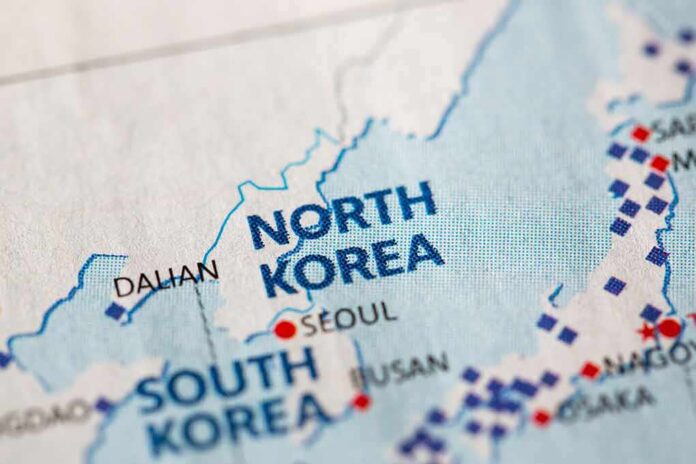
More than 40 North Korean state websites went dark for hours across two days, exposing how fragile the regime’s outside internet link really is.
Story Snapshot
- Over 40.kp sites, including state media and ministries, were unreachable for hours.
- Disruptions hit on October 20 and continued into October 21 for many outlets.
- Network monitors logged hours of routing trouble tied to North Korea’s external links.
- Analysts cited power or line faults; no public proof points to a hacker attack.
State Media And Government Portals Simultaneously Failed
South Korean outlets reported that more than 40 official North Korean websites using the.kp domain became inaccessible or unstable on October 20. The list included the Foreign Ministry, Korean Central News Agency, Rodong Sinmun, Minju Joson, the Naenara portal, Air Koryo, and the main national portal. The blackout lasted about eight hours that first day, with partial returns later in the evening. These services target outside audiences and show the regime’s message to the world.
Several reports said the trouble did not end in one burst. Many of the same websites failed again or kept dropping offline during October 21. Korean Central News Agency reportedly struggled for most of the first 24 hours after the start. Other sites only came up for minutes at a time the next morning before failing again. The repeat pattern fits an infrastructure problem more than a single server crash and affected unrelated state outlets at once.
Routing Disruptions Point To A Choke Point
External network monitors observed trouble in North Korea’s Border Gateway Protocol routing during the outage window. Telecom Observer recorded nearly six hours of disruption on October 20, from about 18:10 to 23:50 GMT. That kind of routing instability can make whole blocks of websites unreachable from abroad even if local servers still have power. The finding supports the view that the failure happened near the border where North Korea connects to the wider internet.
Analysts and past research describe North Korea’s public internet as a “single point of failure” system. Many.kp services appear to rely on one main upstream path through China Unicom, sometimes linked with Hong Kong addresses. When that path fails, a wide range of government and propaganda sites can fall together. This central choke point makes the system easy to break and hard to repair fast. It also explains why outages across different agencies hit at the same time.
Power, Line Faults, Or Traffic Floods? Evidence Favors Infrastructure Issues
A named South Korean cybersecurity executive said unstable power could knock out border routers or switches and produce the on‑off pattern seen during the event. Park Chan‑am, who leads Stealien, pointed to power problems or a specific line fault as likely causes for the simultaneous drop in many sites. Reporting also mentioned the idea of a traffic flood, but none of the accounts presented public forensic proof of a hacker attack driving this incident. The precise cause remains unassigned.
Coverage tied the outage to rumors about Kim Jong Un’s health, but the technical reports did not show a direct link. The stronger facts show broad loss of reachability for outside users and hours of routing instability near North Korea’s internet border. Reports did not confirm conditions inside North Korea during the blackout, which is common given the regime’s secrecy. For readers in the United States, this episode is a reminder that closed, centralized systems fail big and fail often.
Why It Matters For U.S. Security And Policy
North Korea’s weakness online can still be dangerous for others. The regime has used cyber operations to hit banks, media, and infrastructure abroad for years. A fragile home network does not stop those units from working outside the country. The United States must harden its own networks, press partners to improve defenses, and keep pressure on Pyongyang’s illicit revenue streams. Strong borders, reliable energy at home, and secure supply chains help block foreign threats while keeping Americans safe.
What Comes Next: Watch The Border Links And Uptime Data
Further clarity will come from routing archives and uptime tests on the.kp domain in the days ahead. Independent monitors can review whether routes were withdrawn, whether China-side links saw faults, and how long each state portal stayed down. If the pattern repeats, that will add weight to the power or line-fault theory. If logs show traffic floods and mitigation, that would support a denial-of-service theory. For now, the verified piece is wide external unavailability across two days.
Sources:
insiderpaper.com, thestandard.com.hk, ajupress.com, koreajoongangdaily.com, news.sbs.co.kr, asiae.co.kr