British Typhoon jets escorted French Rafales in a first-ever joint nuclear strike drill, signaling tighter allied deterrence in Europe.
Story Snapshot
- Royal Air Force Typhoons escorted French Rafales in Exercise RUMMY over the Mediterranean.
- The mission simulated an airborne nuclear strike; no live weapons were involved.
- Officials framed the drill as coordination, not a merged nuclear force, preserving national control.
- The event builds on the Lancaster House framework and newer coordination pledges.
What Happened In Exercise RUMMY
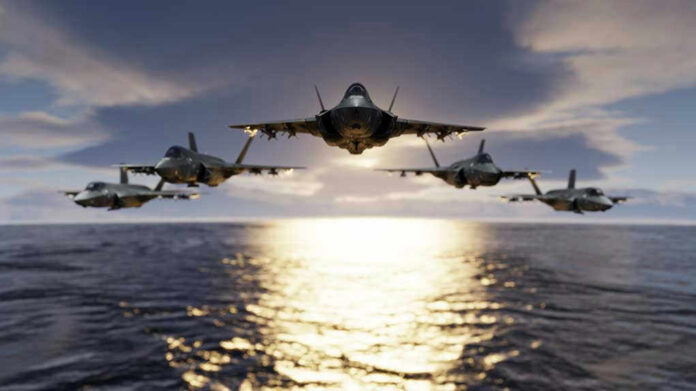
United Kingdom and French air forces flew a joint mission that simulated a nuclear strike package. Royal Air Force Typhoon fighters escorted French Rafale jets during the drill, which took place over the Mediterranean Sea earlier this week. The operation, called Exercise RUMMY, marked the first time British fighters joined a French nuclear exercise. Both governments said the drill aimed to practice procedures and show readiness that supports allied deterrence.
French and British defense officials said the exercise used no live nuclear weapons. The scenario trained crews on navigation, communications, refueling coordination, and threat escort tactics for a notional nuclear mission profile. The flight demonstrated that the two nations can operate side by side on short timelines. It also showed that their aircraft, crews, and planners can communicate and execute a sensitive mission together under realistic conditions.
Why This Drill Matters For Deterrence
The public goal was clear: deter hostile actors by showing speed, discipline, and teamwork. The United Kingdom and France are Europe’s two nuclear powers. When they fly together in a demanding scenario, they send a message to any regime that might test the West. Officials said joint training like this makes Europe’s shield stronger while backing the North Atlantic Treaty Organization’s defense plans. That signal supports President Trump’s focus on allied burden sharing and credible strength.
The mission also helps fix practical gaps that slow responses in a crisis. Aircrews need shared checklists, compatible radios, and predictable refueling plans. Planners need common maps, threat data, and timing standards. Training on these items in peacetime cuts friction in wartime. By practicing the escort of France’s airborne nuclear force, British and French teams can respond faster and with fewer errors if a threat grows.
Coordination, Not A Shared Nuclear Button
Officials stressed a key point: the United Kingdom and France still control their own nuclear forces. Exercise RUMMY showed coordination, not a joint command or a merged arsenal. That follows the Lancaster House cooperation path. It also fits recent pledges to deepen planning links while keeping national authority over any nuclear use. In plain terms, the two countries trained together, but each government keeps its own final say.
This line matters for both policy and politics. Clear national control guards constitutional roles and voter oversight. It also keeps deterrence credible, since foes know who decides and how fast. Analysts describe this model as stronger cooperation across policy, operations, and capabilities, without creating a European nuclear command. Escort missions sit in that middle zone. They prove crews and jets can work together, while preserving sovereign launch authority.
The Bigger Arc Of Anglo-French Defense Ties
Exercise RUMMY did not come out of nowhere. The United Kingdom and France have built deeper defense ties for years under the Lancaster House agreements. Leaders recently refreshed that approach, outlining how independent deterrents can still support shared European and North Atlantic Treaty Organization goals. This latest flight put those words into action, showing that staff talks and communiques now shape real missions in the air.
For American readers, the takeaway is simple. Strong allies make America stronger and wars less likely. When the United Kingdom and France keep their forces sharp and compatible, the burden does not fall on United States forces alone. That fits a conservative view of peace through strength. It also checks the ambitions of aggressive regimes. Clear drills, clear lines of control, and clear resolve together make deterrence work when it counts.
Sources:
theaviationist.com, gov.uk, defensenews.com