
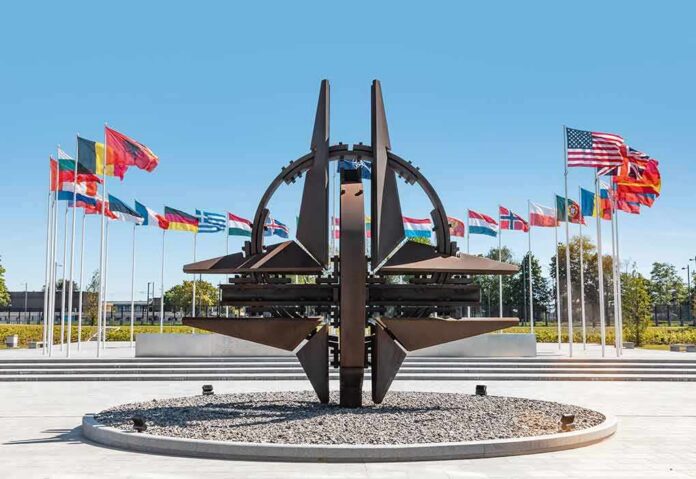
NATO’s leaders locked in a 10‑year plan to treat Russia as a long-term threat and ramp allied defense spending to 5% of national output by 2035.
Story Highlights
- NATO named Russia a lasting danger and set multi-year defense targets.
- Allies pledged 5% of gross domestic product for security by 2035, with 3.5% on core defense.
- New targets cover air and missile defense, long-range weapons, logistics, and big land forces.
- Germany’s plan readies transit for up to 800,000 allied troops across its territory.
NATO’s 2035 Pledge: Spend More, Build Faster
NATO heads of state at The Hague in June 2025 set a clear course: spend 5% of gross domestic product by 2035 to deter Russia and protect the Euro-Atlantic area. Leaders said at least 3.5% will fund core defense, with up to 1.5% for related security. That split matters. It directs real money to forces, ammunition, and training. It also supports resilience, infrastructure, and industry to sustain a long fight if needed.
NATO’s Secretary General said allies remain ready to defend every inch of allied land against military and hybrid threats, including cyberattacks and sabotage. That message signals resolve and unity. It also aligns with a larger U.S. goal under President Trump: allies must carry more of the load so American taxpayers are not stuck with Europe’s defense bill. The pledge turns that burden-sharing talk into measurable targets and annual plans.
From Paper to Power: Concrete Capability Targets
NATO defense ministers agreed capability targets that reach beyond troop counts. The plan prioritizes air and missile defense, long-range weapons, logistics, and large land maneuver formations. It also pushes better network defense and resilient infrastructure. These targets respond to hard lessons from Russia’s war on Ukraine: drones strike deep, missiles stress air defenses, and supply lines decide outcomes. Targets will drive budgets and contracts over several years.
NATO already moved from words to action after Russia’s full-scale invasion in 2022. Allies activated defense plans and surged troops from both sides of the Atlantic. That step raised the baseline for readiness. It also created a framework to scale up. While the 2035 horizon is long, the alliance has shown it can deploy fast when danger grows. The new plan builds a wider foundation so emergency moves are not the only option.
Moving the Force: Germany’s Logistics Role
Germany’s operational plan gives a vital piece of the puzzle: moving allied forces east at speed. Berlin’s blueprint says up to 800,000 troops and 200,000 vehicles must be able to cross Germany within six months if war breaks out. That requires ports, rail, roads, fuel, and protection against cyber and sabotage. Host-nation support will be central. The number is a planning figure, but it shows NATO is treating logistics as a war-winning function, not an afterthought.
Logistics and industrial power go together. The Hague pledge includes defense industry growth as a core line of effort. Allies need more interceptors, artillery shells, long-range missiles, and spare parts. They also need workers, machine tools, and stable contracts. NATO’s official guidance ties money to output, not headlines. That means tracking inventories, availability rates, and reload times, so commitments translate into real combat power when it counts.
Why This Matters for America’s Security and Wallet
U.S. interests are clear. When Europe spends more and builds more, America faces fewer calls to send its own troops and dollars first. President Trump’s stance has been firm: allies must pay their share and harden their defenses. NATO’s 5% path answers that call in writing, with timelines and reviews. The focus on air defense, long-range strike, and logistics matches what U.S. commanders say is needed to stop Russian aggression before it spreads and drags in more U.S. forces.
Risks remain. The alliance set a 2035 endpoint, and delivery depends on national budgets and industry. The plan is strong on intent, while some capabilities will take years to field at scale. Still, the direction is set, the targets are public, and the mission is defense, not adventurism. Strong borders, reliable energy, and secure supply chains start with deterrence that works. NATO’s move tells Moscow the free world is serious, and it tells taxpayers the load will be shared.