New York’s governor said Trump rallies are “poisoning” Nicki Minaj’s mind, turning a celebrity jab into a warning shot at millions of conservative voters.
Story Snapshot
- Gov. Kathy Hochul linked Minaj’s criticism to her attendance at Trump rallies.
- Minaj called Hochul “an evil woman” and endorsed Republican Bruce Blakeman.
- Reports place Minaj alongside President Trump at a Michigan rally days earlier.
- The “poisoning” claim targeted judgment, not policy, days before voters decide.
Hochul Ties Minaj’s Criticism To Trump Rallies
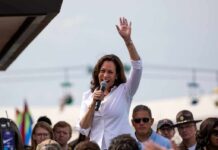
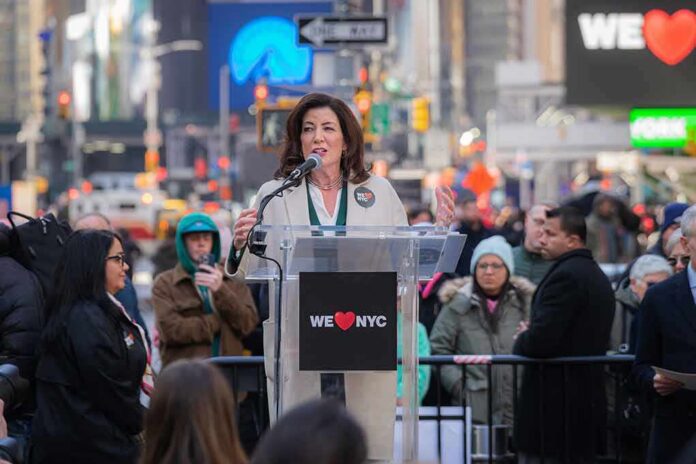
On October 28 in Albany, Gov. Kathy Hochul told reporters that Nicki Minaj should “get offline” and “stop going to Trump rallies,” adding those events are “kinda poisoning your mind.” Reports captured the exchange as part of late-campaign press stops. The remarks came after Minaj blasted Hochul on social media. Hochul did not cite a specific rally line or claim she believed misled Minaj. The comment framed Minaj’s judgment as tainted by attending Trump events.
Minaj’s posts used stark moral language about Hochul and urged voters to back Republican Bruce Blakeman. One outlet reproduced Minaj’s statements calling Hochul an “evil woman,” warning she would “not escape God’s wrath,” and saying Democrats should forfeit Hochul’s seat. Local coverage reported Blakeman’s response: “Nicki, I’ve got the U-Haul ready. It’s time to fire the worst governor in America.” The exchange quickly moved from a celebrity opinion to clear campaign messaging.
What Triggered The Clash And What Is Known
Reports say Minaj shared a past clip of Hochul discussing education in the Bronx and used it to argue Hochul disrespected Black children, then urged Black voters and Christians to reject Hochul and vote Blakeman. Coverage also notes Hochul apologized at the time for misspeaking about the clip’s phrasing. The current record does not establish which specific policy dispute Minaj meant when she said Hochul failed to denounce “evil,” leaving the trigger partly unclear in the reporting.
Outlets place Minaj at a Michigan rally days before the exchange, where she appeared with President Trump. The BBC reported Minaj said Trump “changed the energy of the country” and described herself as his “number one fan.” That timeline helps explain Hochul’s swipe at rallies. It does not, on its face, prove that attending rallies altered Minaj’s views. The “poisoning” claim remains rhetorical, not a measured finding backed by data.
Free Speech, Voters, And A Familiar Playbook
Hochul’s framing targets the venue, not the argument. Telling a citizen to stop going to political rallies undercuts free speech norms and healthy debate. Leaders should answer claims, not police which events people attend. The record shows no point-by-point rebuttal from Hochul to Minaj’s specific charge; instead, it suggests a personal swipe at Minaj’s judgment. That approach risks energizing Trump voters who resent being told where they can listen and whom they can support.
MINAJ BACKS BLAKEMAN: Rapper Nicki Minaj called New York Gov. Kathy Hochul “evil” over past remarks suggesting Black children in the Bronx were unfamiliar with computers and threw her support behind Republican Bruce Blakeman ahead of Tuesday’s gubernatorial election.…
— Ultra MagaBA🇺🇸 (@Brookltnwilliw) October 30, 2026
Campaigns know celebrity moments can move attention and turnout, but the research on effects is mixed. Here, the facts are simple: Minaj voiced support for Trump and Republicans, then blasted Hochul; Hochul answered by blaming Trump rallies. For conservatives, the takeaway is clearer still. When Democrats cannot defend record or results, they attack the messenger and the crowd. Voters will decide whether moral scolding beats answers on safety, schools, costs, and trust at the polls this week.
Sources:
youtube.com, themirror.com, yahoo.com, silive.com, bronx.news12.com, bbc.com