
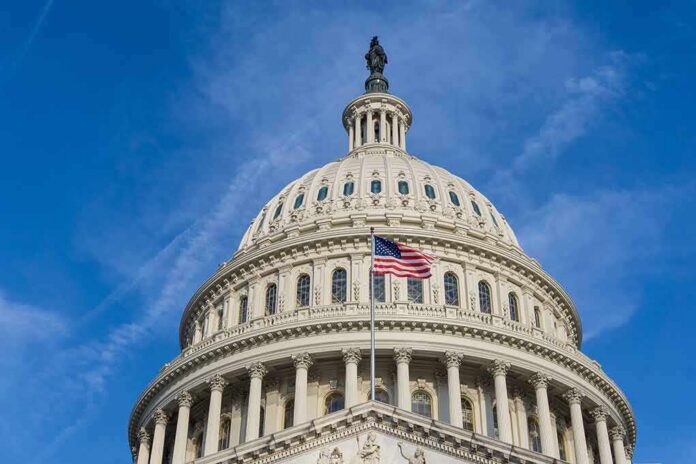
Democrats are projected to retake control of the U.S. House, setting up a direct challenge to President Trump’s agenda starting next year.
Story Highlights
- Major outlets project Democrats will cross the 218-seat mark for House control.
- Republicans entered Election Day with 218 seats to Democrats’ 214 and two vacancies.
- Democratic leaders said they were on the verge of a majority as key races were called.
- Final certifications are pending in some races, but projections show a flip of chamber control.
What Changed: The Projected Flip And The 218 Threshold
Major networks reported that Democrats will win enough seats to control the House when the new Congress is seated, clearing the 218-seat majority line that decides control of the chamber. Before the election, Republicans held 218 seats, Democrats held 214, and two seats were open, which set the flip target at a net gain of three seats for Democrats. Projections from multiple outlets pointed to Democrats reaching or passing that threshold as votes were counted across competitive districts.
House Democratic leader Hakeem Jeffries said on election night that his party was on the verge of a majority and working to get to 218 and beyond as more districts reported results. Live results pages from national outlets showed Democrats leading or winning in several battlegrounds, driving the calls that shifted the projected balance of power. The Associated Press results page still listed some races as uncalled, reflecting normal counting and certification steps that follow election night.
Why It Matters: Checks, Committees, And Biden-Style Gridlock Fights In Reverse
A Democrat-run House would test President Trump’s plans on spending, border enforcement, and energy policy. Committee gavels would shift left, changing hearing agendas, subpoena targets, and the flow of oversight requests. A narrow majority could still stall or reshape key bills, from appropriations to border security measures. Conservative priorities like lower spending, stronger immigration enforcement, and domestic energy growth may now face steeper climbs in the House, even as the administration presses forward using executive tools where lawful.
With Democrats likely in charge, families and small businesses should expect louder fights over taxes, regulation, and school policy. House leaders would set floor calendars and decide which bills get a vote, which could block parts of the president’s legislative package. A small Democratic edge would also empower swing-district members, making each vote a leverage point. Conservatives should watch the early rules package and committee ratios, which will reveal how much authority the new majority gives itself to investigate and delay the administration’s agenda.
The Margin And The Map: Narrow Control Brings Real Limits
Networks projected the House flip based on counts and models, yet the final seat margin remains unclear while some contests await official certification. A slim edge can shift fast due to vacancies or absences. That reality has defined recent Congresses, where a handful of members could stall major action. Democrats only needed a net gain of three seats to claim control, so any final tally near that mark would give individual members outsized sway over spending bills and border or crime measures that matter to everyday families.
Multiple networks have declared that Democrats have seized control of the U.S. House in the midterm election, with projections saying they'll win approximately 244 House seats, more than the 218 needed for a majority. pic.twitter.com/AE7gXgontK
— KCBS 106.9 FM/740 AM (@KCBSRadio) November 4, 2026
Historical patterns favor the party out of the White House in midterms, and recent research shows presidents’ parties often lose House seats in these cycles. That backdrop helps explain how Democrats assembled paths to 218 in closely divided districts. Still, committee chairs and the Speaker must manage a fragile coalition if the margin is small. Conservatives should prepare for heavy oversight aimed at Trump officials and for policy riders in must-pass bills that try to redirect border, energy, and education priorities.
What To Watch Next: Leadership Votes, Rules, And First 100 Days
When the new Congress is sworn in, the majority will elect a Speaker, adopt a rules package, and set committee leadership. Those early moves will shape every clash that follows. Expect fights over budget caps, border enforcement provisions, domestic energy permits, and oversight of federal agencies. Families who want safer streets, lower prices, and affordable energy should track how the new House uses its gavels. The coming session will test whether a narrow majority can govern or only obstruct.
Sources:
cbsnews.com, nytimes.com, apnews.com