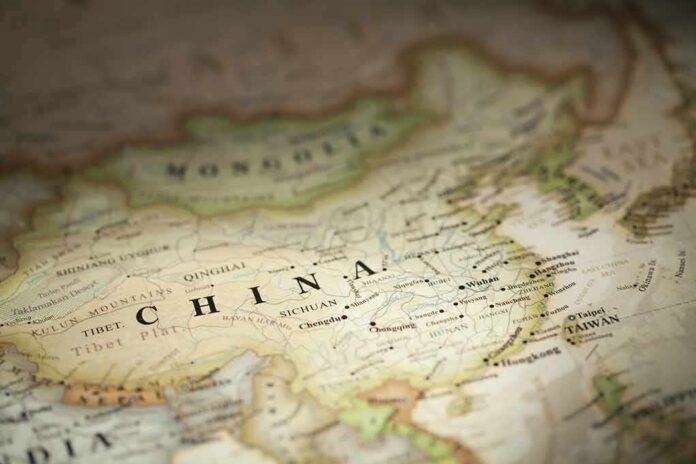
U.S. defense and policy agencies now warn that a stumbling Beijing could be as risky as a surging one, especially around Taiwan.
Story Highlights
- U.S. policy labels China a strategic competitor, confirming long-term rivalry.
- Pentagon reports show steady Chinese nuclear growth and wider military reach.
- Analysts warn that economic strain could push Beijing toward Taiwan coercion.
- Taiwan officials report more gray-zone pressure tied to China’s internal woes.
Washington’s Baseline: China Is a Strategic Competitor
Congressional research confirms that since 2017, official U.S. strategy has named the People’s Republic of China a strategic competitor. That label is not rhetoric. It guides budgets, export rules, and defense planning. It also signals that China’s rise created a real national-security challenge for the United States. This framing matters now because it shapes how leaders react if China slows. Competition does not end if growth stalls; some risks increase instead.
For readers, the point is simple. America is in a long contest with a one-party state that mixes trade power, technology policy, and military force. Voters feel the downstream effects at home. Supply shocks hit prices. Export rules hit jobs. Defense needs hit taxes. President Trump’s team must manage all three while holding firm on national strength, energy security, and the constitutional order that keeps government in check.
Hard Power Trends: Nuclear, Space, and Joint-Force Reach
The Department of Defense’s 2025 China report details broad People’s Liberation Army growth. The report says China’s nuclear stockpile was in the low 600s through 2024 and could exceed 1,000 warheads by 2030 if current trends continue. It also tracks advances in cyber, space, and long-range fires. These gains do not make war certain. They do change risk, timelines, and crisis options Washington must plan for now.
U.S. analysts also warn that China’s space effort is a whole-of-government push to surpass the United States. A congressional commission describes a linked military, commercial, and civil campaign to build launch capacity, satellite networks, and counterspace tools. Space underwrites command, targeting, and economic power. That makes it central to any Taiwan or Indo-Pacific crisis. It also demands tighter U.S. industrial policy that protects innovation without bloating government or crushing free markets.
Why a Slump in China Can Raise Near-Term Danger
Several studies argue that a peaking or slowing China can be more aggressive in the short run. The Atlantic Council warns that economic stress could add urgency for Beijing to coerce Taiwan, even by choking its energy imports. If that failed, the blowback could hammer China’s economy and global trade. The point is not collapse theater. It is that pressure at home can fuel risky moves abroad, which then boomerang on everyone’s supply chains.
Taiwan’s Mainland Affairs Council says Beijing’s worsening economy and political pressure may drive more gray-zone tactics. These include naval and coast guard harassment, air incursions, and election interference. Such moves fall below open war but still aim to wear down Taiwan’s will and test U.S. resolve. They also create shocks for shipping lanes and chip supply routes that Americans rely on for cars, phones, and defense gear.
What This Means for Americans: Energy, Chips, and Deterrence
A Taiwan crisis would ripple through oil flows, container traffic, and semiconductors. That means higher fuel costs, pricier electronics, and production delays. Families already stretched by years of inflation and high energy bills would feel it first. The Trump administration’s task is to stiffen deterrence while rebuilding secure supply lines at home. That means more North American energy, more trusted chip capacity, and fewer single points of failure overseas.
Deterrence starts with clarity. The United States should keep strong naval and air posture, deepen drills with allies, and close gaps in munitions and air defense. It should also push targeted technology controls that hit military end uses without strangling honest trade. Congress should fund these steps without waste, protect taxpayers, and reject mission creep. Strong borders, strong energy, and strong industry make a strong military. That is how free nations keep the peace.
How to Read the Threat Without the Hype
The Pentagon and congressional bodies warn about China for good reason, but some claims in public debate can drift toward alarm. The core facts here stand on official reports and named experts. China’s forces are getting stronger. China’s economy is slowing. Those two truths can coexist. That mix can raise the odds of coercion around Taiwan. Planning for that risk protects American families, jobs, and constitutional freedoms without inviting a fight.
Sources:
realcleardefense.com, breakingdefense.com, hsdl.org, onlinelibrary.wiley.com