
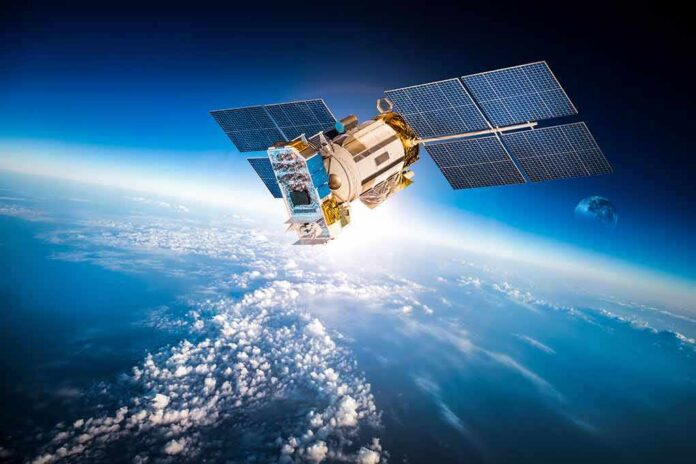
Ukraine says Russia’s new “Rassvet” satellites are guiding drones over Ukraine with real-time links that are harder to jam.
Story Highlights
- Ukrainian intelligence says Russia is using the Rassvet satellite network for military communications over Ukraine.
- Reported uses include real-time drone data and mid-flight route updates for strike drones.
- Russia launched 32 Rassvet satellites in 2026; about 30 remain in orbit, with intermittent coverage.
- Bureau 1440 leads the state-backed project; plans target more than 900 satellites by 2035.
Ukraine Reports Russian Satellite Links Powering Drone Warfare
Ukrainian military intelligence stated that Russia is using the Rassvet satellite network for military communications over Ukraine. Spokesman Andrii Yusov described two-way data links that can send live sensor feeds from surveillance drones and allow pilots to change strike drone routes mid-flight. That capability can speed targeting and make attacks tougher to disrupt. The report compares Rassvet to a homegrown version of Starlink, but on a far smaller scale so far.
Reuters reported that Russia launched 32 Rassvet satellites in two waves during March and July 2026. Independent tracking showed about 30 of those satellites remained in orbit by early November, with several clustered near 508 to 509 kilometers in altitude. Those passes create communication windows over Ukraine, but not constant coverage. Ukraine’s statement said links occur when satellites pass overhead, meaning timing and geography still matter.
Intermittent Coverage, Tactical Impact, and Electronic Warfare
Reports said Rassvet does not yet offer continuous nationwide service. Ukraine’s assessment said communication sessions open during satellite passes. Analysts have counted at least two daily windows over Ukraine that can last longer than an hour, which can still support planned missions and timed strikes. The links may help drones keep control and share data when ground networks face jamming, though published reports stop short of naming specific battles enabled by Rassvet.
Ukrainian sources framed the system as aiding Russian drones under pressure from electronic warfare. If even intermittent links hold up, operators can adjust routes and react to defenses. That can complicate air defense planning and raise costs for interceptors. It also underlines a wider trend from recent wars: low Earth orbit satellites now back up battlefield command, control, and drone operations as a regular part of combat support, not a niche tool.
Who Is Building Rassvet and How Big Could It Get?
Reuters identified Bureau 1440 as the coordinator of the state-backed Rassvet project. Ukrainian intelligence named Bureau 1440 and IKS Holding as key players in development and component work. The plan aims for more than 900 satellites by 2035, which would increase coverage and shorten gaps between passes if achieved. Ukraine has also reported sanctions and pressure on companies linked to the program, which could affect supply chains and rollout pace.
Tracking summaries show the constellation is still maturing. Of the 32 produced satellites launched this year, about 30 remained in orbit by early November, while others were maneuvering or had re-entered. Roughly 26 reached an orbit near 508 to 509 kilometers, suggesting a target operational shell with some spacecraft still stabilizing. These facts point to a growing system with real, if limited, windows for use over Ukraine right now.
What It Means for U.S. Interests and Allies
Russian forces fielding a Starlink-style link, even in a small form, raises stakes for drone warfare. Timed satellite passes can still enable long-range strikes, surveillance updates, and more flexible flight paths. That puts pressure on Ukraine’s electronic warfare teams and air defenders. It also signals a race to scale low Earth orbit support on all sides. Western planners have warned that modern conflicts hinge on secure satellite links for drones, command, and data fusion.
The United States and allies face a simple choice: outmatch hostile satellite links or watch them shape the battlefield. Interdiction tools, better jamming, and rapid launch capacity all matter. So does protecting our own networks from attack. As Russia expands Rassvet, windows over Ukraine could grow more frequent. That would tighten drone loops, speed targeting, and raise risks for frontline units and cities alike unless countermeasures keep pace.
Sources:
realcleardefense.com, militarnyi.com, en.lb.ua, orbitalradar.com, journals.sagepub.com, dw.com, thestratosbrief.com