
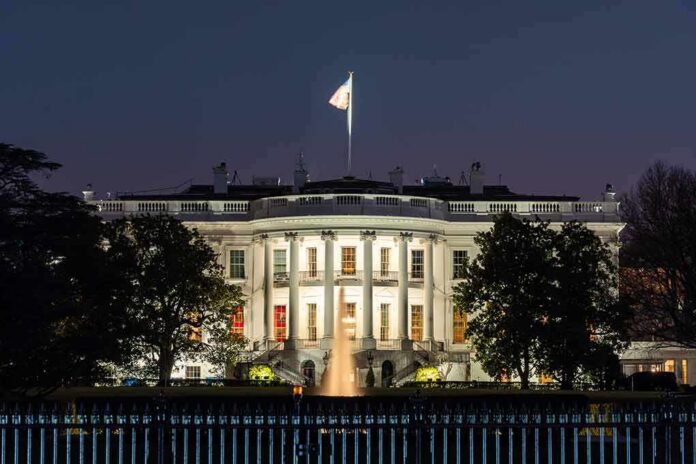
A new White House order tells federal contractors to route Congress’s questions through the executive branch first, putting oversight and separation of powers on a collision course.
Story Highlights
- Executive Order 14438 requires contractors to alert the White House about congressional requests and follow executive instructions on withholding information.
- Legal analysts warn the policy could force contractors to choose between Congress and contract penalties from agencies.
- The order applies to all federal contractors and subcontractors, not only defense firms.
- The White House says the order protects executive privilege and confidential communications.
What Executive Order 14438 Demands From Contractors
Executive Order 14438, signed November 20, requires every federal contractor and subcontractor to “immediately” notify the White House and their contracting agency about “any pending or future congressional request” tied to work or communications with the executive branch. The order instructs contractors to coordinate responses and abide by executive directions on withholding communications considered privileged. The text applies across the federal marketplace. It does not carve out special handling for defense vendors or whistleblower channels at this stage.
The White House released a fact sheet saying the goal is to protect executive privilege and ensure sensitive information stays confidential, so agencies keep sharing what they need with contractors to run key programs. The administration frames some recent investigations as overreach that risks harassment of private firms. The order centralizes review inside the executive branch before any contractor answers Congress. That means the first stop for a letter from Capitol Hill is the White House and the agency, not a committee clerk.
Why Legal Experts See Oversight Risks
Lawyers tracking federal contracts say the order creates a real-world conflict. A contractor may face a demand from Congress at the same time the executive branch tells them to hold back, which could invite contract penalties for disobedience or congressional enforcement for delay. Analysts note the order’s broad reach to “future” requests makes it a gatekeeper even before privilege is sorted out. They add that an agency’s privilege call may not shield a company from a committee’s next steps.
Reporters also flagged doubts about arguments that Congress must clear higher legal bars before seeking information from contractors. One analysis quoted legal experts calling that claim “dubious,” signaling likely fights ahead over legislative purpose and separation of powers. At the same time, the current record shows no named contractor held in contempt, debarred, or punished in court because of this order. The clash is concrete in process terms, but not yet tested in a courtroom or a subpoena-return showdown.
How This Collides With Separation Of Powers
Congress has long monitored how agencies use private vendors, including cost, performance, and waste. Routing requests through the executive branch inserts a new checkpoint between investigators and potential witnesses. That change can slow timelines and shape what is produced. When the gatekeeper is the same branch under review, it raises alarms for readers who value checks and balances, transparent spending, and strong oversight of billion-dollar contracts, especially in defense.
Supporters say central screening protects national security, privileged advice, and ongoing operations. Critics answer that committees already handle classified and sensitive material under rules that guard secrets. They warn that conditioning a contractor’s survival on agency favor can chill cooperation with Congress. The practical pressure is clear: companies depend on federal awards and may follow executive instructions even when a committee expects answers on schedule.
What Patriots Should Watch Next
Watch for letters from key committees and responses from major vendors. A named case where a contractor delays or refuses based on the order would test how far this policy goes. Look for agency guidance that defines what gets withheld and for how long. If disputes escalate, courts may be asked to decide whether a contractor must comply with a subpoena despite executive-branch directions, a ruling that would set the ground rules for future fights.
Legal experts warn that @POTUS’s new executive order governing contractor responses to congressional information requests could put federal contractors at the center of a constitutional tug-of-war as incoming House Democratic leaders prepare to ramp up oversight.…
— MeriTalk (@MeriTalk) November 25, 2026
Here is the bottom line for readers who care about constitutional balance and responsible spending: Congress needs full access to follow the money and the work. The executive branch needs space to protect genuine privilege. This order tilts the field toward the executive by making it the first and central arbiter. Until courts speak or Congress compels production, contractors are stuck in the middle. Vigilant oversight and clear rules are the only path to restore balance.
Sources:
insidedefense.com, apnews.com, legal500.com, insidegovernmentcontracts.com