America’s new Iran war is already testing whether the West can stay focused on Ukraine—or whether Moscow will exploit the distraction in Donbas.
Story Snapshot
- U.S.-Israeli strikes launched Feb. 28, 2026, opening a second major front for Washington and its allies.
- Analysts say the expanded conflict risks diverting Western attention, money, and munitions away from Ukraine as peace talks drag on.
- Russia’s missile activity in and around Donbas reportedly spiked to a four-year high in February 2026, aligning with an attrition strategy.
- Energy and shipping risks around the Strait of Hormuz add inflationary pressure and complicate European security calculations.
Two Wars, One Strategic Opportunity for Moscow
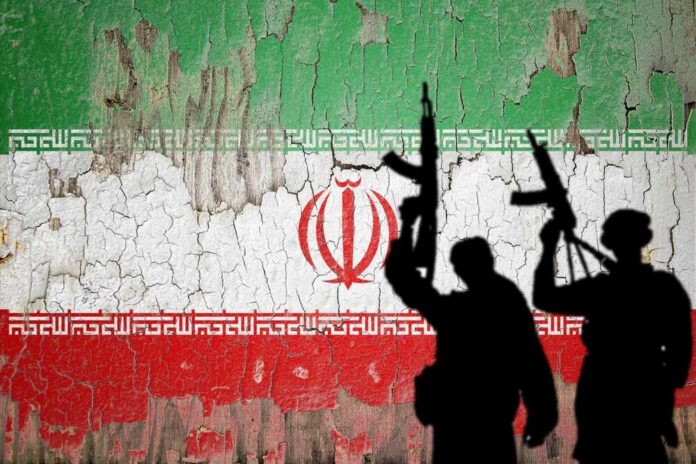
U.S.-Israeli strikes on Iran began Feb. 28, 2026, after President Trump ordered action the day prior, according to widely cited timelines and summaries of the opening phase. Those strikes—reported as hundreds of attacks against Iranian military, nuclear, and leadership-linked targets—did not occur in a vacuum. They landed while the Russia-Ukraine war entered its fourth year and while negotiations were still being extended into 2026, leaving a narrow bandwidth for Western decision-makers.
Russia’s long-run approach in Ukraine has increasingly resembled a grinding contest of endurance rather than rapid maneuver. Reporting and analysis tied to the February 2026 period point to intensified Russian missile strikes around the Donbas front, with descriptions that this tempo hit a multi-year high. The timing matters: when Washington is pulled into a fast-moving Middle East air-and-maritime campaign, adversaries have historically looked for openings elsewhere—especially in conflicts where ammunition, air defense, and political attention are already strained.
How Resource Diversion Becomes a Real Policy Problem
Western support for Ukraine has always been as much about logistics and industrial capacity as it is about speeches. The Iran conflict adds immediate demands: air defense for U.S. forces and partners, strike platforms, intelligence assets, and naval presence to protect shipping lanes. Analysts tracking this new war argue the effect is not theoretical—any shift in prioritization can slow deliveries, complicate planning, and create incentives for Russia to intensify pressure in Donetsk and Luhansk while negotiations remain unresolved.
Peace efforts have continued through venues such as Istanbul, Abu Dhabi, and Geneva, with a reported June 2026 deadline framing the diplomatic runway. That schedule collides with the reality that active wars reorder priorities week to week. Ukraine’s leadership continues pursuing Western integration goals, including NATO-related progress previously reported as advancing through 2025. Yet diplomacy requires leverage, and leverage requires capability—particularly air defense and long-range strike capacity—precisely the categories likely to be rationed if multiple theaters demand the same stockpiles.
Hormuz Pressure, Energy Volatility, and the Inflation Question
Iran’s posture around the Strait of Hormuz adds a second-order effect that hits American families: energy price volatility. Statements attributed to Iranian and U.S. military messaging during early March 2026 emphasized threats to shipping alongside efforts to keep the waterway open via escorts. Even without a full closure, elevated risk can raise insurance costs, reroute tankers, and tighten markets. For voters still angry about the inflationary aftershocks of prior years, a new external shock is a reminder that global instability can quickly reach the gas pump.
Europe also sits inside this squeeze. With Ukraine still under attack and energy security still a strategic vulnerability, disruption in Gulf shipping can reshape bargaining positions across the continent. Analysts have noted that Russia can attempt to leverage energy narratives or supply offers to widen political cracks inside Europe—especially when voters are fatigued by high costs and prolonged war. That dynamic does not require grand conspiracies; it only requires governments facing competing emergencies and finite budgets.
What the Iran War Reveals About the Limits of Alliances
One theme emerging from expert analysis is that the Iran war exposes uncomfortable limits—both for Russia’s influence in the Middle East and for Western capacity to manage simultaneous crises. Iran and Russia have drawn closer through drones and broader military cooperation connected to Ukraine, while reports also describe North Korean involvement on Russia’s side that Moscow has acknowledged. Yet a larger regional war can force each partner to protect its own priorities, complicating assumptions that any one bloc can seamlessly coordinate across theaters.
For Americans who want a foreign policy rooted in clear interests, the basic question is whether Washington can prevent a two-front demand signal from undermining deterrence in either theater. The risk is real: the Iran war can soak up attention and resources, and Russia appears prepared to press in Donbas when it senses Western impatience. The next several months—especially as talks approach mid-2026 milestones—will show whether strategy and supply keep pace with events.
Sources:
Timeline: 4 years of Russia-Ukraine war: Key turning points
The New Iran War & The Trajectory of the Russia-Ukraine War
From Tehran to Donbas: What the Iran War Means for Russia and Ukraine
Timeline: Russia’s invasion of Ukraine
Iran war exposes the limits of Russia’s leverage, fragmenting regional order