Tehran’s “black rain” shows how modern war can poison civilians overnight—while global bureaucracies lecture, ordinary families are left breathing the fallout.
Quick Take
- Reports say U.S.-Israeli strikes on Iranian fuel depots and refineries produced thick smoke that later fell as oily “black rain” over Tehran.
- Iranian agencies and the Red Crescent urged residents to stay indoors as officials warned of toxic chemicals and potential acid rain.
- The World Health Organization warned about contamination risks to air, food, and water—especially for children, the elderly, and those with health conditions.
- The UN raised concerns about proportionality and civilian harm when strikes hit infrastructure that is not exclusively military.
Black rain over Tehran after depot strikes
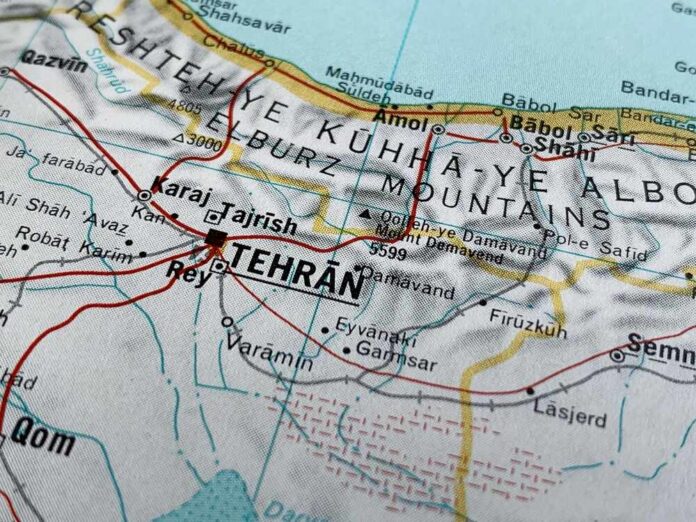
Iranian and international reporting described a dark, oily rainfall over Tehran after fuel depots and related oil facilities were hit during the early-March phase of the war that began February 28, 2026. Two sites repeatedly cited were the Shahran depot in northeast Tehran and the Shahr-e-Rey depot to the south. Multiple outlets say the city was blanketed by smoke as fires continued, turning a military campaign into an immediate public-health event for civilians.
Health risks described in the reporting stem from what typically rides inside heavy smoke from burning petroleum: soot and chemical byproducts that can irritate lungs and eyes and settle onto surfaces where families live, work, and shop. Coverage highlighted compounds such as polycyclic aromatic hydrocarbons and other pollutants associated with incomplete combustion, along with broader concerns about heavy metals and acidic components. The practical problem for ordinary people is simple: once fallout lands on streets, balconies, and reservoirs, basic daily life becomes a safety question.
WHO warnings focus on air, water, and food contamination
World Health Organization messaging during the crisis emphasized that the danger is not limited to breathing smoky air. WHO officials warned that contamination can reach drinking water, food supplies, and exposed surfaces, increasing risk for vulnerable groups. That framing matters because it shifts the story from a battlefield update to a household emergency—what kids might inhale walking to school, what seniors might breathe during a power outage, and what families might bring inside on clothing and shoes.
Iran’s own warnings tracked closely with those public-health concerns. Reports said the Iranian environmental agency and the Red Crescent urged residents to remain indoors as the smoke and fallout spread, while government figures acknowledged risks such as skin and lung harm and the possibility of acid rain. Separate reporting also described power cuts in Tehran and nearby Karaj during the same period, a complication that can make “stay indoors” orders harder when ventilation, filtration, and medical access become less reliable.
Attacks on energy infrastructure raise legal and moral questions
International humanitarian law generally requires distinction and proportionality, and UN reporting signaled concern that strikes on infrastructure with civilian proximity could violate those standards when the harm to noncombatants is excessive. The UN’s emphasis was not abstract: oil depots and refineries are often embedded near population centers and transportation corridors. When they burn, the blast damage is only the first wave; lingering smoke and chemical residue can turn entire neighborhoods into exposure zones for people who had no say in the conflict.
Some reporting described Israel’s stated intent to hit regime-supporting infrastructure, while Iran warned of severe economic consequences, including disruption to oil production and sales. Strategically, energy targets can degrade logistics and revenue, but the second-order effects are hard to confine to government officials or military units. Conservatives who value the laws of war and the protection of innocents can recognize the dilemma: a campaign meant to weaken a hostile regime can still produce civilian suffering that fuels instability and radicalization for years.
Information blackout makes verification harder—and heightens risk
Reporting also pointed to Iran’s extended internet blackout during the crisis, with claims of arrests tied to Starlink use and limited information flow through landlines, radio, and intermittent channels. That matters because blackouts reduce independent verification and slow emergency coordination. When authorities control the narrative, civilians can struggle to get clear guidance about where fallout is heaviest, how to decontaminate surfaces, or when it is safe to travel. Limited transparency also makes it harder for the international community to assess the scale of harm in real time.
Toxic black rain in Iran after bombing of oil depots https://t.co/TQqzJjmFW6
— The Algiers Herald (@AlgiersHerald) March 15, 2026
What remains clear from cross-referenced reporting is that burning petroleum infrastructure can create toxic exposure quickly, and the hazards can persist long after the flames are out. Experts cited in coverage compared aspects of the pollution to past oil-fire disasters, while also noting that an urban setting changes the human cost because dense populations sit directly under the plume. With the conflict still active in early March reporting, precise long-term health outcomes were not yet measurable, but the warnings about contamination and respiratory harm were immediate and consistent.
Sources:
After attacks, Iran’s oil facilities: Toxic ‘black rain’ endangers public
Bombing of civilian infrastructure aims to bring Iran to its knees
UN News story on health and humanitarian concerns linked to toxic fallout in Iran conflict
‘Black rain’ in Iran war: toxic pollution will spread and last decades
Middle East: all parties’ unlawful attacks on energy infrastructure