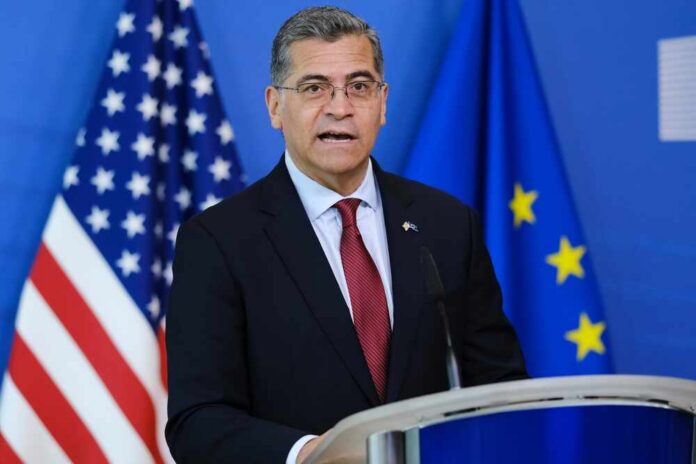
Xavier Becerra’s governor bid is now shadowed by a fraud case that federal prosecutors say left him as the victim, not the target.
Quick Take
- Federal prosecutors have treated Becerra as a victim in the campaign-fund fraud case.
- Dana Williamson, Sean McCluskie, and Greg Campbell have pleaded guilty or been charged in the scheme.
- Reporters say the money came from Becerra’s dormant campaign account and was routed through aides.
- Political opponents are still using the scandal to paint Becerra as part of a broken system.
Prosecutors Say Becerra Was Misled
Federal filings and court reporting describe a scheme that diverted about $225,000 from Becerra’s dormant campaign account. Prosecutors said aides misled Becerra about the purpose of the payments and used the money to help cover another aide’s salary after a pay cut. The key point for voters is simple: the case described in the record centers on the aides who took part in the fraud, not on any charge against Becerra himself.
CalMatters reported that prosecutors have considered Becerra a victim and have not charged him with wrongdoing. The same report said Becerra cooperated with investigators and called the betrayal a “gut punch,” while his campaign argued that the record now confirms he did nothing wrong. Dana Williamson later pleaded guilty in Sacramento federal court to conspiracy to commit bank and wire fraud, false tax filing, and false statements to federal investigators.
The Guilty Pleas Give the Case Weight
The guilty pleas from Williamson, Sean McCluskie, and Greg Campbell give the allegations real weight because they came from inside the scheme. Reporters said investigators used Federal Bureau of Investigation wiretaps and seized communications during the probe, which strengthens the government’s account that aides worked to hide the true purpose of the money transfers. That is why the legal picture looks much stronger than the political noise around it.
Still, one hard truth remains for Becerra’s team: the public record is built mostly on the testimony and plea deals of the accused. CalMatters noted that defense counsel said they did not have direct knowledge of what was said between McCluskie and Becerra. That leaves critics free to push suspicion, even though the available evidence points to aides misleading the candidate rather than the candidate running the fraud.
Politics, Perception, and the Newsom Connection
The bigger political problem is not the courtroom record. It is the damage from headlines that link Becerra to Gavin Newsom’s inner circle and to a broader ethics fight in Sacramento. Tom Steyer’s campaign has already used the scandal in attack material, calling Becerra part of a broken system and turning the case into campaign fuel. For conservatives, that matters because public trust falls fast when insiders and consultants keep popping up in the same mess.
The fight now is over perception, not charges. Becerra says he was not involved and did nothing wrong, and the guilty pleas give that defense more force. But opponents are not waiting for a final political verdict. They are using the scandal to keep the focus on California’s culture of insider deals, loose oversight, and campaign money that can move through dormant accounts with little public scrutiny.
Why This Story Still Matters
This case should worry voters because it shows how easily campaign money can be misused when trusted aides control the flow. It also shows why clear records matter in politics. When prosecutors say the candidate was the victim, the public should expect facts to lead the debate. If future releases produce internal emails, memos, or other documents, they could settle the remaining questions about who knew what and when.
Sources:
nypost.com, sacbee.com, tomsteyer.com, abc7.com