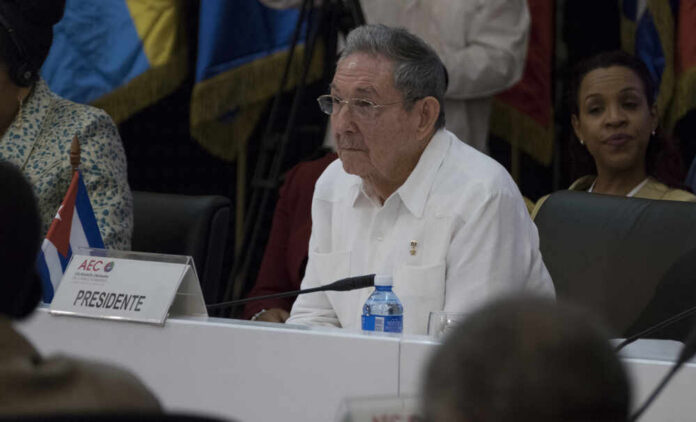
Beijing is now lecturing Washington over the Raul Castro indictment, demanding the United States stop seeking justice for murdered Americans and drop its so‑called “judicial stick” against Cuba.
Story Snapshot
- Raúl Castro has been federally indicted for the 1996 shootdown of two Brothers to the Rescue planes that killed four people, including U.S. nationals.[2]
- China is warning the United States to “stop brandishing the judicial stick” against Cuba, framing the case as political interference rather than accountability.[2]
- President Trump says the indictment does not mean new military escalation, while critics question the timing and symbolism of the charges.[1][2]
- The case highlights a deeper clash between American rule of law and authoritarian regimes that shield their allies from consequences.
Raúl Castro Faces U.S. Murder Indictment Over 1996 Shootdown
The United States Department of Justice unsealed a superseding indictment charging former Cuban ruler Raúl Castro with conspiracy to kill United States nationals, destruction of aircraft, and four counts of murder tied to the February 24, 1996 shootdown of two Brothers to the Rescue Cessna planes over international waters. Prosecutors say Castro, now 94, played a leading role in the decision to send Cuban fighter jets to destroy the civilian aircraft, killing Carlos Costa, Armando Alejandre Jr., Mario de la Peña, and Pablo Morales.[2]
Acting Attorney General Todd Blanche announced the charges at an emotional event in Miami, surrounded by Cuban exile families who have waited three decades for Washington to formally name Castro as criminally responsible.[1] Blanche said Castro “oversaw the chain of command” at the time of the attack and described the indictment as a step toward accountability, even while acknowledging that bringing Castro physically before a United States jury remains unlikely in the near term given Cuba’s refusal to extradite its former head of state.[2]
China Rushes to Shield Cuba, Blasts U.S. “Judicial Stick”
China’s foreign ministry reacted to the indictment by telling the United States to “stop brandishing the judicial stick” against Cuba, characterizing the case as a politicized move rather than a straightforward effort to prosecute the killing of American citizens.[2] Beijing’s language fits a broader pattern where the Chinese Communist Party attacks United States legal actions against authoritarian partners—whether in Cuba, Iran, or elsewhere—as illegitimate “long‑arm jurisdiction,” while ignoring the basic right of American families to seek justice in United States courts.
Chinese criticism also comes as Cuba’s current leadership angrily denounces the indictment as a “political action,” echoing Beijing’s talking points and insisting Washington is weaponizing its justice system against a small socialist neighbor.[1][2] That narrative collides with the long record of prior federal indictments against Cuban military officers and pilots involved in the same shootdown, including a 2003 Miami grand jury case, underscoring that demands for accountability did not suddenly appear in 2026 or magically coincide with a single administration’s policy preferences.
Trump Balances Justice Message With No-Escalation Pledge
President Donald Trump responded to fears that the Castro indictment might be a pretext for war by saying there “won’t be escalation” against Cuba, even as his Justice Department framed the case as a long‑overdue response to the murder of Americans in international airspace.[2] That balance tries to separate legal accountability from military intervention, pushing back on critics who claim the filing is merely cover for tightening economic or naval pressure on Havana rather than a principled stand for victims’ families.[1][2]
Some groups like the Chicago Cuban Coalition argue the timing is suspicious and accuse Washington of using the indictment as a justification to intensify economic and military pressure on the island.[1] Yet the public record shows this case has been investigated for decades, has previously produced charges against Cuban officers, and is supported by reporting about intelligence gathering, alleged recordings, and survivor testimony, even though the full evidentiary file is not yet public. That history weakens the claim that the indictment is a sudden political invention.
Rule of Law Versus Authoritarian Impunity
The fundamental clash here is between an American system that still aspires to hold foreign leaders accountable for killing United States citizens and a bloc of authoritarian regimes, led by Beijing, that reflexively denounce such efforts as imperial “judicial sticks.”[2] Conservatives who value the Constitution, national sovereignty, and the sanctity of American life can see the danger in allowing foreign strongmen to murder civilians with impunity simply because they hide behind borders and sympathetic great‑power patrons like China.
By JOSHUA GOODMAN, ALANNA DURKIN RICHER and ERIC TUCKER MIAMI (AP) — The Justice Department is preparing to seek an indictment against former Cuban President Raúl Castro, three people familiar with the matter told The Associated Press on Frid… https://t.co/VEJAMjmw8W
— Capital Gazette (@capgaznews) May 15, 2026
At the same time, the case exposes real tension inside the United States: when prosecutions are announced amid patriotic ceremonies and exile politics, the symbolism can drown out sober scrutiny of evidence. The long delay since 1996, the lack of transparent access to the full indictment text, and reliance on press summaries rather than court filings mean citizens must demand both things at once—serious justice for murdered Americans, and serious proof that stands up in open court—no matter how loudly Beijing and Havana complain.[2]
Sources:
[1] Web – Raúl Castro indicted in 1996 shootdown that killed 3 …
[2] YouTube – Trump Administration Indicts Cuba’s Raul Castro Over …