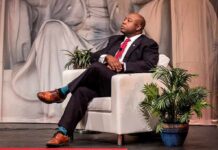
Vice President JD Vance’s turn at the White House podium did more than brief reporters — it signaled a tougher, more accountable Trump administration that is finally answering directly to the American people.
Story Snapshot
- Vice President JD Vance personally led an official White House press briefing, fielding questions across foreign and domestic policy.[1][2][4]
- The briefing focused heavily on Iran, with Vance stressing that Iran will never be allowed to obtain a nuclear weapon under President Trump.[1][2][3]
- Vance emphasized “good faith” negotiations with Iran while making clear the United States is “locked and loaded” if diplomacy fails.[1][3]
- Corporate and legacy media rushed to spin a routine staffing substitution into palace-intrigue drama over who really speaks for the administration.[2][3]
Vice President Steps Into the Briefing Room, Not Away From Accountability
Official White House video and archival records confirm that on May 19, 2026, Vice President JD Vance, not a press aide, stood at the lectern in the James S. Brady Briefing Room to face reporters on camera.[1][2][4] The White House’s own upload is titled “Vice President JD Vance Briefs Members of the Media, May 19, 2026,” and multiple outlets carried the event live as a standard White House press briefing, not a campaign rally or informal chat.[1][2][3] That simple fact alone marks a stark contrast with past administrations that often hid principals behind layers of staff.
Reuters and other outlets reported that Vance was filling in for Press Secretary Karoline Leavitt while she is on maternity leave, underscoring that this was an official function rather than a power struggle. Prior reporting indicated the White House planned for senior officials, including Vance and even President Trump, to rotate through the briefing room during Leavitt’s leave, turning a family-focused absence into an opportunity for more direct engagement. While internal memos outlining that rotation have not been released, the on-camera record shows Vance acting as the administration’s primary spokesperson that day, taking questions on the full spectrum of policy.[1][2][3]
Iran, Red Lines, and a Foreign Policy That Finally Means What It Says
During the briefing, Vance repeatedly hammered home one central message: under President Donald Trump, the United States will not permit Iran to obtain a nuclear weapon.[1][2][3] He told reporters the president had instructed his team to “aggressively negotiate with the Iranians” but stressed that a nuclear weapon remains a clear red line.[1][3] Vance described long, intensive sessions with Iranian negotiators as a “sign of good faith,” while insisting that any deal must include real processes to ensure Iran cannot simply rebuild its nuclear capability after Trump leaves office.[1][3]
Vance emphasized that the administration believes Iran “wants to make a deal,” but he refused to pretend success is guaranteed, saying he would not express confidence until there is “pen to paper” on a negotiated settlement.[1][3] He acknowledged multiple draft texts already circulating between the sides, but framed the outcome as ultimately dependent on Tehran’s willingness to accept that nuclear weapons are off the table.[1][3] At the same time, he reminded reporters that the president has made clear the United States is “locked and loaded” if diplomacy fails, signaling a readiness to use force rather than slip back into the empty talk and side payments that characterized the old Iran deal.[3]
Media Spin Versus the Reality of a Vice President Taking Questions
The substance of the briefing looked very much like a traditional White House question-and-answer session, with Vance calling on reporters, saying “Go ahead,” and responding in detail to queries about foreign policy, domestic priorities, and the administration’s broader agenda.[1][2][3] The topics ranged from Iran negotiations to national security, with the vice president speaking on the record for the administration in the same room where prior press secretaries once tried to sell “woke” talking points and bureaucratic power grabs.[3][4] In that sense, the event represented a return to accountability: instead of a staffer spinning, a top elected official answered.
Yet much of the media conversation fixated less on what Vance said and more on what his presence supposedly “signaled.” Some outlets leaned into drama about whether he was “taking over” from Leavitt, even though the original reporting simply stated he was among the senior figures scheduled to guest-host briefings during her leave. Other coverage sought to frame the briefing as unusual or symbolic, despite White House records placing it squarely within the normal sequence of briefings and statements, complete with an official listing on the briefing archive page.[4] For many conservatives, that disconnect reinforces a familiar frustration: corporate media never miss a chance to turn routine Trump administration governance into a storyline about palace intrigue.
What This Means for Conservatives Watching Washington
For Americans who care about strong borders, affordable energy, and a government that remembers its constitutional limits, the Vance briefing offers two notable signals. First, on foreign policy, it shows an administration confronting a hostile regime with both diplomacy and credible deterrence, instead of writing checks and hoping for the best.[1][3] Vance’s insistence on verifiable limits on Iran’s nuclear capability directly addresses years of conservative concern that prior deals relied on blind trust and weak inspections.[1][3]
In a press briefing from the White House on Tuesday, Vice President JD Vance declared that the United States is "locked and loaded" in its stance toward Iran. https://t.co/LFzFGrjhOT
— NewsRadio WHAM 1180 (@WHAM1180) May 20, 2026
Second, on communications, it shows senior leaders are willing to subject themselves to tough questions in full view of the public rather than hiding behind anonymous leaks and friendly anchors. The evidence we have confirms that this was an official briefing, documented by the White House itself, carried live by major outlets, and conducted with Vance acting as the administration’s spokesperson for the day.[1][2][3][4] Whether or not one likes every policy answer, that kind of direct engagement is exactly what self-governing citizens should demand from those who wield power in their name.
Sources:
[1] YouTube – Vice President JD Vance Briefs Members of the Media, May 19, 2026
[2] YouTube – LIVE: White House press briefing with JD Vance
[3] YouTube – WATCH NOW: U.S. VP JD Vance White House Briefing …
[4] Web – Briefings & Statements – The White House