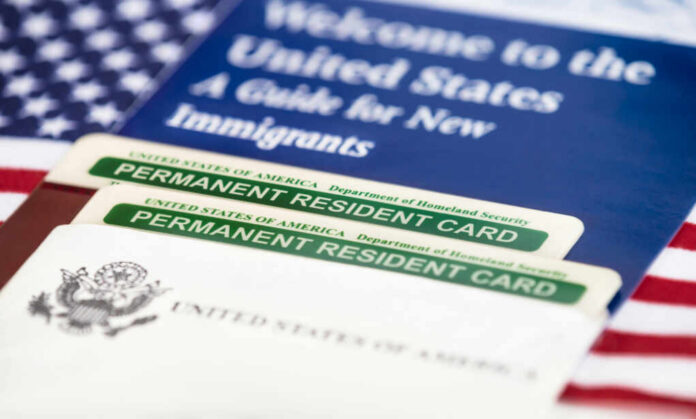
A new Trump administration proposal would once again let federal officials weigh Medicaid and housing assistance when deciding who earns a green card, raising a simple question for many Americans: should newcomers be able to rely on taxpayers and still win permanent status.
Story Snapshot
- The Department of Homeland Security (DHS) has proposed scrapping Biden’s 2022 “public charge” rule and reopening the door to counting more welfare-type benefits in green card decisions.
- The plan would again let officers consider non‑emergency Medicaid, food stamps, and housing aid as signs an immigrant may become dependent on taxpayers.
- DHS’s own analysis projects about $9 billion less per year in government transfer payments, with most savings from lower Medicaid and children’s health program spending.
- Liberal advocacy groups and health policy researchers are attacking the proposal, warning of “chilling effects” and threatening more lawsuits to shut it down.
What “public charge” means and how Biden narrowed it
Federal immigration law has, for decades, said that any foreign national “likely at any time to become a public charge” can be denied admission or a green card. For years, officials read that to mean someone who would be primarily dependent on government cash welfare or long-term care in an institution like a nursing home. The Clinton-era 1999 field guidance limited public charge to cash benefits and long-term institutional care. The Biden administration’s 2022 rule basically locked that narrow view back into place nationwide.
Under Biden’s 2022 regulation, use of programs like Medicaid, food stamps, housing assistance, or the Children’s Health Insurance Program does not count against most immigrants when officers decide if they are a public charge. The rule says officers may only look at cash assistance, such as Supplemental Security Income and Temporary Assistance for Needy Families, plus long-term government-paid institutional care. It also stresses a “totality of the circumstances” test, so no single factor can decide a case, and even clarifies that simply applying for benefits, or helping a family member apply, does not count as “receipt.”
How Trump earlier expanded the rule to cover Medicaid and housing aid
During Trump’s first term, the Department of Homeland Security issued a 2019 rule that took a tougher approach to self‑sufficiency. That rule said officers could treat use of non‑emergency Medicaid, most forms of housing assistance like Section 8 vouchers, and food stamps as negative factors when deciding if a green card applicant might become a public charge. The standard shifted from “primarily dependent” on cash welfare to whether someone was more likely than not to use one or more listed public benefits for more than 12 months in a 36‑month window.
Immigration groups, progressive nonprofits, and many Democrat state officials sued almost at once, arguing the 2019 rule was illegal and cruel. Several federal courts issued nationwide injunctions that blocked the policy for much of its short life. After Joe Biden took office, his Justice Department told the Supreme Court it would no longer defend the Trump public charge rule, and the rule was vacated nationwide by lower courts. In March 2021, the Department of Homeland Security formally removed the 2019 language from the regulations, and by late 2022 Biden’s narrow, benefits‑friendly rule was in full effect.
What the new 2025 Trump proposal would change
Now, in Trump’s second term, the Department of Homeland Security has published a new proposed rule that would rescind the 2022 Biden regulation and reopen the door to counting non‑cash benefits. The filing says the department wants to move away from a rigid “primary dependence” standard and allow officers to consider “receipt of any type of public benefits” when judging whether someone might become a public charge, including Medicaid and the Children’s Health Insurance Program. A news report explains that the rule would make it easier to deny green cards to applicants using programs such as Medicaid and food stamps.
🔴 DHS rescind Biden rule, broadens benefits review for green card applicants
The Department of Homeland Security is rescinding a 2022 regulation that narrowed the "public charge" test used to determine green card eligibility. The change restores a broader standard allowing… pic.twitter.com/r0s7PQnTGe
— NewsTongue (@NewsTongueX) July 16, 2026
Unlike the 2019 rule, this 2025 proposal would first wipe away Biden’s detailed definitions of “public charge” and “public benefits,” then leave more room for case‑by‑case judgment. The American Immigration Lawyers Association complains that DHS would “eliminate the public charge regulations from the Biden era, replace them with nothing, and harken back to the pre‑1999 era” when officers leaned on old Board of Immigration Appeals case law instead of clear regulatory text. Supporters see that flexibility as basic common sense; opponents call it dangerous discretion.
The money at stake and the fight over “chilling effects”
DHS’s own cost‑benefit analysis says the proposed change could reduce state and federal transfer payments by about $9 billion every year, mainly because fewer immigrants would enroll in welfare‑style benefits if those programs put a green card at risk. The analysis expects about 65 percent of that reduction, or roughly $5.76 billion, to come from lower spending in Medicaid and the Children’s Health Insurance Program. For taxpayers who have watched the federal debt and health spending soar, that is not a small number.
Health policy advocates and immigrant‑rights groups are pushing back hard. Georgetown University’s Center on Children and Families warns that the public charge change “will have far-reaching consequences for children, pregnant women and families and sow fear in immigrant communities,” and it projects a 10.3 percent disenrollment rate from Medicaid and related coverage as families drop off the rolls out of fear. They describe these as “chilling effects,” where even people who would not be penalized may avoid care because they do not trust the system. These groups are already laying the groundwork for another round of court challenges.
Legal tug-of-war and what it means for border and budget hawks
This latest move fits a long pattern: one administration tightens the public charge test, activists sue, judges issue nationwide injunctions, and the next Democrat administration rolls the policy back. Courts blocked much of Trump’s 2019 rule, and Biden’s team refused to defend it, helping to wipe it off the books. As of now, Biden’s 2022 rule still governs decisions until the new proposal goes through notice, comment, and final approval, and then survives almost certain lawsuits.
For conservatives who believe immigration should favor self‑reliance over dependency, the stakes are clear. The Immigration and Nationality Act already says that anyone “likely to become a public charge” is inadmissible; the real fight is over whether that phrase includes heavy use of programs like Medicaid and subsidized housing, or just cash welfare. The Trump administration’s 2025 proposal aims to restore a broader view of self‑sufficiency and protect taxpayers, but activist groups, liberal states, and much of the media are lining up to stop it again in court and in the court of public opinion.
Sources:
cbsnews.com, aila.org, abcnews.com, ccrjustice.org, kff.org, clasp.org, miracoalition.org, americanimmigrationcouncil.org, cnn.com, ccf.georgetown.edu, youtube.com, essentialhospitals.org, nokidhungry.org, ilrc.org, migrationpolicy.org, congress.gov, govinfo.gov