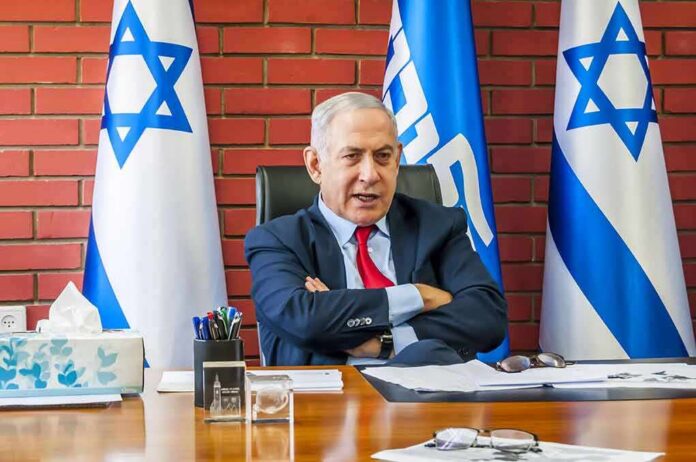
Axios reported that Benjamin Netanyahu asked President Trump for more public backing days before Israel’s close October 27 election, pressing for stronger statements and outreach to Israeli media.
Story Highlights
- Axios reported Netanyahu asked Trump to “double down” on his endorsement and boost public support.
- President Trump already endorsed Netanyahu on October 18 on Truth Social, praising his leadership.
- Media accounts say Netanyahu proposed language and interview formats to maximize the message.
- American presidents weighing in on Israeli elections has precedent across both parties.
Axios Scoop: Netanyahu Sought Expanded Trump Support
Axios reporter Barak Ravid, as summarized by Mediaite, reported that Israeli Prime Minister Benjamin Netanyahu asked President Trump for more public support ahead of Israel’s October 27 election. The report said Netanyahu spoke with Trump twice in three days and asked him to “double down” on his recent Truth Social endorsement. The account described concrete asks, including suggested language and proposed media steps to reach Israeli voters. The Axios report cited an anonymous source, which is common for fast-moving election coverage.
Mediaite’s summary of Axios said Netanyahu pressed for more statements and even interview formats that could air in Israel. The reporting framed the outreach as urgent given a tight race. The timing came less than two weeks after Trump’s initial endorsement. The details underscored Netanyahu’s interest in highlighting his bond with the White House. That bond centers on shared positions against the Islamic Republic of Iran and on regional security goals, which both leaders have emphasized publicly in recent years.
Trump’s October 18 Endorsement Praised Netanyahu’s Leadership
President Trump endorsed Netanyahu on October 18, calling him “Strong, Brave, and Brilliant” in a Truth Social post, according to Reuters. The endorsement arrived as Israeli polls signaled a close contest. Coverage by several outlets described the message as full and personal, reflecting years of partnership on security, diplomacy, and economic ties. Reporting noted that the endorsement came nine days before the vote, giving Netanyahu’s campaign time to amplify it through video, social media, and friendly outlets.
Additional press coverage echoed the core points of Trump’s message and its timing. The Independent described Trump’s post as a boost for a longtime ally under intense political pressure. Other outlets summarized the praise for Netanyahu’s record and his stance toward Iran’s regime. They also noted that the endorsement fit a pattern of direct White House communication through social platforms. Israeli media quickly circulated the post, and Netanyahu’s camp worked to link it to their closing argument days before ballots were cast.
Why This Matters for U.S. Conservatives
U.S. conservatives see Israel as a front line against terror and the Islamic Republic of Iran. Trump’s endorsement signals continued resolve on those priorities. Many readers value strong borders, stable energy, and clear lines against extremist groups. Netanyahu has long aligned with those goals. His outreach to Trump shows he wants to spotlight that alignment as voters decide. The move also reflects a broader truth: personal leadership and security strength can matter when a nation faces real threats.
Some analysts argue that presidential endorsements often have mixed effects. Academic studies have found modest or uneven gains from endorsements in general elections, depending on context and audience. But foreign policy and security issues can shift how voters react. In Israel, leaders’ ties to Washington can shape views on deterrence against Iran and on regional stability. Whether the ask changes votes or not, the signal is clear: Netanyahu wants the world to see tight U.S.–Israel coordination on defense and peace through strength.
A Long History of U.S. Voices in Israeli Politics
American leaders from both parties have weighed in on Israeli elections before. Commentary tracing this history points to moments when President George H. W. Bush opposed Yitzhak Shamir and when Presidents Bill Clinton, Barack Obama, and Joe Biden were linked to efforts that challenged Netanyahu’s bids. Trump’s endorsement is more explicit and more personal, but the pattern of engagement is not new. The current step fits a larger tradition of public positioning by allied leaders during hot campaigns.
Scoop: Netanyahu presses Trump for more support ahead of tight Tuesday electionhttps://t.co/v9aYRl4FXQ
— Blue Paul (@gobacktosanity) October 25, 2026
For conservatives at home, the key takeaway is focus. Israel needs resolve to deter Iran, stop terror financing, and protect families. Trump’s message highlights a partner he trusts to do that work. Netanyahu’s reported request shows he wants those stakes front and center. Voters can debate endorsements. But the hard reality is that security leadership matters. When allies coordinate, America is safer, Iran is more isolated, and the Middle East is less likely to spiral into wider war.
Sources:
mediaite.com, reuters.com, cambridge.org