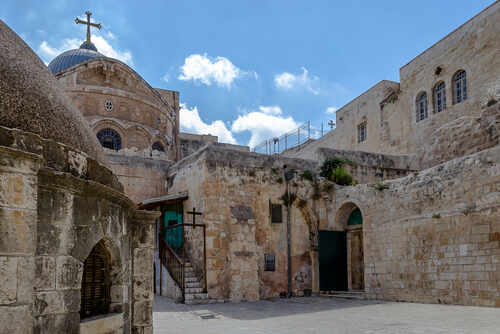
Israeli police stopping Christian clergy from Palm Sunday worship at Christianity’s holiest Jerusalem site is the kind of wartime “security” decision that can quickly turn into a precedent—especially while America is dragged deeper into a widening Middle East conflict.
Quick Take
- Israeli police blocked the Latin Patriarch of Jerusalem and another Catholic leader from entering the Church of the Holy Sepulchre for a private Palm Sunday Mass, citing safety concerns tied to the Iran war.
- Church officials called the move a “grave precedent,” saying it was the first such prevention in centuries and disrupted Holy Week at a site governed by long-standing access rules.
- Prime Minister Benjamin Netanyahu denied malicious intent and said he ordered “full and immediate access,” along with a security plan to allow worship during Holy Week.
- Jerusalem’s holy sites have faced tightened restrictions since Feb. 28, 2026, including limits on gatherings and requirements for nearby bomb shelters after missile threats and impacts.
Palm Sunday block raises alarms about religious liberty under emergency rule
Israeli police stopped Cardinal Pierbattista Pizzaballa, the Latin Patriarch of Jerusalem, and Father Francesco Ielpo from entering the Church of the Holy Sepulchre on Palm Sunday, March 29, 2026, as they attempted to celebrate a private Mass. Authorities pointed to safety concerns tied to the ongoing war with Iran, including missile threats and the Old City’s cramped access routes. Church representatives disputed the necessity, warning the incident risked becoming a precedent.
The dispute matters because the Holy Sepulchre is not simply another church in a war zone; it is revered as the site of Jesus’ crucifixion, burial, and resurrection. The church is governed by a “status quo” arrangement that has historically managed access among Catholic, Greek Orthodox, and Armenian Apostolic communities. When government security forces override that arrangement—even for stated safety reasons—religious leaders fear it signals that wartime controls can eclipse centuries-old protections.
Israel cites narrow alleys, shelter limits, and missile risk—church leaders cite inconsistency
Israeli officials argued that the church’s surrounding alleys are too narrow for emergency vehicles and that adequate shelter is not available nearby, making even a small service risky during missile alerts. Reports also noted that missile fragments had landed near the Holy Sepulchre area, adding to authorities’ caution. Church officials countered that private Masses had taken place at the site since late February, raising questions about why Palm Sunday warranted a total block for senior clergy.
Because large gatherings are already restricted, the immediate controversy was not about a mass procession through the streets, which was canceled amid wartime rules, but about access itself. Israeli restrictions have limited gatherings to small numbers at sites with sufficient shelter, and other locations have reportedly allowed limited prayer under those parameters. That contrast fueled the Catholic leadership’s claim that the denial at the Holy Sepulchre did not match the on-the-ground pattern elsewhere in Jerusalem.
Netanyahu orders access and promises a worship plan, but details remain unclear
Prime Minister Benjamin Netanyahu responded publicly the same day, posting that there was no malicious intent and saying he instructed authorities to provide “full and immediate access” to the church leaders. Netanyahu also announced a plan to enable worship at the Holy Sepulchre in the coming days, framing Easter as a uniquely sensitive period. As of the reports available, no follow-up confirmation was provided showing precisely how access would be implemented or enforced.
What this means for Americans watching a widening Iran war from home
For U.S. conservatives, the episode lands at a volatile moment: America is already at war with Iran, and many Trump voters are split between solidarity with Israel and frustration over another Middle East conflict that threatens energy costs and open-ended commitments. The Palm Sunday dispute illustrates how quickly war pressures can collide with basic liberties—here, religious freedom and long-standing rules meant to keep sacred sites accessible. Even allies can make decisions that inflame cultural and faith tensions.
Bottom line: security policies need transparency, accountability, and equal treatment
Israel’s stated rationale—public safety amid missile threats—cannot be dismissed in a shooting war, especially when officials cite physical constraints like narrow alleys and shelter capacity. At the same time, church leaders’ concern about a “grave precedent” is grounded in the reality that emergency powers have a habit of expanding without clear endpoints. The test now is whether promised access is delivered consistently, under rules applied evenly across sites and faiths, with minimal intrusion on worship.
Israel to draft "plan" to allow Catholic church leaders to worship after Latin Patriarchate of Jerusalem blocked from Church of the Holy Sepulchre on Palm Sundayhttps://t.co/6im17oxZqF
— Human Events (@HumanEvents) March 30, 2026
Cardinal Pizzaballa ultimately held Mass at St. Savior’s Monastery and led prayers at the Dominus Flevit Shrine instead, but that workaround does not resolve the underlying issue. In wartime, democratic societies earn trust by explaining restrictions clearly, applying them narrowly, and correcting mistakes quickly. With Holy Week underway and global attention on Jerusalem, the credibility of any “plan” will depend on whether it restores access without turning temporary security measures into a permanent new normal.
Sources:
Israel prevents Catholic leaders from celebrating Palm Sunday Mass at Jerusalem church
Church of the Holy Sepulchre: Jerusalem Cardinal Pizzaballa blocked by Israel
Israel faces backlash after church leaders blocked from the Holy Sepulchre
Israeli police prevent Catholic leaders from celebrating Palm Sunday Mass at Jerusalem church