Indonesian forces clash with 800 protesters in Papua’s capital, demanding military withdrawal after an operation that allegedly killed 15 civilians—a stark reminder of how unchecked government power crushes self-determination and individual liberty.
Story Snapshot
- Approximately 800 students and civilians protested in Jayapura on April 27 against military presence following 15 alleged civilian deaths in a recent operation.
- Police deployed tear gas and water cannons, injuring officers slightly but sparing protesters; lawmakers later de-escalated tensions peacefully.
- Papua’s long-simmering conflict stems from a disputed 1969 vote, fueling separatist demands amid Indonesia’s massive troop deployments.
- Militarization expands into civilian life, blocking local development and igniting widespread resentment across indigenous communities.
Clashes Erupt in Jayapura
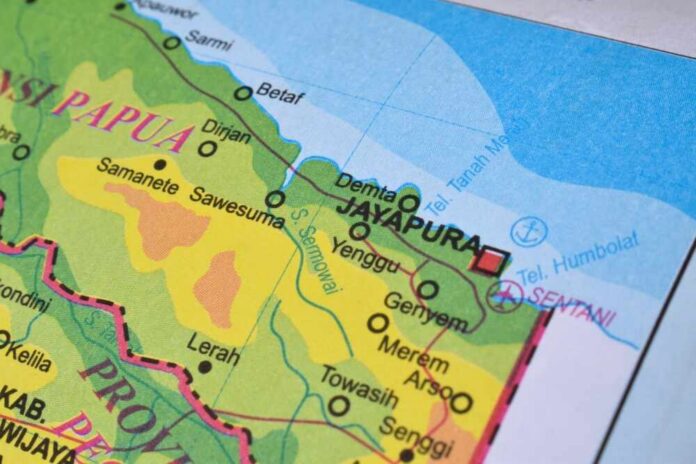
On April 27, roughly 800 demonstrators gathered in Jayapura, Papua’s provincial capital, to protest the Indonesian military’s heavy presence. Students and civilians demanded full troop withdrawal after a recent counter-separatist operation that a human rights watchdog confirmed killed 15 civilians. Indonesian police responded with tear gas and water cannons during initial clashes. Officers sustained minor injuries, but no protesters were hurt. The situation calmed as regional lawmakers engaged directly with the crowd, allowing the demonstration to continue peacefully.
Deep-Rooted Historical Grievances
Papua’s unrest traces to Indonesia’s 1969 “Act of Free Choice,” a UN-supervised process where only 1,025 selected participants voted under military coercion. Independence activists universally reject this as illegitimate, sparking decades of resistance by groups like the Free Papua Movement. Since 1961, Indonesia has run its longest military operations here. Recent escalations include 29 non-organic army units deployed in 2024-2025, with raids by the West Papua National Liberation Army linked to killings and torture. Protests surged in late 2025 and January 2026 across multiple sites, including child-involved marches demanding self-determination.
Stakeholders and Power Imbalance
Protesters, including the Yahukimo Student Front, church leaders, and groups like the Indonesian Legal Aid Foundation, seek demilitarization, dialogue, and indigenous rights. The Indonesian military and police, with up to 83,000 personnel historically, deny civilian casualties and expand into education, health, and economy sectors in this mineral-rich region. Armed separatists pursue independence, while government lawmakers promote development through province divisions. Churches criticize the “excessive” presence, and the government blocks UN and journalist access, tilting power heavily toward Jakarta.
Indonesia frames operations as anti-terrorism for security and growth, but activists view it as occupation with rights abuses. Human rights monitors document displacement and violations, urging civil society unity for peace.
Impacts and Broader Warnings
Short-term effects include displacement and fear among indigenous Papuans, with children joining protests near operation zones. Long-term, conflict entrenches, hindering true development as military roles sideline civilians. Economically, mining disrupts; socially, a humanitarian crisis festers; politically, separatism grows with calls for UN intervention. This mirrors frustrations worldwide where elites prioritize control over people, eroding self-reliance and traditional governance principles that Americans cherish—government overreach stifling the pursuit of prosperity through individual initiative.
Clashes in Indonesia's Papua as hundreds protest military presence https://t.co/V5pMbT9LDv
— Reuters Asia (@ReutersAsia) April 27, 2026
Ongoing Militarization Trends
Government plans 100 territorial battalions signal further entrenchment, following December 2025 reinforcements to Yahukimo. YLBHI reports from December 2025 warn that such buildup triggers resistance and abuses, advocating dialogue over force. Contradictions persist: military denies deaths confirmed by watchdogs, and troop figures vary between non-organic units and totals. Limited independent verification underscores opacity, fueling distrust in distant authorities much like concerns over “deep state” influences at home.
Sources:
Protesters demand military withdrawal amid Papua unrest
West Papua under siege: rising militarisation and civil society resistance
Clashes in Indonesia’s Papua as hundreds protest military presence
A Lopsided War: Papua Militarization, 83000 Soldiers and Police
Indonesian Bishops Slam Excessive Military Presence In Papua