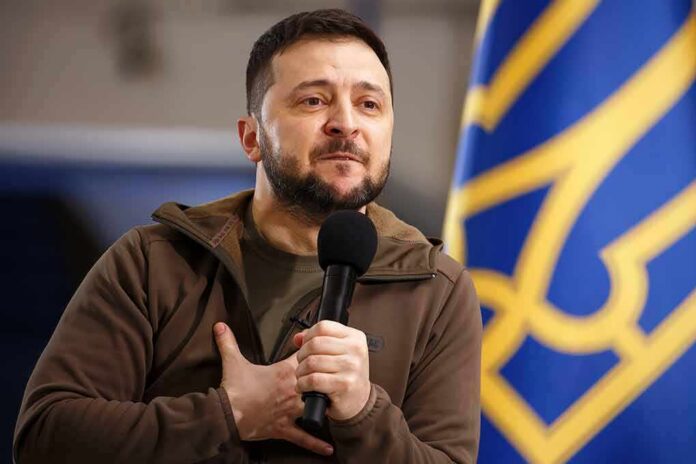
Ukraine’s President Volodymyr Zelenskyy addressed Norway’s Parliament during a historic session tied to a multi‑year support program for Ukraine, underscoring Oslo’s long-term military and economic backing.
Story Highlights
- Zelenskyy spoke at a historic session involving Norway’s Parliament, the Storting.
- Norway linked the address to a multi‑year Nansen support program for Ukraine.
- Norway’s leaders described major, ongoing aid that includes weapons and industry support.
- Visual political content online is often manipulated, demanding careful source checks.
Zelenskyy’s Address Anchored to Norway’s Parliamentary Support
Norway’s Prime Minister introduced a “historic session,” welcomed Zelenskyy, and tied the moment to the launch of a multi‑year Nansen support program for Ukraine. The official record places Zelenskyy’s appearance alongside Parliament’s broad move to back Ukraine through sustained help. This confirms that Norway’s legislature was directly connected to the event. The message was clear: lawmakers stood behind a structured plan meant to aid Ukraine’s defense, economy, and recovery during a brutal war launched by Russia.
Norway’s framing matters for taxpayers and allies who want clean goals and timelines. Officials described a program, not a blank check, and tied it to the Storting’s role. That signals oversight and intent, which many Americans wish Washington had shown during past foreign aid debates. When a Parliament labels a session “historic,” it signals accountability and a long view. That is how serious countries treat war spending, readiness, and industrial capacity, rather than passing chaotic, last‑minute patches.
What Norway Says It Is Delivering and Why It Counts
Norway’s Prime Minister later detailed support that includes artillery ammunition, drone capacity, and investments in Ukraine’s own defense industry. He said Parliament had acted with a united vote to scale and speed deliveries. This pairs immediate battlefield needs with long‑term production. That approach echoes what American defense hawks have urged for years: ramp industry, refill stocks, and press partners to carry real weight. It also reduces strain on the United States when allies step up credibly.
Norway’s government described recent meetings in Oslo with Zelenskyy that focused on military support and paths to peace. Leaders said Norway had more than doubled aid and highlighted gratitude shown by Ukraine’s president for help that keeps his country in the fight. Those statements match the picture from the parliamentary event: a European partner building a plan and executing on it. For U.S. readers tired of vague pledges, this is a case where a NATO partner spells out deliveries and stays engaged.
Why Conservative Readers Should Care Now
American voters want allies to pay their fair share, defend their own region, and protect Western energy and trade lanes without draining U.S. coffers. Norway’s plan ties funds to defense output and industry growth. That can harden Europe’s flank and lower long‑term costs for the United States. It also deters wider conflict that would drag Americans into a bigger, pricier fight. When Europe proves it can shoulder serious burdens, it supports a stronger, more focused U.S. posture.
Nordic Countries Don't Trust Putin!
Speaking after meeting Nordic leaders, @ZelenskyyUa praised Denmark, Sweden, Norway, Finland and Iceland for their deep understanding of Ukraine's security challenges and their continued support against Russia's invasion.
But his strongest… pic.twitter.com/iSMelh6DbB— euDebates.tv (@eudebates) November 11, 2026
One caution still holds: political video and images online are often mislabeled or fake. Studies show that most synthetic videos on social platforms are political, and visual misinformation is common. Readers should lean on official records when viral clips race across their feeds. In this case, Norway’s own documents confirm the Storting‑linked event and the multi‑year support frame. Facts first, feelings second — that keeps our debates grounded and our policy choices sharp.
Sources:
regjeringen.no, ar5iv.labs.arxiv.org, eeas.europa.eu, debunk.org