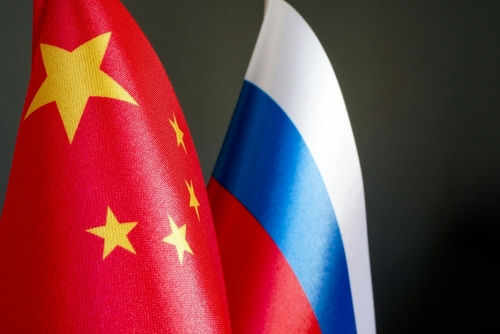
Vladimir Putin’s two-day state visit to Beijing signals a deepening Russia-China partnership that is reshaping global power dynamics — and American policymakers cannot afford to ignore it.
Story Highlights
- Putin arrived in Beijing on May 19, 2026, for a state visit at President Xi Jinping’s invitation, marking his 25th trip to China.
- Putin declared Russia-China relations have reached a “truly unprecedented level,” citing mutual trust, trade exceeding $200 billion, and coordinated support on sovereignty issues.
- Bilateral trade now ranges between $220 billion and $240 billion, with most transactions settled in rubles and yuan rather than U.S. dollars.
- The partnership, rooted in a 2001 friendship treaty, has accelerated sharply since Russia’s 2022 invasion of Ukraine drove Moscow closer to Beijing as Western sanctions mounted.
Putin Lands in Beijing for Summit with Xi
Russian President Vladimir Putin arrived in Beijing on May 19, 2026, for a two-day state visit hosted by Chinese President Xi Jinping. The visit marks Putin’s 25th trip to China and comes just days after Xi met with former U.S. President Donald Trump, underscoring Beijing’s careful effort to manage relationships on multiple fronts simultaneously. Putin delivered a video address ahead of his arrival declaring that “Russia-China relations have reached a truly unprecedented level.” [3]
The summit agenda centers on deepening bilateral cooperation across trade, energy, and strategic coordination. Putin framed the relationship as built on “mutual understanding and trust” and described the two nations as “supporting each other on matters affecting the core interests of both countries, including protection of sovereignty and state unity.” [6] The diplomatic choreography — Putin visiting Beijing immediately after Trump’s meeting with Xi — signals that both Russia and China are actively managing their global positioning as great-power competition intensifies.
Trade Surges as Dollar Is Sidelined
Bilateral trade between Russia and China now stands between $220 billion and $240 billion annually, according to Putin, with Chinese state media confirming the figure has “long surpassed the $200 billion mark.” [4][6] Critically, mutual settlements are now conducted almost entirely in rubles and yuan, deliberately bypassing the U.S. dollar. This financial realignment represents a direct challenge to dollar dominance in global trade — a trend American economic and national security officials have warned about for years.
The economic integration goes beyond raw trade figures. Putin cited nearly 600 joint investment projects between the two countries, reflecting a broad institutional entrenchment of the partnership. [4] While the precise methodology behind the ruble-yuan settlement figures has not been independently verified through central bank or customs data, the directional trend is consistent across multiple reporting sources. The scale of this dollar-avoidance effort is not symbolic — it is structural, and it is growing.
A Strategic Alignment Washington Must Watch
Putin anchored the relationship’s legitimacy in the 2001 Treaty of Good-Neighborliness and Friendly Cooperation, noting that “25 years ago, Russia and China signed the Treaty of Good-Neighborliness and Friendly Cooperation, which laid a solid foundation for a genuinely strategic relationship.” [6] That legal foundation has been reinforced by regular summitry, with Putin describing top-level talks as “an important and integral part” of advancing the relationship’s “truly limitless potential.” [3]
Russian President Vladimir Putin has arrived in Beijing for a summit with President Xi Jinping. They plan to sign numerous agreements on trade and investment, strengthening ties between Russia and China following Xi's recent meeting with U.S. President Trump.
— AL Khammas (@ALkhammas2) May 19, 2026
Independent analysts caution that “unprecedented” is a political characterization, not a verified historical benchmark. The relationship lacks a formal mutual-defense treaty, and the two powers are constrained by asymmetry and lingering mistrust. [5] Still, for American conservatives who have long warned about the dangers of a Russia-China axis — accelerated by years of weak Western foreign policy and European energy dependence on Moscow — the trajectory is unmistakable. A sanctioned, war-fighting Russia and an economically powerful China are building the kind of durable strategic partnership that could define the next era of global competition. The Trump administration’s foreign policy team faces the challenge of preventing that alignment from hardening further while managing simultaneous pressure points from Ukraine to the Pacific.
Sources:
[3] Web – Urgent: Putin says Russian-Chinese ties reach truly unprecedented …
[4] Web – ‘Unprecedented’ Russia-China ties based on ‘full trust’: Putin
[5] Web – Putin lauds ‘unprecedented’ level of Russia-China ties in message …
[6] Web – Putin says Russian-Chinese ties reach ‘truly unprecedented level’