Ukraine is now exporting battlefield-tested counter-drone know-how to protect wealthy Gulf partners—while negotiating a swap that could directly strengthen Kyiv’s air defenses against Russia’s next missile barrage.
Story Snapshot
- President Volodymyr Zelensky announced Ukraine will send counter-drone specialists to Qatar, the UAE, and Saudi Arabia following Iranian drone attacks in the region.
- The arrangement is framed as a “fair exchange,” with Gulf partners providing Patriot PAC-2 and PAC-3 interceptor missiles to Ukraine.
- The U.S. requested Ukrainian help days earlier for Middle East bases, and Washington is coordinating broader cooperation sometimes described as a “Drone Deal.”
- Analysts say Ukraine’s experience against Iranian-made Shahed drones since late 2022 is shaping new air-defense playbooks outside Europe.
Zelensky’s Gulf Deployment Signals a New Kind of Wartime Bargain
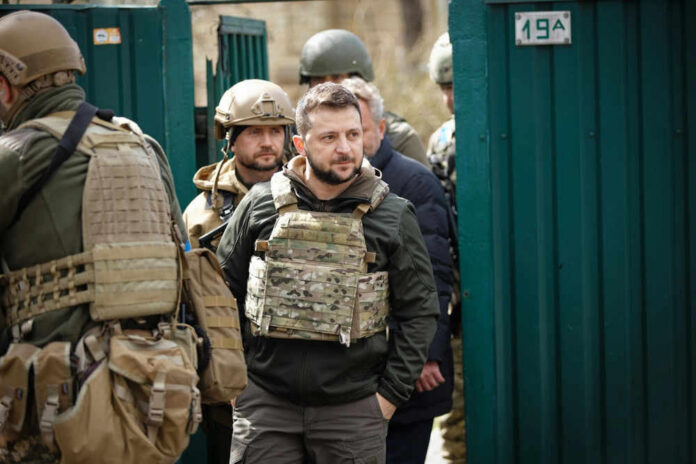
Ukrainian President Volodymyr Zelensky said on March 10, 2026, that Ukraine is sending counter-drone specialists to Qatar, the United Arab Emirates, and Saudi Arabia to help blunt Iranian drone threats. Zelensky also described the effort as a reciprocal arrangement that would deliver Patriot interceptor missiles to Ukraine. Details such as team size, equipment, and exact delivery timelines remain limited in public reporting as of March 11.
Ukrainian officials have emphasized that the initiative builds on hard-earned experience defending cities and infrastructure from waves of Iranian-designed Shahed drones used by Russia. That experience includes identifying launch patterns, coping with massed attacks, and adapting air defense procedures under pressure. The agreement also reverses the usual aid dynamic: a nation under invasion is now providing a service to oil-rich partners that are facing similar drone tactics.
Why the Gulf Wants Ukraine’s Drone Lessons Now
Regional pressure has intensified after U.S. and Israeli strikes on Iran, followed by Iranian retaliatory drone barrages toward Gulf targets and military facilities. Reporting cited attacks or threats affecting infrastructure and civilian-adjacent sites, raising the stakes for governments that host major international airports, ports, and energy assets. Gulf states are U.S. partners, and protecting those corridors also protects U.S. forces and logistics networks that operate across the region.
Military analysis in the source material highlights a key tactical point: expensive interceptor missiles are not always an efficient answer to cheap, numerous drones. Several reports describe Ukraine’s emphasis on lower-cost interception options and layered defense, including techniques for coping with decoys and mixed attacks involving drones and cruise missiles. Even sympathetic coverage acknowledges the constraint for Ukraine: sending scarce specialists abroad can strain a country still fighting daily air raids at home.
Washington’s Role and the “Drone Deal” Concept
Multiple outlets reported that the United States requested Ukrainian assistance in early March for Middle East locations, including bases in Jordan, and that Ukrainian teams deployed quickly. That timeline matters because it shows the Gulf mission is not an isolated headline but part of a wider coordination effort. It also references a proposed “Drone Deal” framework in which Ukrainian interceptor-drone production and expertise could be scaled with outside funding and partners.
For an American audience that watched years of foreign-policy drift and bureaucratic overreach, the practical question is whether U.S. coordination produces measurable security gains without open-ended commitments. The available reporting does not specify financial terms, quantities of Patriot interceptors, or any U.S. congressional action tied to this particular swap. What is clear is that the arrangement is structured around immediate air-defense needs—protecting bases and civilians—rather than symbolic diplomacy.
What’s Known, What’s Not, and Why It Matters
Confirmed elements across the cited reporting include Zelensky’s announcement, the focus on countering Iranian drones, and diplomatic contact with Gulf leaders. Uncertainties include which Gulf countries ultimately receive teams beyond the core list, how many specialists deploy, and when outcomes can be assessed. Some sources mention additional regional contacts, but public details remain thin. That information gap limits any definitive claims about effectiveness until deployments and results are independently verified.
The bigger takeaway is strategic: drone warfare is spreading, and countries that learned the hard way are becoming exporters of tactics. From a conservative perspective focused on security and limited government, the lesson is straightforward—technology and competence matter more than slogans. If allies can trade capabilities instead of demanding indefinite blank checks, that is a model worth watching. Whether it holds depends on transparent terms and demonstrable results, not press releases.
Sources:
Ukraine Delivers Support to the Persian Gulf Countries
Ukraine offers Gulf nations help to counter drone attacks
Russian Offensive Campaign Assessment, March 8, 2026
US, Gulf states, Iran war, Shahed, Ukraine interceptor drones, weapons export ban
Lessons From Ukraine for Defending Gulf Airspace From Shaheds
Ukrainian delegation heads to Gulf region to stabilize security after Iran strikes
Energy under attack: what the Gulf can learn from Ukraine and Iraq