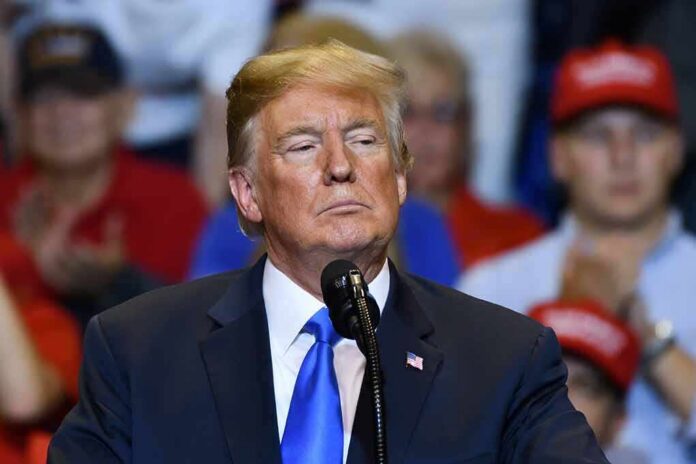
President Trump cut short his weekend at Camp David and rushed back to the White House Saturday night after the State Department warned that fighting in the Middle East “has the potential to escalate rapidly.”
Story Snapshot
- President Trump ended his Camp David stay a day early and returned to Washington, D.C. Saturday evening.
- The State Department issued a fresh security alert warning Americans in the Middle East to “exercise heightened vigilance.”
- Houthi rebels launched new missile and drone attacks on Saudi Arabia, including strikes near civilian airports.
- At least 11 U.S. embassies across the region echoed the warning about possible travel disruptions.
- The White House has not yet detailed exactly why the president moved so quickly.
Trump Rushes Back As Threats Mount Abroad
President Trump left his Camp David retreat in Maryland ahead of schedule Saturday, returning to the White House hours after the State Department renewed a broad travel alert for the Middle East. The department warned that “the security environment remains complex with the potential for unforeseen escalation,” a signal that Washington sees real danger to Americans overseas.
The alert came as Iranian-backed Houthi rebels fired fresh missile and drone attacks at Saudi Arabia, targeting areas that included civilian airports. State Department officials didn’t mince words, telling Americans already in the region to prepare for sudden travel disruptions and stay alert around the clock.
State Department Sounds The Alarm
The warning wasn’t vague diplomatic boilerplate. The department said plainly that “this military conflict has the potential to escalate rapidly,” and told Americans outside the Middle East to seriously reconsider travel to the region altogether. That’s a serious statement from an agency that usually chooses its words carefully to avoid spooking the public.
More than 11 U.S. embassies across the Middle East pushed out matching warnings, a coordinated move that shows this wasn’t one nervous official overreacting. When that many American outposts sound the same alarm on the same day the commander in chief cuts short his weekend, conservatives watching the news have every reason to take it seriously.
A Commander In Chief Who Moves Fast
Whatever critics say about President Trump, nobody can accuse him of sitting on his hands while a crisis builds overseas. The moment his own State Department flagged rising danger to Americans abroad, he dropped his weekend plans and got back to the White House. That’s the kind of decisive leadership voters expect from a president, especially after years of watching the previous administration fumble one foreign policy crisis after another.
The White House hasn’t yet spelled out every detail behind the president’s quick move, and that’s worth noting plainly. But the public timeline is not in dispute: a real security warning went out, and the president responded to it without delay.
Why This Matters For American Families
This isn’t some abstract overseas squabble. Americans living, working, or traveling in the Middle East were told directly to be ready for sudden disruptions to flights and travel plans. For military families, missionaries, contractors, and tourists in that part of the world, this is a real and immediate concern, not a distant headline.
Conservatives have long argued that weak, indecisive leadership abroad invites exactly this kind of chaos, from emboldened Iranian proxies to attacks on our allies like Saudi Arabia. President Trump’s swift return shows a White House treating the threat as urgent rather than something to manage from a mountain retreat while Americans overseas wait for answers.
Sources:
feedpress.me, yahoo.com, independent.co.uk, news.meaww.com, english.ahram.org.eg, timesnownews.com