
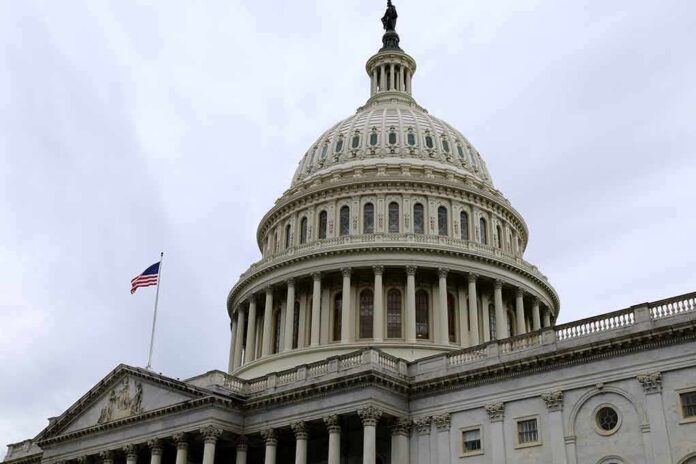
House Republicans stopped an impeachment push against Defense Secretary Pete Hegseth with a narrow procedural vote, leaving a fierce war-powers fight unresolved.
Story Highlights
- The House voted 211–204 to send impeachment articles against Hegseth to committee, halting a floor vote.
- The articles accused Hegseth of continuing hostilities in Iran without proper authorization and past a 60-day limit.
- Both chambers previously approved a measure directing removal of U.S. forces from unauthorized hostilities in Iran.
- Hegseth called the impeachment a political stunt and said all operations were lawful, not “high crimes”.
What The House Actually Did With The Impeachment Push
House leaders used a procedural step to refer the eight impeachment articles to the Judiciary Committee. The 211–204 vote blocked an immediate up-or-down decision on removing Defense Secretary Pete Hegseth. That outcome effectively stalled the effort in the current Congress, even though a simple majority could have advanced it if brought to the floor. Reports describe Representative Thomas Massie’s resolution as a privileged measure that forced quick consideration before leadership redirected it to committee.
Reporting said Massie was the only Republican to oppose referral, while most Democrats backed the impeachment effort. The vote did not judge the facts. It only decided process and timing. That means the House created no formal record on evidence, legal analysis, or witness testimony. The choice signaled that many Republicans, despite concerns about the war’s direction, did not see conduct that met the constitutional bar for impeachment at this stage.
The Core Allegations Center On War Powers And Iran
Massie’s articles accused Hegseth of engaging in hostilities against Iran without a declaration of war, a specific authorization, an attack on the United States, or an imminent threat. Coverage described three Iran-focused claims: launching the war without authorization, continuing it after both chambers instructed removal, and continuing it beyond the 60-day period allowed for unauthorized hostilities. The accounts also mentioned separate allegations tied to boat strikes and a Venezuelan operation.
Congress had earlier taken a notable step on the same question. A concurrent resolution in the 119th Congress directed the President to remove United States forces from unauthorized hostilities in Iran. The House agreed to it on June 3, 2026, and the Senate on June 23, 2026. That action put Congress on record against continuing those hostilities without proper authorization, adding fuel to Massie’s argument that the executive branch had pushed past clear legislative lines.
Hegseth’s Defense And Why Many Republicans Balked At Impeachment
Hegseth rejected the claims outright. He said every operation was lawful and that the results—destroyed terror capabilities, drug boats sunk, and a narco-dictator captured—do not add up to “high crimes.” He labeled the impeachment a political stunt, not a real case with evidence of corruption or criminal acts. That stance, paired with the view among many Republicans that policy disputes should not become impeachable offenses, helped slow the drive to remove him.
Supporters of Hegseth also pointed to chain-of-command facts. Reporting quoted Secretary of State Marco Rubio saying Hegseth carried out direct orders from President Trump on Iran and other operations. For Republicans wary of setting a precedent that punishes cabinet officials for executing presidential directives within asserted legal authority, that argument carried weight. It framed the fight as a long-running power struggle between Congress and the executive, not a clear-cut case of personal misconduct.
Why This Matters For Constitutional Conservatives
The Constitution gives Congress the power to declare war and fund the military. Presidents, over many decades, have claimed growing power to use force without explicit votes. This case fits that pattern. The House’s referral vote did not settle the core dispute. It only put off a reckoning. For readers who want firm checks on endless conflicts and clear lines of authority, the lesson is simple: Congress must assert its power with binding authorizations and real oversight, not just symbolic steps.
The US House of Representatives blocked outgoing US Rep. Thomas Massie’s (R-KY) effort to impeach War Secretary Pete Hegseth on November 10, voting 211-204 to refer eight articles of impeachment to the Republican-led Judiciary Committee, effectively killing the resolution before… pic.twitter.com/oqPMzozU2v
— VPol (@VocalPolitics1) November 11, 2026
Conservatives want strong defense and real victories, not open-ended wars or blurred rules. The administration says it is hitting terrorists and traffickers lawfully. Critics say the Iran fight crossed legal lines. The path forward is clarity: public timelines for any hostilities, prompt reports to Congress, and explicit votes when force continues. That keeps our troops safe, follows the Constitution, and prevents political games from weakening national security or family stability at home.
Sources:
defensedaily.com, congress.gov, cbsnews.com, nbcnews.com, bbc.co.uk, deadline.com