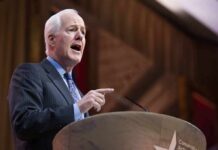

A Republican senator is pushing legislation to permanently ban Chinese electric vehicles from American roads, warning they function as surveillance tools for the Communist Party while threatening to obliterate the domestic auto industry.
Story Snapshot
- Sen. Bernie Moreno calls Chinese automakers “predator companies” designed to destroy Western auto manufacturing
- Bipartisan Connected Vehicle Security Act targets embedded surveillance technology and CCP data harvesting capabilities
- Bill expands Biden-era restrictions to include complete hardware, software, and partnership bans
- Measure passed Senate Commerce Committee 18-5 but remains stalled amid budget negotiations
Predator Companies Targeting American Industry
Senator Bernie Moreno introduced the Connected Vehicle Security Act of 2026 in early April, characterizing Chinese electric vehicle manufacturers as existential threats to both national security and the American automotive sector. The Ohio Republican told Fox News that companies like BYD, NIO, and XPeng receive approximately $230 billion in state subsidies designed to flood global markets with vehicles priced 30 percent below American alternatives. Moreno argues this predatory pricing strategy aims to systematically dismantle Western auto manufacturing while embedding surveillance infrastructure controlled by Beijing throughout U.S. transportation networks.
Surveillance Risks and CCP Control
The legislation addresses growing concerns that Chinese-manufactured vehicles contain cameras, microphones, and connected systems enabling real-time data collection for the Chinese Communist Party. Security analysts compare these risks to TikTok’s data harvesting capabilities, noting that vehicles generate continuous location, behavioral, and infrastructure data. Moreno emphasized that these systems could theoretically allow remote vehicle control, creating vulnerabilities in critical transportation networks. Previous congressional hearings in 2023 explored similar concerns regarding Chinese-made drones, establishing precedent for technology-based security restrictions that now extend to the automotive sector.
Bipartisan Support and Legislative Progress
The bill secured passage through the Senate Commerce Committee on April 15, 2026, with an 18-5 vote, demonstrating rare bipartisan consensus on China-related policy. House companion legislation introduced by Representative Gimenez of Florida reflects growing cross-party agreement that Chinese EV imports pose unacceptable risks. The United Auto Workers union rallied in Detroit on May 1 supporting the measure, viewing it as essential protection for manufacturing jobs in Ohio, Michigan, and other auto-producing states. Despite committee success, the bill faces delays in full Senate consideration due to ongoing budget reconciliation negotiations.
Economic and Industry Implications
Brookings Institution estimates the legislation could protect or create approximately 10,000 automotive jobs in traditional manufacturing states, primarily benefiting Detroit’s Big Three automakers—General Motors, Ford, and Stellantis. However, Goldman Sachs projects the ban may increase electric vehicle prices by 5 to 10 percent for American consumers by eliminating lower-cost import competition. GM CEO Mary Barra publicly endorsed the measure, citing unfair subsidies that distort market competition. The bill builds upon existing Biden administration rules banning Chinese software effective 2027 and hardware effective 2029, extending restrictions to cover all partnerships and connected technologies in a comprehensive prohibition.
Senator Bernie Moreno on The Threat of Chinese Electric Vehicles – 'These are Predator Companies That Seek to Destroy the Western Auto World' (VIDEO) https://t.co/Zr4oAPguqE #gatewaypundit via @gatewaypundit
— tim fucile (@TimFucile) May 11, 2026
The measure represents escalating U.S.-China economic confrontation, with the European Union imposing 45 percent tariffs on Chinese EVs on April 25 and Mexico investigating BYD manufacturing plants suspected of circumventing trade restrictions. Industry experts at the Center for Strategic and International Studies estimate 70 percent of analysts view long-term net benefits for American interests, despite short-term consumer price increases and supply chain disruptions. The legislation aligns with Trump administration signals toward executive orders expanding restrictions, continuing protectionist momentum from 2018 tariff policies. Whether the bill advances to a floor vote before midterm election pressures intensify remains uncertain, with prediction markets assigning 60 percent odds to eventual Senate passage.
Sources:
Sen Bernie Moreno proposes ban on Chinese EVs amid surveillance threat – Fox News