As world leaders pour into Washington for Lindsey Graham’s funeral, President Trump is turning a memorial into a high‑stakes summit with Ukraine’s Volodymyr Zelenskyy — and that has real consequences for American power, taxpayer money, and the future of the war in Europe.
Story Snapshot
- Zelenskyy has arrived in the United States to attend Sen. Lindsey Graham’s funeral and meet with President Trump, turning a memorial into a major diplomatic moment.
- While in Washington, Zelenskyy is set to visit the White House and then meet all 100 U.S. senators, pressing his case on the war and sanctions.
- Graham’s role as one of Ukraine’s strongest backers explains why Kyiv is treating his funeral as both a tribute and a chance to lock in continued support.
- Conservatives now face big questions about how far U.S. aid, sanctions, and global commitments should go as Trump hears Zelenskyy out and weighs next steps.
Zelenskyy’s Washington visit: funeral and White House meeting
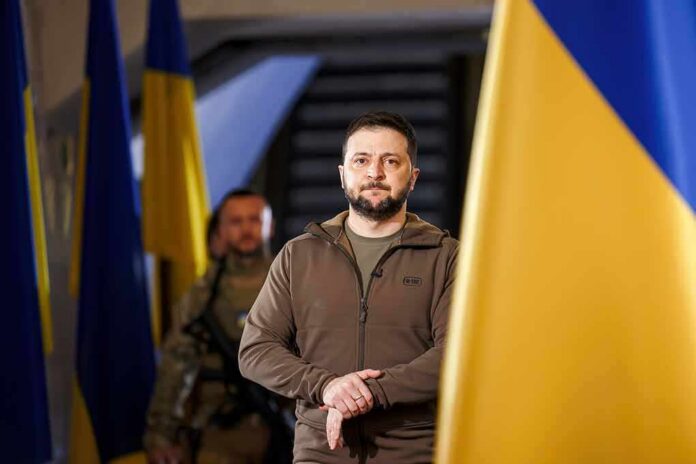
Ukrainian President Volodymyr Zelenskyy is in the United States this week for a tightly packed visit centered on honoring Sen. Lindsey Graham and meeting President Trump. Reports from the Associated Press say Trump will host Zelenskyy at the White House on Tuesday, just hours before Graham’s funeral service at Washington National Cathedral. This is their second sit‑down this month, underscoring how often Zelenskyy seeks direct access to the American president to push his war agenda.
ABC News and other outlets, citing White House and Ukrainian officials, confirm that Zelenskyy’s trip is built around two core events: the funeral and the Trump meeting. Ukraine’s public broadcaster Suspilne reported that Zelenskyy was invited to Graham’s funeral and that the Presidential Office had been planning a U.S. trip tying together the memorial and bilateral talks with Trump. Early coverage described the visit as a “working” trip, not just a symbolic appearance, with aides stressing ongoing peace and sanctions discussions.
Why Lindsey Graham’s funeral became a diplomatic stage
Lindsey Graham’s sudden death at age 71 cut short the career of one of Washington’s loudest voices for stronger U.S. backing for Ukraine. NBC News and other outlets noted that Graham had visited Kyiv repeatedly after the Russian invasion and pushed sanctions aimed at punishing countries that keep buying Russian oil, gas, and other exports. Just days before his death, he was in Ukraine again, meeting with Zelenskyy to discuss air defense, sanctions, and ways to move peace talks forward.
Because of that track record, Ukrainian and European media describe Graham as one of Kyiv’s strongest advocates on Capitol Hill. His final act as a public official reportedly involved securing an agreement on a sanctions package meant to tighten pressure on Russia’s energy sales. That is why Zelenskyy’s team treated the funeral not only as a moment to pay respect, but also as a key point on the diplomatic calendar, with sanctions, long‑range weapons, and peace terms all in play around the memorial events.
Meetings with Trump and Congress: what Zelenskyy wants
Trump’s meeting with Zelenskyy comes as Ukraine continues to press the United States for more military support, tougher sanctions enforcement, and a clearer path to ending the war on terms friendly to Kyiv. The Associated Press reports that after the White House session and the funeral, Zelenskyy is scheduled to head to Capitol Hill for a gathering with senators on Tuesday evening. According to Senate aides, all 100 senators have been invited to meet him while he is in Washington for the funeral.
Ukrainian and regional outlets say Zelenskyy’s itinerary includes a “peace track” meeting and broader talks on the future of the conflict. Reports from Suspilne and lawmakers such as Yaroslav Zheleznyak describe the visit as a working trip expected to last nearly a week once travel time and time zones are counted, during which Zelenskyy will push his diplomatic strategy directly to Trump and key members of Congress. For many conservatives, this raises familiar questions about open‑ended commitments, sanctions spillover on U.S. energy prices, and how long Washington should carry the main burden.
Fast‑moving coverage and what is firmly confirmed
Much of the early reporting on this visit followed a now common pattern in modern political news: unnamed officials and public broadcasters first said Zelenskyy “may” or “was considering” traveling, then wire services and national outlets shifted to language that he “will” attend the funeral and “will” meet Trump once schedules were locked in. That ladder—from planned, to expected, to confirmed—can be easy for audiences to blur together, even though each step rests on different levels of proof.
At this stage, several key points are now on solid ground. A White House official has stated Zelenskyy will meet Trump on Tuesday in Washington, and news outlets citing Ukrainian officials say he will attend Graham’s funeral at the National Cathedral. Senate staff confirm an invitation for all senators to meet Zelenskyy during the same visit. What remains less clear from public sources is the exact format of every conversation—whether some talks will be private, at the sidelines of the funeral, or in formal photo‑op style settings.
What this means for U.S. conservatives watching the war
For conservative Americans, Zelenskyy’s presence in Washington during President Trump’s second term is a reminder that foreign leaders know the United States still sits at the center of global power debates. Graham’s funeral shows how deeply some in the old Washington guard tied American policy to far‑away conflicts, from sanctions and energy rules to long‑range weapons and war funding. Now Trump is the one hearing Zelenskyy’s pitch face‑to‑face and weighing how much U.S. leverage, money, and risk should remain on the table.
Many on the right will want Trump to use these meetings to defend core American interests: a strong but limited role abroad, protection of the U.S. economy from sanction blowback, and a clear line against turning memorials into pressure campaigns for endless foreign aid. Zelenskyy’s trip, wrapped around the funeral of a powerful Ukraine supporter, captures the tension between honoring a longtime ally and making sure future policy stays grounded in the Constitution, restrained government, and common sense priorities at home.
Sources:
youtube.com, tvpworld.com, volunteers.support, abcnews.com, newsukraine.rbc.ua, usnews.com, en.interfax.com.ua, kyivpost.com, ua.news, english.nv.ua, nbcnews.com, npr.org