A new ISW assessment says Putin’s boasts of big gains hide a much smaller, grinding advance on the ground.
Story Highlights
- Putin claims sweeping wins and a “collapsing” Ukrainian front, but ISW says the data does not match.
- Independent mapping shows far smaller gains than the Kremlin’s public numbers in mid to late 2026.
- Analysts report a culture of exaggeration inside Russia’s command that likely misleads Putin.
- Ukrainian leaders publicly disputed Russian claims of capturing key towns cited by Moscow.
Putin’s Public Claims Clash With Verified Ground Gains
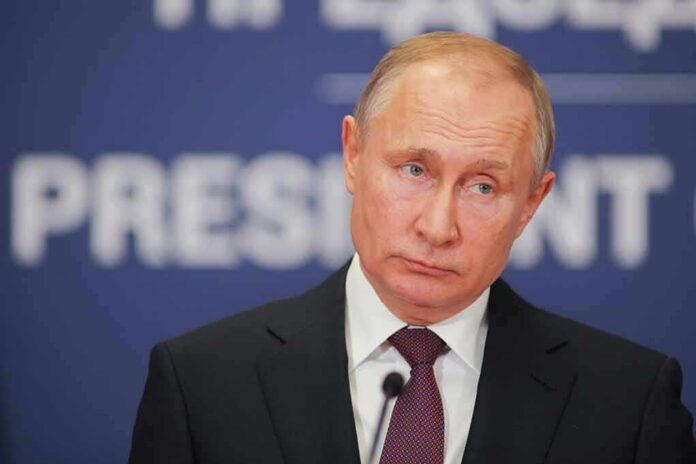
Reuters reported that on September 1, 2026, Vladimir Putin said Russia was winning the war and would not negotiate with leaders he labeled “terrorists,” framing momentum as firmly on Russia’s side. The Institute for the Study of War (ISW) countered that his talk of rapid advances did not match battlefield evidence, citing limited movement across the front. ISW calculated that Russian forces averaged about 1.03 square kilometers per day in June 2026, a modest rate for such sweeping rhetoric.
ISW-linked reporting said Russian commanders have long overstated progress, which likely shaped Putin’s perception of the front in 2026. That claim is supported by a pattern seen in official tallies and public statements. When the Kremlin touted large territorial gains, mapping and geolocated evidence showed a smaller footprint. ISW’s September figures showed total gains of about 90 square kilometers across the theater in August 2026, undercutting grand claims of surging advances.
Specific Town Claims Drew Rapid Pushback
Russian state messaging pointed to headline “liberations” to prove momentum. Yet those claims ran into fast rebuttals. NHK reported that Russia said it captured Kostyantynivka in early July 2026, but Ukraine’s President Volodymyr Zelenskyy denied it while independent analysis also questioned Moscow’s version of events. ISW’s running assessments said such announcements were part of a narrative of inevitable victory that glossed over slow, costly fighting.
Earlier numbers also raised doubts. RBC-Ukraine noted a February 2026 claim from Russia’s operations chief of about 900 square kilometers taken that year, but ISW tracked nearer to 572 square kilometers and 19 settlements, a large gap for a single reporting period. By September, ISW again said Putin was making exaggerated statements about a faster pace and collapsing defenses, claims that did not line up with observed combat trends.
Inside Russia’s Reporting Culture and Why It Matters
Western and independent outlets highlighted a deeper issue: a command culture that rewards good news up the chain. The Independent cited Russian analysts and military bloggers who described pervasive lying in internal reports, leaving Putin with a distorted view of the frontline. ISW similarly assessed that routine exaggeration likely convinced him the situation was better than it was, sustaining risky choices and propaganda lines that promised more than the army could deliver.
Conservatives know information warfare when they see it. Inflated wins sell a story to demoralize opponents and sway the West. But bad data also leads to bad strategy. Overstatement hides costs, drags out war, and raises the chance of wider spillover. This matters for America’s security and wallet. Clear facts protect our troops, our allies, and our energy and trade lanes. Washington must keep pressure on truth, not hype, and avoid blank checks built on someone else’s propaganda.
What This Means for U.S. Policy Under President Trump
President Trump and his national security team face a fog of claims and counters. The reliable thread is to move by verified facts, not Kremlin talking points or social media noise. ISW’s numbers show steady but limited Russian gains, not a breakneck rout of Ukraine. That supports a course that deters escalation, protects vital U.S. interests, and demands accountability for every dollar. Americans are tired of spin, forever wars, and wasted funds. Rigorous verification helps end all three.
Limits and What We Still Need to Know
The public record does not include internal Russian briefing packets or transcripts showing exactly what Putin was told by his generals. That is a key gap. Even so, the consistent mismatch between large Kremlin claims and geolocated changes supports the assessment that Moscow’s story inflates results. More primary records could sharpen the picture. Until then, policymakers should treat sweeping boasts with caution and keep decisions rooted in cross-checked data that can stand on its own.
Sources:
english.nv.ua, ua.news, understandingwar.org, independent.co.uk, ukrinform.net