
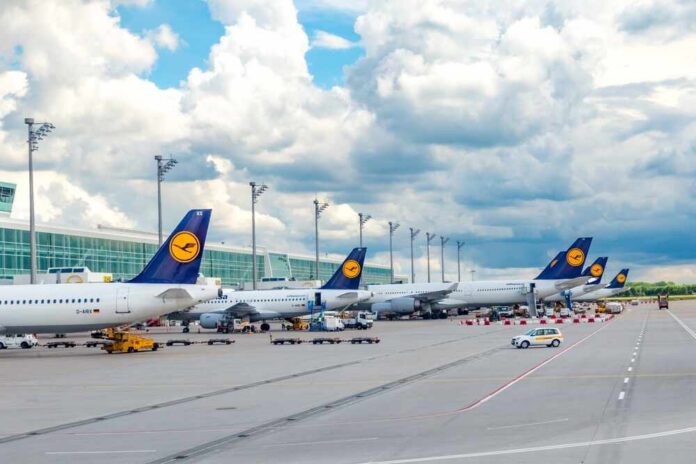
European air travel faces a looming crisis as geopolitical turmoil in the Middle East threatens to ground thousands of flights and leave summer travelers stranded, exposing the continent’s dangerous dependence on foreign fuel sources.
Story Snapshot
- IATA warns of widespread flight cancellations across Europe starting late May due to jet fuel shortages linked to Middle East conflicts
- Lufthansa has already slashed 20,000 flights through October, targeting short-haul routes from major hubs like Frankfurt and Munich
- Fuel prices have surged due to disruptions in the Strait of Hormuz, which handles 20% of global oil supply, with travelers facing price increases exceeding €100 per round-trip
- EU policymakers are scrambling to implement strategic fuel reserves while airlines demand regulatory relief to manage the crisis
Middle East Conflict Triggers European Aviation Crisis
The escalating conflict involving Iran has created a chokepoint in the Strait of Hormuz, disrupting oil supplies that European airlines depend on for jet fuel. This geopolitical crisis has sent fuel costs into what industry insiders call a “tailspin,” forcing carriers to make impossible choices between profitability and maintaining service. The International Air Transport Association’s Director General Willie Walsh issued a stark warning that airlines need contingency plans, including potential fuel rationing, as shortages could materialize by late May. This crisis exposes Europe’s strategic vulnerability after shifting away from Russian energy sources following the 2022 Ukraine invasion, leaving the continent heavily reliant on Middle Eastern imports.
Airlines Slash Routes to Survive Economic Pressure
Lufthansa Group has announced the most dramatic response, canceling approximately 20,000 flights through October, representing roughly one percent of its total capacity. The German carrier is eliminating short-haul routes including Frankfurt-Stavanger and Frankfurt-Bydgoszcz, with previews of Hamburg Airport showing eerily empty terminals. France-based carriers like Air France and Transavia have responded differently, raising prices by €100 or more on long-haul round-trips rather than cutting flights. Smaller carriers like Volotea have already canceled over 50 flights from Strasbourg since March. These cuts disproportionately affect smaller airports and remote communities that depend on these connections, while passengers face the double burden of fewer options and higher prices.
Germany’s Energy Dependence Creates Uneven Impact
The crisis has exposed critical differences in how European nations structured their fuel supply chains. Germany’s heavy reliance on Middle Eastern sources has made carriers like Lufthansa particularly vulnerable, forcing immediate and severe route reductions. France, by contrast, has maintained more diversified fuel sourcing, allowing carriers like Air France to absorb costs through price increases rather than service cuts. This disparity reveals the consequences of energy policy decisions made in recent years. Major hubs in Frankfurt and Munich face the hardest impacts because short-haul routes feed passengers into long-haul networks, meaning cuts cascade throughout the system and undermine overall connectivity.
Summer Travel Season Faces Unprecedented Disruption
The timing of this crisis could not be worse, hitting just as Europe enters its peak summer travel season. Airlines are preparing for what industry observers fear could be a “disaster summer” with fuller flights, reduced frequency, and sustained price increases. The EU is now considering mandates for strategic jet fuel reserves to prevent future supply shocks, though such measures offer no relief for travelers planning trips in the coming months. While some optimists suggest the crisis may ease if Middle East tensions resolve, the Strait of Hormuz remains contested with no diplomatic breakthrough in sight. IATA continues pushing for slot relief from regulators to help airlines manage reduced capacity without penalty.
This unfolding situation demonstrates how foreign policy failures and energy dependence can directly harm ordinary citizens trying to visit family, conduct business, or simply enjoy earned vacations. The crisis also raises questions about government priorities when policies leave entire industries vulnerable to supply shocks from unstable regions. While airline executives and EU bureaucrats scramble for solutions, working families face canceled plans and inflated costs through no fault of their own, illustrating once again how the decisions of elites in both government and corporate boardrooms impose real hardship on average people who simply want reliable, affordable services they’ve come to expect.
Sources:
Flights in Europe may face cancellations from late May, IATA warns – Investing.com
Europe airlines flight cancellations jet fuel shortage – The Independent