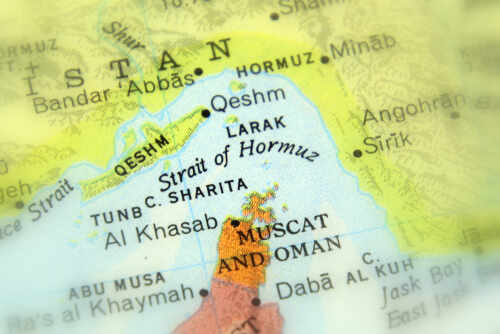
Iran’s decision to fire live weapons into the Strait of Hormuz is a blunt reminder that a single hostile regime can still threaten America’s pocketbook by squeezing the world’s energy lifeline.
Quick Take
- Iranian forces conducted live-fire drills in the Strait of Hormuz, a key corridor for roughly a quarter of global seaborne oil and about a fifth of LNG trade.
- Reports describe missiles fired from vessels, coastal positions, and drones during February drills that temporarily disrupted maritime traffic.
- After U.S.-Israel strikes and a Trump-announced ceasefire, the situation reportedly escalated into direct gunfire/rocket incidents involving commercial ships.
- Energy markets, shipping insurers, and consumers face renewed price and supply risks if the strait remains effectively blocked.
Why the Strait of Hormuz Matters to U.S. Families
The Strait of Hormuz sits between Iran and Oman, but the consequences of disruption land far beyond the Gulf. Research tied to the current crisis describes the waterway as a chokepoint carrying roughly 20–25% of the world’s seaborne oil and about 20% of liquefied natural gas trade. When military activity slows or halts traffic there, shipping schedules slip, insurance costs climb, and fuel prices can rise quickly—hitting commuters, truckers, and household budgets.
For American voters already worn down by years of inflation, the strait’s vulnerability highlights a hard reality: global energy shocks don’t stay overseas. Even if U.S. production is strong, oil is still priced on global markets, and shortages or panic buying can raise costs at the pump. That is why freedom of navigation isn’t an abstract slogan—it is directly tied to cost-of-living stability and economic confidence at home.
Live-Fire Drills and a Message of “Control”
Reports from late February describe Iran carrying out what it called “Smart Control of the Strait of Hormuz” naval drills. The research summary states that live missiles were fired from vessels, coastal sites, and drones, and that maritime traffic was suspended for hours. Iranian state-linked messaging framed the activity as readiness and deterrence. From a security perspective, live-fire in a busy commercial corridor is inherently escalatory because it increases the chance of miscalculation in a confined space.
That matters because shipping companies and foreign navies must make real-time decisions with imperfect information. If captains believe a drill is turning into enforcement—or if a missile launch is misread as an attack—commercial vessels may stop transiting altogether. In practical terms, that can create a “soft closure” of the strait even before any formal blockade is declared, with immediate ripple effects across energy and freight pricing worldwide.
Operation Epic Fury and the Spiral into Commercial Ship Attacks
The timeline describes U.S.-Israel strikes on Feb. 28, 2026—Operation Epic Fury—followed by Iranian retaliation and a widening maritime confrontation. The research claims the strikes severely degraded Iranian air defenses and mine capabilities, while Iran leaned into asymmetric responses such as attacks on merchant shipping and mine-laying. The same summary cites 21 confirmed merchant ship attacks during the crisis period, underscoring how quickly a regional exchange can threaten neutral commerce.
Several incidents listed involve vessels operating near Bahrain and the Gulf, including attacks on a U.S.-flagged ship and additional strikes on a tugboat assisting another vessel, with the tug reportedly sunk and crew missing. These details, as presented, show why shipping insurers treat the region as a high-risk zone during conflict spikes. When insurers reprice risk, those costs feed into consumer goods—another quiet inflation channel that voters often feel before policymakers act.
Ceasefire Whiplash and the Risk of a “Closed Again” Strait
As of April 18, says Iran “closed” the strait hours after a Trump ceasefire announcement, with reports of gunboats firing on ships and a container vessel struck by a rocket off Oman. It also notes an initial allowance of passages followed by a reversal. That kind of whiplash is destabilizing because global trade relies on predictable rules, not day-to-day permission slips from a regime using waterways as leverage.
Iranian Regime Fires on Strait of Hormuz: Reporthttps://t.co/iKlVokhke4
— PJ Media (@PJMedia_com) April 18, 2026
Still, multiple sources cited align on the central point: live-fire activity and reported attacks are occurring in or around a corridor vital to global energy flows. From an America First standpoint, the policy question becomes straightforward—how to protect navigation and keep energy shocks from punishing U.S. households.
Sources:
Iran fires live missiles in Strait of Hormuz as Trump envoys arrive for nuclear talks
Iranian media report that Iran has fired missiles into the Strait of Hormuz