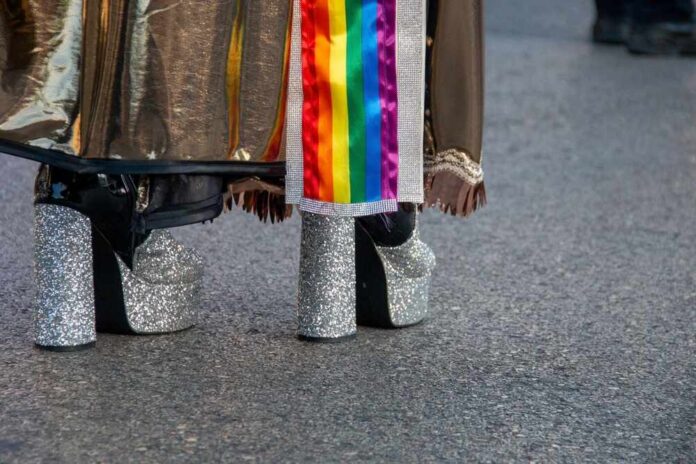
A Brooklyn drag fundraiser turned mockery of Trump-world figures into a $25,000-plus cash haul for the ACLU—an organization that routinely fights the America First agenda in court.
Story Snapshot
- A drag show billed as “Turning Point US Gay NYC” packed a Bushwick venue on April 16, 2026, after organizers expanded capacity due to demand.
- Performers parodied public figures linked to MAGA politics, including a Melania Trump act by organizer Kiki Ball-Change and an “Erika Kirk” act by Lauren Banall.
- The event reportedly raised more than $25,000 for the ACLU and drew over 1,000 attendees, plus additional livestream viewers.
- Organizers framed the night as political “pushback through performance,” blending humor with overt fundraising for progressive legal activism.
What happened in Bushwick—and why it traveled far beyond Brooklyn
Organizers staged the drag fundraiser Thursday, April 16, in Bushwick, Brooklyn, using promotional titles such as “Turning Point US Gay NYC” and “I Want You for Turning Point US Gay NYC.” Reports say demand was strong enough that the team expanded the event to accommodate the crowd. The performance line-up leaned heavily into political parody, with individual numbers aimed at recognizable conservative personalities and current headlines.
Performers reportedly spoofed Melania Trump, Rudy Giuliani, Pam Bondi, and Kristi Noem, while another segment mocked Byron Noem’s cross-dressing scandal using balloons under a top. The show also incorporated gogo dancers in U.S. flag-themed outfits—an image designed to provoke, especially for viewers who see the flag as a sacred symbol rather than a stage prop. Media coverage published April 27 said the night drew more than 1,000 in-person attendees, plus livestream viewers.
The “Turning Point” satire angle: culture war as a fundraising engine
The show’s branding targeted Turning Point USA’s orbit directly, down to the title’s play on the group’s name. Lauren Banall performed as “Erika Qwerk,” a parody of Erika Kirk, described in coverage as Charlie Kirk’s widow and the current CEO of Turning Point USA after Kirk’s death. Organizers also used a routine tied to the viral “We Are Charlie Kirk” song, leaning on TikTok-style meme energy to turn political identity into a ticket-selling hook.
That playbook matters because it shows how political fundraising now runs through entertainment channels as much as traditional campaigns. A viral impersonation can create a ready-made audience, and that audience can be converted into donations on a single night. In this case, multiple outlets reported the fundraiser generated over $25,000 for the ACLU. The reporting did not provide an itemized accounting or independent audit, so the figure should be treated as a media-sourced total rather than a verified filing.
Where the money went: the ACLU’s role in the second Trump term
The beneficiary was the American Civil Liberties Union, a legal advocacy group that frequently litigates against Republican administrations and has been criticized by Trump and conservatives as a courtroom counterweight to elected government. That context is central: the event wasn’t simply a general charity night but a targeted effort to resource an organization built to challenge federal and state policy through lawsuits. In a closely divided country, this is the parallel political system voters say they resent—policy by courtroom.
What both sides should notice about this moment
Organizer Kiki Ball-Change told an outlet that drag “has always been political” and that the show aimed to balance jokes with “real-world consequences.” Conservatives will read that as confirmation that some activists view cultural institutions as political weapons, not neutral spaces. Progressives will see it as protest and self-defense. The shared takeaway is less comfortable: Americans keep getting pushed into proxy battles—on stage, online, and in court—while trust in government continues to erode.
The event’s success also highlights how quickly polarization becomes profitable. A sold-out show can raise tens of thousands for legal activism, while outrage on the other side can amplify the same content. At the same time, available reporting is narrow and largely celebratory, leaving key questions unanswered, including whether any satirized individuals responded, how much of the fundraising was ticket revenue versus direct donations, and how many livestream viewers paid. That information gap fuels suspicion across the spectrum.
For voters frustrated with “elites” and a government that feels unresponsive, the deeper issue is the incentive structure. Activists can raise money by humiliating political opponents; institutions can raise money by promising to fight the other side; and politicians can raise money by reacting to each new cultural flashpoint. Whether one sees the Brooklyn show as free expression or deliberate provocation, it sits inside a larger system where Americans are monetized as audiences first and citizens second.
Sources:
https://www.thepinknews.com/2026/04/27/maga-drag-queens-erika-kirk-melania-trump-fundraiser/
https://www.starobserver.com.au/news/international-news-news/turninbg-point-us-gay-fundraiser/241668